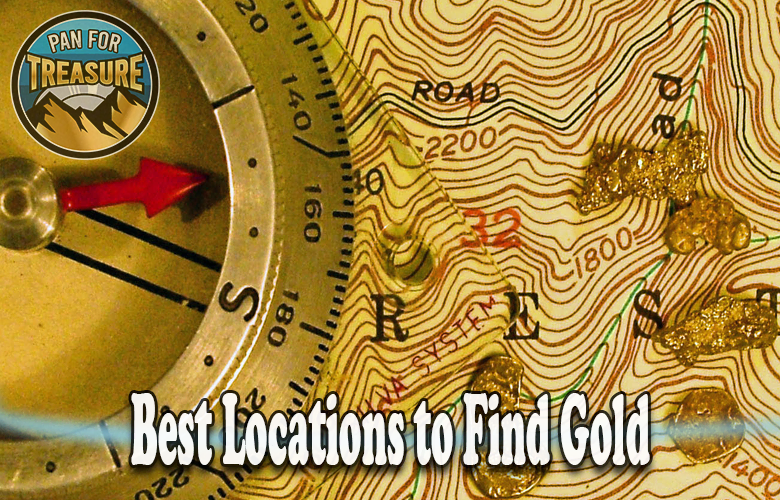
If you’re searching for the best locations to find gold, you’ve come to the right place – whether you’re an aspiring prospector or a seasoned treasure hunter.
The answer lies in some of the world’s prime locations that have lured prospectors for centuries with the promise of hidden riches.
This complete directory explores the best locations to find gold, from iconic gold rush hotspots to lesser-known treasures awaiting discovery across the United States and beyond.
TL;DR – Best Locations to Find Gold
- Top US states: California, Alaska, Nevada, Colorado, and Arizona offer the richest gold deposits
- Best for beginners: California’s Mother Lode region has accessible streams and established mining areas
- International hotspots: Canada’s Yukon, Australia’s Victoria, and South Africa’s Witwatersrand Basin
- Modern opportunities: Many historic locations still produce gold for recreational panners
- Always check first: Research local laws, obtain permits, and respect private property
- Equipment needed: Basic gold pan, classifier, and small shovel for most locations
- Bottom line: The best locations combine geological potential with legal access and safety
Complete Directory of the Best Locations to Find Gold
For a detailed exploration of where gold can be found across the country, see our state-by-state guide to gold panning locations in the United States.





Top Gold-Producing Regions in the United States
California Gold Country
Mother Lode Region
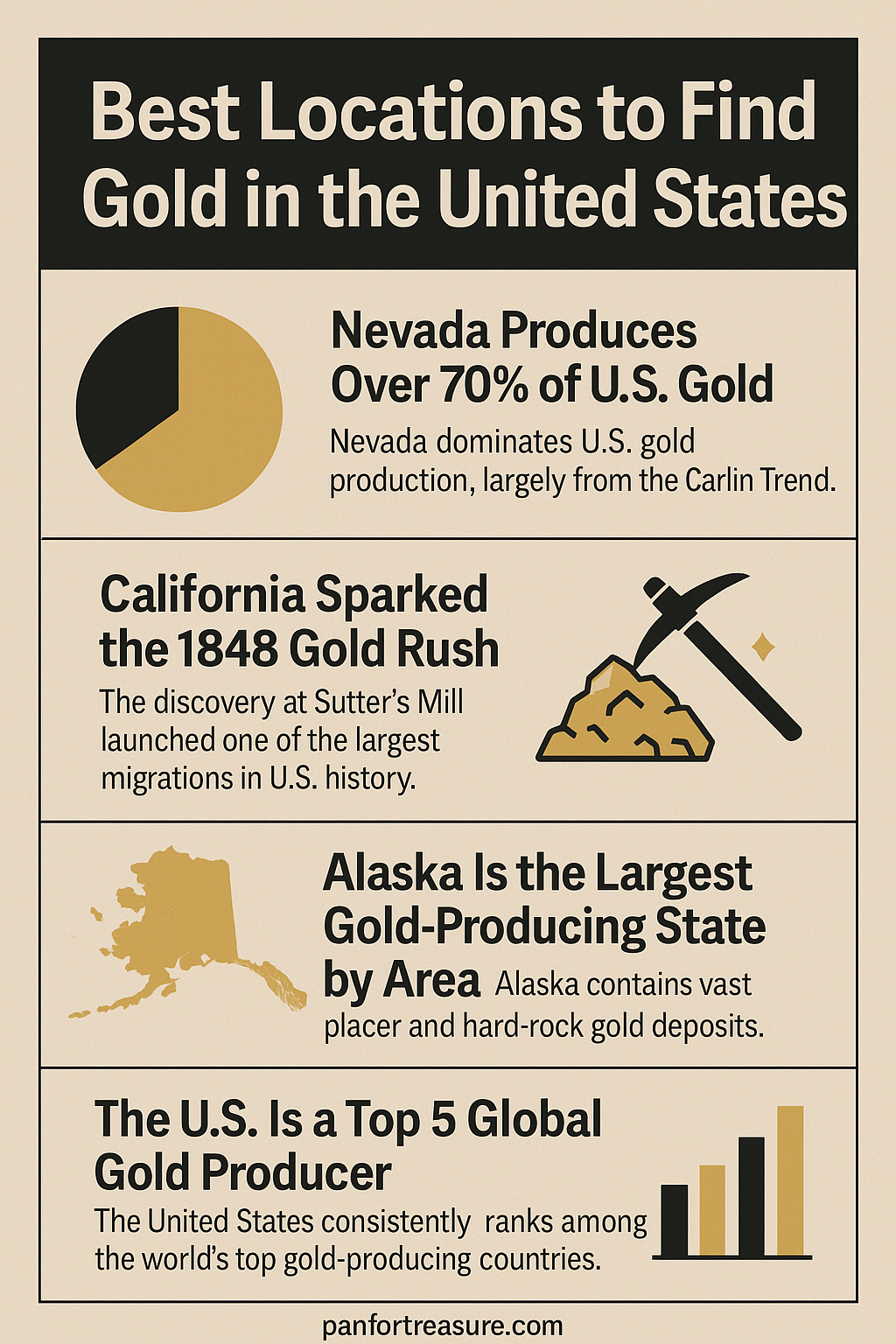
- Sutter’s Mill: The birthplace of the California Gold Rush, Sutter’s Mill in Coloma remains one of the most historically significant and productive gold locations.
- Auburn State Recreation Area: Offers legal panning opportunities along the American River with excellent access for beginners.
- Mokelumne River: Known for consistent gold production and beautiful Sierra Nevada scenery.
Sierra Nevada Gold Belt
- The Sierra Nevada Mountains are renowned for their rich gold deposits and scenic beauty.
- Nevada City area: Rich placer deposits and historic hydraulic mining sites still produce gold today.
- Grass Valley: Hard rock and placer mining opportunities in one of California’s most productive districts.
- Placerville region: Multiple creek systems with documented gold deposits and public access areas.
Alaska’s Golden Frontier
Nome Region
- Nome beaches: Explore the beaches of Nome, Alaska, where gold is still being recovered by dedicated prospectors.
- Anvil Creek: Historic creek with ongoing recreational mining opportunities.
- Snake River: Accessible by road with established mining claims and public areas.
Fairbanks District
- Chatanika River: Year-round mining potential with winter and summer access.
- Goldstream Creek: Well-documented placer deposits near Fairbanks.
- Pedro Creek: Historic discovery site with continued production.
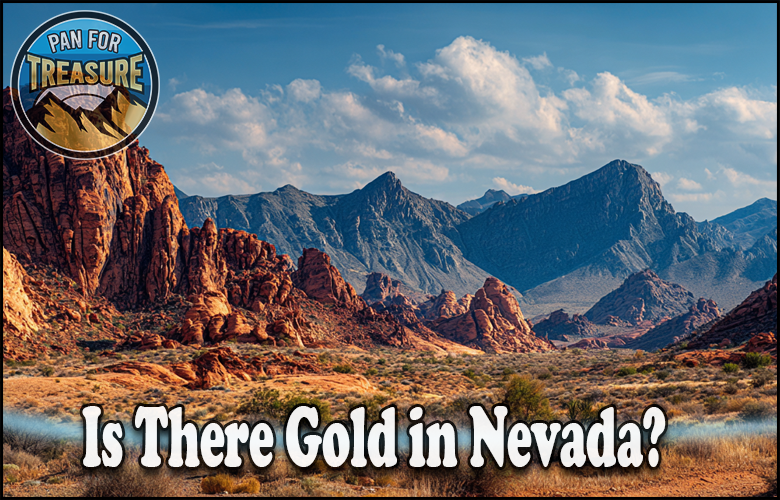
Nevada’s Hidden Treasures
- Humboldt River: Extensive placer deposits along Nevada’s longest river system.
- Tuscarora Mountains: Both placer and lode gold opportunities in remote settings.
- Virginia City area: Historic Comstock Lode region with accessible recreational areas.
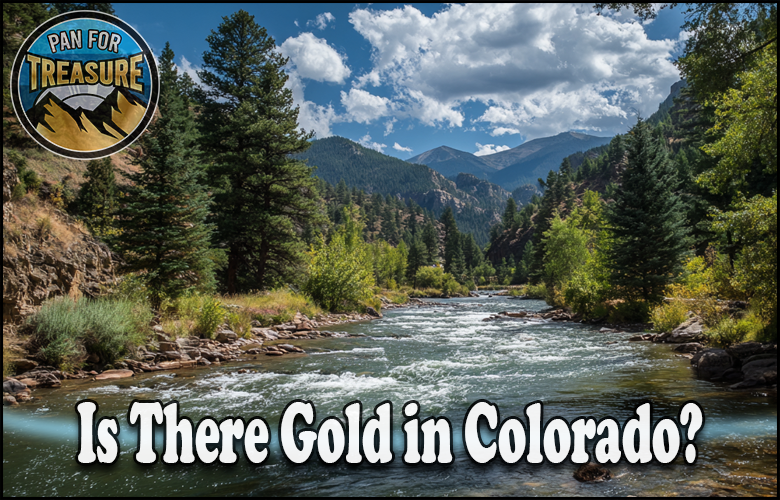
Colorado’s Rocky Mountain Gold
- Clear Creek: Popular recreational panning area near Denver with consistent small gold recovery.
- South Platte River: Multiple access points and documented placer deposits throughout the Front Range.
- Arkansas River: Headwaters region offers excellent prospects in scenic mountain settings.
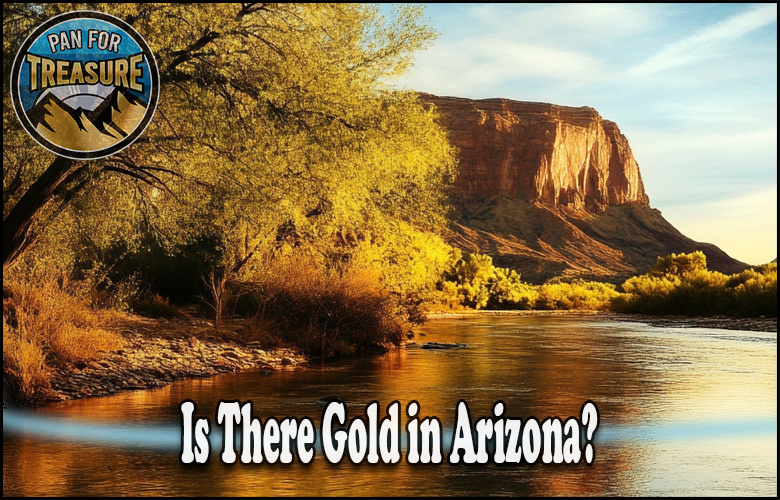
Arizona’s Desert Gold
- Lynx Creek: One of Arizona’s most productive recreational gold areas with easy access.
- Hassayampa River: Historic placer deposits in central Arizona’s Bradshaw Mountains.
- Rich Hill: Famous for large nugget discoveries and ongoing recreational opportunities.
International Gold Locations
Klondike Gold Rush Region, Canada
- Dawson City, Yukon: Relive the Klondike Gold Rush by exploring Dawson City and its historic goldfields, frozen in time.
- Bonanza Creek: Pan for gold in Bonanza Creek, where some of the largest gold nuggets in the Klondike were discovered.
- Victoria, British Columbia: Prospect in the scenic landscapes of Vancouver Island, known for its gold-bearing rivers.
Victorian Goldfields, Australia
- Ballarat and Bendigo: Experience the Australian gold rush of the 1850s by visiting Ballarat and Bendigo in Victoria.
- Sovereign Hill: Step into the past at Sovereign Hill, a living museum that recreates the gold rush era.
Witwatersrand Basin, South Africa
- Johannesburg: Explore Johannesburg, built atop the Witwatersrand Basin, one of the world’s richest gold-bearing regions.
- Pilgrim’s Rest: Visit Pilgrim’s Rest, a well-preserved gold mining town frozen in time.
Central Otago, New Zealand
- Central Otago: Journey through the picturesque landscapes of Central Otago, where the Otago Gold Rush of the 1860s unfolded.
- Clutha and Shotover Rivers: Pan for gold along the Clutha and Shotover Rivers, known for their gold-bearing potential.
Choosing the Right Location for Your Skill Level
Best Locations for Beginners
- California’s American River: Easy access, established facilities, and consistent fine gold recovery.
- Colorado’s Clear Creek: Close to Denver with multiple access points and beginner-friendly conditions.
- Arizona’s Lynx Creek: Well-documented deposits and active prospecting community.
Advanced Prospector Destinations
- Alaska’s remote creeks: Higher potential but requires extensive preparation and experience.
- Nevada’s backcountry: Excellent opportunities for those with proper equipment and desert experience.
- Canadian territories: Vast potential but requires understanding of complex regulations and harsh conditions.
Legal Considerations and Access
Public Land Opportunities
- Bureau of Land Management (BLM) areas offer extensive recreational panning opportunities
- National Forest lands allow casual prospecting with proper permits
- State parks may have designated recreational mining areas
Private Property and Claims
- Always verify land ownership before prospecting
- Respect posted boundaries and private mining claims
- Join prospecting clubs for access to private claims and group locations
Seasonal Considerations
Best Timing by Region
- California: Year-round opportunities, but spring and fall offer ideal conditions
- Alaska: Summer season (June-September) provides the best access and weather
- Colorado: Late spring through early fall, avoiding winter snowpack
- Arizona: Fall through spring, avoiding extreme summer heat
Tips for Successful Location Research
Before You Go
- Research geological surveys: Study USGS reports and geological maps for your target area
- Check land status: Verify public access and existing mining claims
- Contact local authorities: Confirm current regulations and permit requirements
- Join local clubs: Connect with experienced prospectors for location insights
On-Site Evaluation
- Look for geological indicators: Quartz veins, black sand deposits, and contact zones
- Test multiple locations: Gold concentrates in specific areas within larger systems
- Follow the gold trail: Work upstream from productive areas
- Document your findings: Keep records of productive locations for future visits
Frequently Asked Questions
What are the best locations to find gold for beginners?
California’s American River system, Colorado’s Clear Creek, and Arizona’s Lynx Creek offer the best combination of accessibility, legal access, and consistent gold recovery for new prospectors.
Can I still find gold in famous gold rush locations?
Yes, many historic gold rush areas continue to produce gold for recreational prospectors. Modern equipment and techniques can recover gold that early miners missed, especially fine gold particles.
What’s the difference between placer and lode gold locations?
Placer locations contain gold that has weathered out of rock and concentrated in streams and gravels. Lode locations have gold still embedded in rock formations. Most recreational prospectors focus on placer deposits.
How do I find out if a location is legal to prospect?
Check with local BLM offices, Forest Service districts, or state geological surveys. Use online claim maps to verify no active mining claims exist in your target area.
What should I expect to find at these locations?
Most recreational prospectors find fine gold flakes and small nuggets. Significant finds are rare but possible. The experience and outdoor adventure are often as valuable as any gold recovered.
Are international gold locations worth visiting?
International locations offer unique cultural experiences and geological diversity, but require more planning for permits, travel, and understanding foreign regulations. Canada and Australia offer excellent English-speaking destinations.
Equipment Recommendations by Location Type
Basic Equipment for All Locations
- 14-inch gold pan for general prospecting
- Classifier to remove large rocks and debris
- Small shovel for moving material
- Snuffer bottle for recovering fine gold
- Magnifying glass for gold identification
Advanced Equipment for Remote Locations
- Portable sluice box for processing larger volumes
- Metal detector for locating larger nuggets
- GPS device for marking productive locations
- Camping gear for multi-day expeditions
- First aid kit and emergency communication device
Environmental Responsibility
Leave No Trace Principles
- Fill in all excavations and restore natural appearance
- Pack out all trash and equipment
- Avoid disturbing vegetation and wildlife
- Use existing access routes to minimize impact
Water Quality Protection
- Minimize sediment disturbance in active waterways
- Avoid prospecting during fish spawning seasons
- Use settling ponds when processing large amounts of material
- Never use mercury or other harmful chemicals
Conclusion
These prime locations for Pan for Treasure offer not only the thrill of discovering gold but also a profound connection to history and the natural world.
Whether you’re a novice or an experienced prospector, these destinations hold the promise of adventure and the possibility of striking it rich.
The best locations to find gold combine geological potential with legal access, safety considerations, and your personal skill level. Before embarking on your journey, it’s essential to research local regulations, obtain any necessary permits, and practice responsible prospecting to ensure both your safety and the preservation of these iconic gold-bearing areas.
So, pack your gear, follow the golden path, and let your prospecting adventures lead you to the treasures that await beneath the earth’s surface.
Sources and References
- United States Geological Survey – Mineral Resources Program
- Bureau of Land Management – Recreation and Mining Information
- U.S. Forest Service – Special Uses and Permits
- Natural Resources Canada – Mining and Materials
- Government of Western Australia – Department of Mines
- New Zealand Government – Business and Industry Information
Information verified as of February 2026. Regulations and access conditions subject to change.
Pins for Pinterest
If you like what you see, feel free to share some love on Pinterest ❤️
Subscribe to Our Newsletter