

The top picks for gold sluice boxes come down to matching the box to your water, your budget, and how much gravel you actually plan to move.
A sluice is a long channel with riffles that lets flowing water trap gold while lighter material washes away, and the right one turns a slow day of panning into a real production setup.
Below are the models worth knowing, grouped by budget, with the specs and the honest tradeoffs. Whether you’re after the best sluice box for recreational gold mining or a production setup, the same criteria apply.
TL;DR
- Budget pick: the StanSport aluminum sluice, about $79, 30 inches, USA-made, no extras included. Great starter if you already own a pan and classifier.
- Mid-range kit: the Sluice Fox kit, around $160, bundles a 12 inch sluice with a magnet, tweezers, pans, and a classifier so you’re ready to dig out of the box.
- Powered option: a 6 inch mini power sluice with a 12V pump, roughly $290, runs its own water so you’re not dependent on strong current.
- High capacity: Keene’s larger sluices handle serious volume with adjustable legs and aggressive riffles for prospectors moving a lot of material.
- Match the box to the water: a plain sluice needs good current, a power sluice supplies its own flow, and length plus riffle style set how much gold it holds.
- Judge on specs, not hype: length, weight, riffle and matting design, and whether classified feed is required tell you far more than any star rating.
How to judge the top picks for gold sluice boxes
Before the models, know what you’re comparing. A sluice is simple, but small design differences change how well it holds gold and how it fits your prospecting style. Judge every box on the same short list of criteria rather than on marketing claims.
- Length: longer boxes give gold more chances to settle but weigh more and need more water. Portable models run 30 to 50 inches; mini units can be as short as 10 to 12 inches.
- Material: aluminum is light and rust-proof, plastic is cheap and lets you spot gold, steel is heavy but tough. Most portable sluices are aluminum or plastic.
- Riffles and matting: the riffle pattern plus the carpet or miner’s moss on the floor decide how well fine gold gets trapped. Expanded metal over ribbed matting is the common, effective combination.
- Power or manual: a standard sluice relies on creek current, while a power sluice adds a pump so you can work where flow is weak or absent.
- Included gear: some boxes are bare, others come as kits with pans, classifiers, and cleanup tools. A kit costs more but saves separate purchases.
Best Sluice Box for Recreational Gold Mining
For most recreational gold miners, the best sluice box is the one that matches your water and your ambitions, not the biggest one you can afford.
If you have a creek with decent current and you’re panning on weekends, the 30-inch StanSport aluminum sluice is the best sluice box for recreational gold mining on a budget – light enough to hike in, simple to set up, and cheap enough that it pays for itself in saved panning time.
If you want everything in one box, the Sluice Fox kit adds the classifier, pans, and cleanup tools recreational prospectors need anyway.
And if your local water runs slow, the mini power sluice supplies its own flow so weekend digging doesn’t depend on the creek cooperating.
The full breakdown of each pick is below.
Budget option: StanSport aluminum sluice box
If you already own a pan and a classifier and just want to add throughput without spending much, the StanSport aluminum sluice is the value pick. It runs around $79, it’s made in the USA, and it uses an interlocking design that packs down for transport.
At 30 inches it’s on the shorter side, which makes it light and easy to carry but means you’ll want to feed it carefully and keep the angle right so fine gold doesn’t run out the tail. It ships bare, with no pans or classifier, so factor those in if you don’t already have them. For a first sluice on a budget, the combination of light weight, solid aluminum build, and low price is hard to beat.
Mid-range option: Sluice Fox gold panning kit
The Sluice Fox kit, around $160, is aimed at the prospector who wants one box to open and go. It centers on a 12 inch interlocking sluice and adds the support gear most beginners end up buying anyway.
The bundle typically includes a separator magnet for pulling magnetic black sand off your concentrate, tweezers with a built-in magnifier for picking out flakes, gold pans for scooping and cleanup, and a mini classifier sifting pan for sizing your material before it goes through the box. That mix covers the full loop from digging to final cleanup, which is why kits like this appeal to people just getting started. The sluice itself is short, so it’s best suited to processing already-classified gravel at a measured pace rather than shoveling raw material fast.
Powered option: 6 inch mini power sluice and setup kit
A power sluice solves the biggest limit of a plain sluice: the need for strong natural current. The 6 inch mini power sluice and setup kit runs about $290 and adds an electric pump that pushes water through the box for you.
What the power setup gives you
- Its own water supply: a pump driven by a 12V battery recirculates water through the sluice, so you can work slow water, still pools, or a bank away from the main current.
- Interlocking build: the box breaks down for transport and setup, like the manual models.
- Steady flow control: a pump gives you a consistent water speed, which is exactly what a sluice needs to form clean riffle pockets and hold gold.
The tradeoffs are cost, weight, and the need to carry and charge a 12V battery. But for anyone who wants to process bench gravel or work water without reliable current, a power sluice opens up ground a basic box can’t touch. Think of it as the bridge between a creek sluice and a full highbanker.
Higher-capacity picks: Keene and other production sluices
When you’re ready to move real volume, larger sluices from established makers like Keene step up capacity. These bigger boxes are built for prospectors who’ve found ground that pays and now want to process a lot of gravel per hour.
Keene super sluice and power combinations
Keene’s larger sluice models are known for high-volume capacity, sturdy construction, and features like an adjustable leg system that lets you dial in the exact angle for the water you’re working. Keene also sells power sluice combination kits that pair the box with a pump so you can run it away from strong current. The name carries weight because the gear holds up to hard, repeated use, which matters when a box is your daily production tool.
Other names you’ll run into include ASR Outdoor, which makes affordable folding aluminum sluices in the beginner-to-intermediate range, and specialty scoop-style tools like Doc’s Gold Pit, a hand tool that works more like a rapid classifying pan than a true sluice. Each fills a niche, so match the tool to how and where you dig rather than chasing whatever gets marketed hardest.
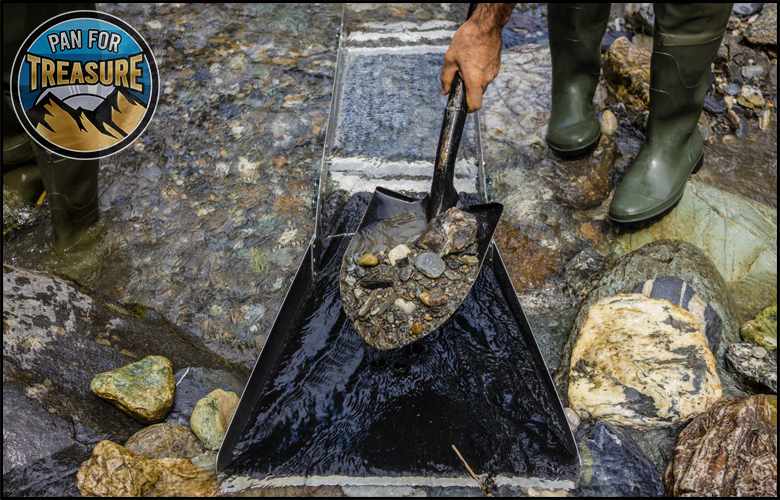
Top Picks for Gold Sluice Boxes: Side-by-side Comparison
| Model | Rough price | Length | Type | Included gear | Best for |
|---|---|---|---|---|---|
| StanSport aluminum | ~$79 | 30 in | Manual, aluminum | Box only | Budget starter, own gear |
| Sluice Fox kit | ~$160 | 12 in | Manual, kit | Magnet, tweezers, pans, classifier | Complete beginner setup |
| 6 in mini power sluice | ~$290 | Compact | Powered, 12V pump | Pump and setup kit | Weak or no current |
| Keene large sluice | Higher tier | Full-size | Manual or power | Adjustable legs | High-volume production |
| ASR Outdoor | Budget tier | Folding | Manual, aluminum | Box only | Portable, packable |
Notice the pattern: price tracks capacity and completeness, not some vague quality tier. A bare budget box and a full kit can both find gold. What you’re really buying as you move up is throughput, convenience, and independence from natural current.
Getting any sluice to actually hold gold
The best box in the world loses gold if you set it up wrong, so this matters more than which model you pick. Set the sluice in current or under pump flow at a slight downhill angle, then watch the water behind the riffles. You want a gentle rolling action, not a fast rip that scours the traps clean.
Feed classified gravel slowly and steadily. Dumping raw, unsorted material with big rocks in it plows the riffles and lets fine gold escape. When you clean up, lift the matting into a tub carefully, rinse every bit of trapped concentrate loose, and pan it down. If you’re new to sizing your feed, a classifier set and a good pan are the two accessories that most improve results, and our roundup of the best tools for gold panning covers what to pair with your box.
Where Is It Legal to Use a Sluice Box?
A sluice box sits in a different legal category than a gold pan in many states, so check the rules before you set one up. Panning with a hand pan is allowed almost everywhere gold prospecting is permitted, but a sluice moves more material and disturbs the streambed, which is exactly what regulators pay attention to.
Some states treat a small hand-fed sluice the same as a pan, others require a permit once any equipment beyond a pan enters the water, and a few restrict sluicing to specific seasons to protect fish spawning.
Power sluices raise the bar again. Because the pump pulls water and the setup processes gravel faster, several states regulate motorized equipment separately, and on some waterways it’s prohibited outright.
If you’re buying the mini power sluice from this list, confirm your state allows motorized equipment on the water you plan to work before it ships.
The short version: know your state’s rules and know whose land you’re on. Our gold panning laws by state guide breaks down every state’s requirements, and if you’re prospecting on federal land, our guide to federal regulations for gold panning covers BLM and Forest Service rules.
States like Georgia, Virginia, and Wisconsin each handle sluicing differently, so a five-minute check saves you a fine and a confiscated box.
Choosing from the top picks for gold sluice boxes
Start by being honest about your water and your budget. If you’ve got good current and already own pans and classifiers, a bare budget box like the StanSport gets you moving cheaply. If you want everything in one purchase, a kit is worth the premium. And if your ground has weak flow or sits above the water, a power sluice earns its higher price.
Whatever you buy, remember the box is only half the equation, since setup and steady feeding decide how much gold you keep. Judge the top picks for gold sluice boxes on real specs like length, riffle design, and water needs, set the one you choose up with care, and it’ll pay you back in color after a solid day of recreational gold mining on the water.
Resources for sluicing and prospecting rules
- U.S. Geological Survey, mineral resource maps and data on where placer gold is found.
- Bureau of Land Management, Mining and Minerals, rules for prospecting and equipment use on public land.
- U.S. Forest Service, regulations for recreational mining in national forests, including sluicing.
- Gold Prospectors Association of America (GPAA), claims, gear guidance, and a network of active members.
- TreasureNet, forum where prospectors compare sluices and local conditions.
Frequently Asked Questions – Gold Sluice Boxes
What is the best sluice box for recreational gold mining?
The StanSport 30-inch aluminum sluice is the best all-around choice for recreational gold mining: light, durable, and around $79. Recreational prospectors who want a complete setup should look at the Sluice Fox kit, and those working slow water should consider a 12V mini power sluice instead.
What length sluice box should I start with?
A 30 to 40 inch box is a good all-around starting length. It gives gold enough distance to settle without being too heavy to pack in, and it works in the moderate current most creeks offer.
Do I need a power sluice or a regular one?
If your water has decent current, a regular sluice is cheaper and simpler. A power sluice only makes sense when flow is weak, or when you want to work gravel away from the stream, since the pump supplies the water the box needs.
Can I use a sluice box without a classifier?
You can, but you shouldn’t. Feeding raw gravel with big rocks plows the riffles and lets fine gold escape. Classifying your material first keeps the feed sized right so the box holds more gold.
How much does a good sluice box cost?
Bare budget boxes start around $79, complete kits run about $160, and powered mini sluices land near $290. Larger production sluices cost more. You can find gold with any tier if you set it up well.
What is the difference between a sluice box and a highbanker?
A sluice sits in the current and lets the stream do the work. A highbanker adds a raised hopper and a pump so you can process gravel on the bank, away from the water. A highbanker is basically a sluice with its own water supply and more capacity.
Why is my sluice box losing gold?
Almost always it’s too much water speed or too steep an angle, which scours the riffles instead of forming the slack pockets that trap gold. Lower the angle, slow the feed, and classify your material, then watch for a gentle rolling action behind the riffles.
Are aluminum sluice boxes better than plastic?
Aluminum is lighter and won’t rust, which is why most portable boxes use it. Plastic is cheaper and lets you spot gold against the surface. For durability and packability, aluminum is the common choice, but both catch gold when set up right.
⛏ Recommended Gear ⛏


* As an Amazon Associate I earn from qualifying purchases at no extra cost to you.
Subscribe to Our Newsletter

Ryan Conlon is the founder of Pan for Treasure.
A lifelong gold panning enthusiast, he created this site to help beginners learn the ropes and share practical tips from his own time on the creek. [email protected]