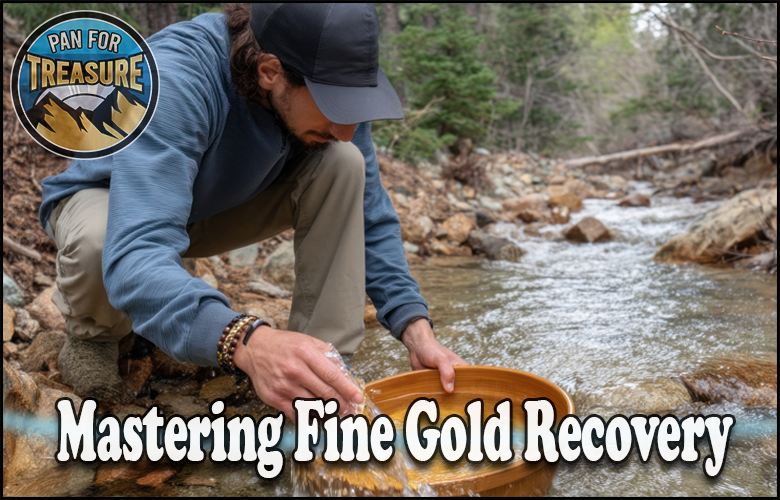
Mastering fine gold recovery is what lets you capture the flour gold that most prospectors wash straight out of their pans without ever seeing it.
In many streams the majority of the gold is extremely fine, so the prospector who can hold onto those tiny flakes comes home with far more than one who only catches the visible pieces.
The good news is that it takes technique and patience, not expensive equipment.
TL;DR
- Fine gold is where the volume is: most streams hold far more flour gold than nuggets.
- Surface tension is the enemy: tiny flakes float away unless you handle water carefully.
- Classify tightly: separating sizes lets you treat fine gold with the gentleness it needs.
- Kill black sand: a magnet removes the heavy sand that hides your fine gold.
- Reduce surface tension: a drop of rinse aid helps flakes settle instead of floating.
- Finish slow: patient, controlled cleanup recovers what speed loses.
Why Fine Gold Is Worth Chasing
Nuggets get the attention, but fine gold is where the real volume usually lives. Countless streams carry far more flour gold than coarse pieces, and it adds up quickly for anyone who can keep it. Learning to recover it well can multiply what you take home from the same ground.
The catch is that fine gold behaves very differently from larger flakes. It is light enough that the surface tension of water can float it right out of your pan, and black sand hides it from view. Beating those two problems is the heart of fine gold recovery.
| Challenge | Why It Happens | The Fix |
|---|---|---|
| Flakes float away | Water’s surface tension lifts them | Add rinse aid, handle water gently |
| Gold hidden by black sand | Heavy sand concentrates with the gold | Remove magnetics with a magnet |
| Fines lost while panning | Aggressive motion flushes them out | Slow, gentle, controlled technique |
| Hard to see and collect | Flakes are tiny | Good light and a snuffer bottle |
Our Favorite Posts
Classify Tightly and Kill the Black Sand
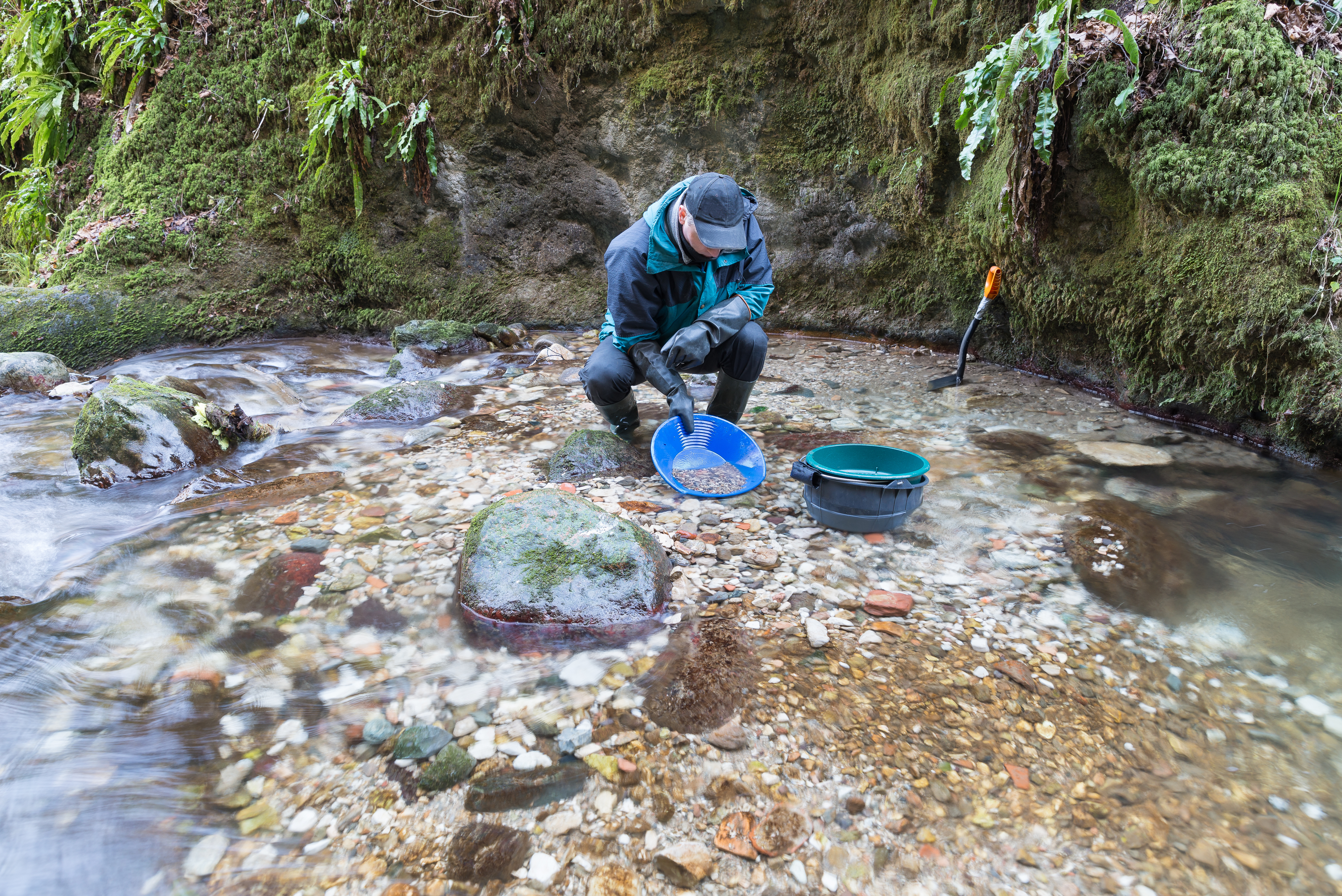
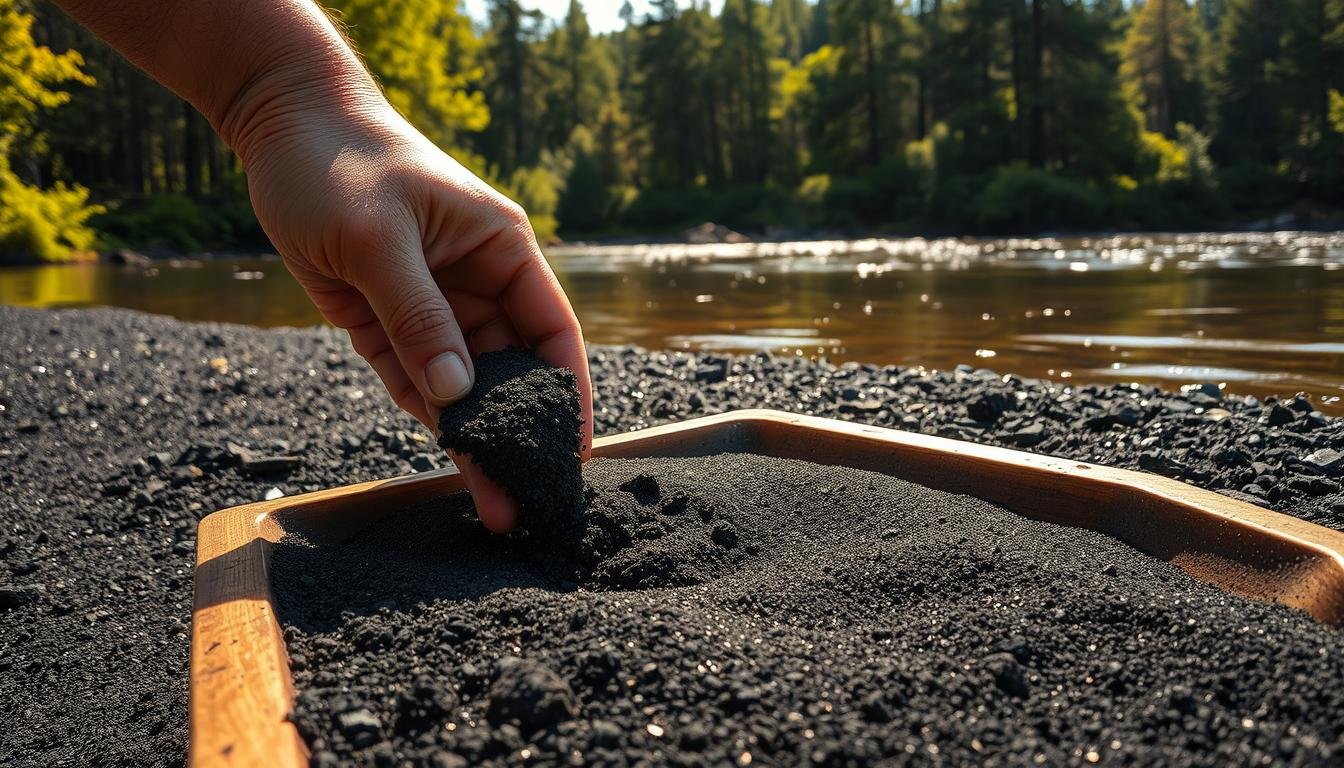
Two steps set up everything else: tight classification and black sand removal. Separating your material into narrow size ranges lets you handle the finest fraction with the gentle touch it needs, instead of treating it like coarse gravel.
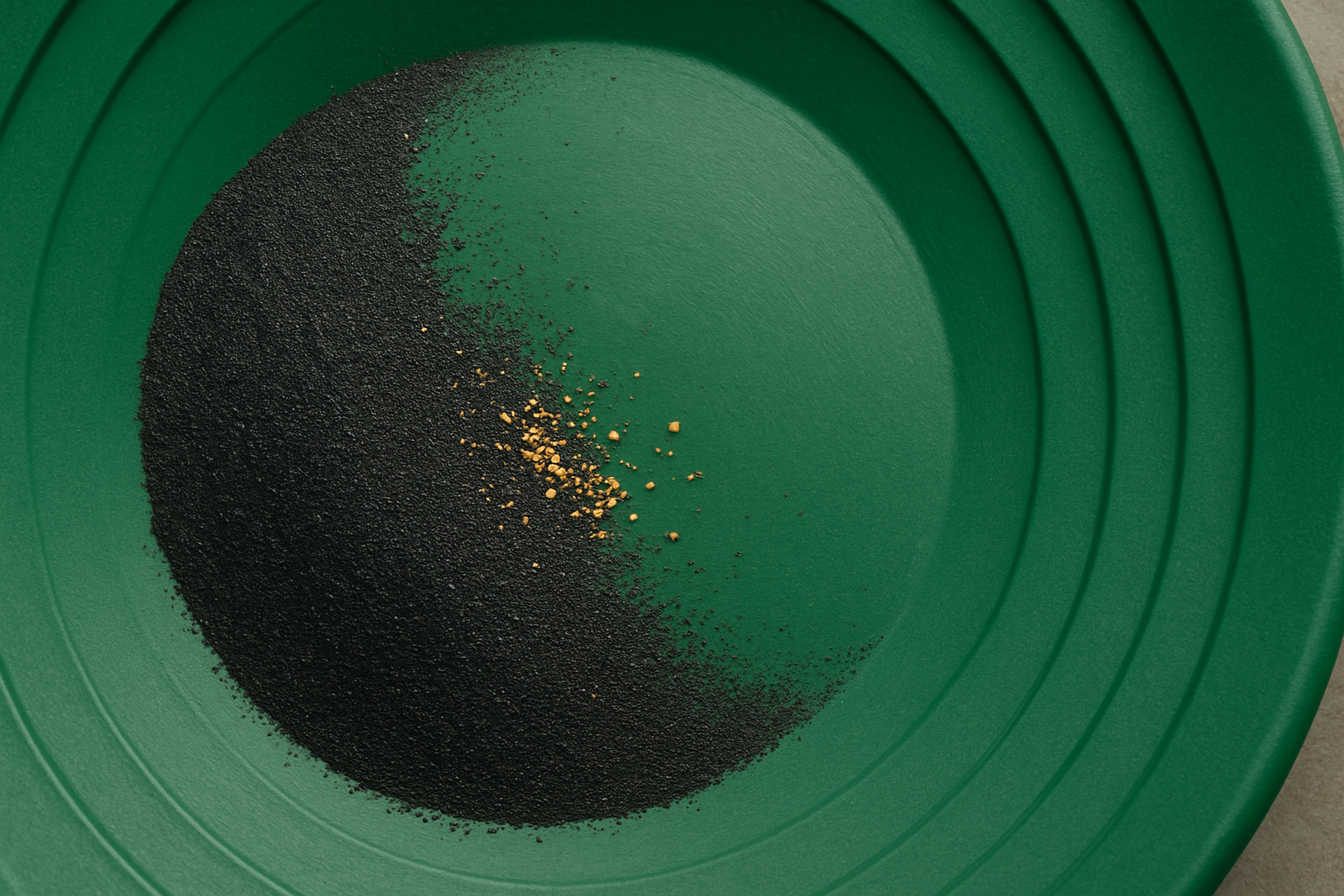
Once you have panned down to concentrate, a rare-earth magnet pulls out the magnetic black sand that otherwise buries your gold. Removing it leaves a much smaller, cleaner batch of material where the fine gold is finally easy to see and isolate.
- Classify your material into narrow size ranges before finishing.
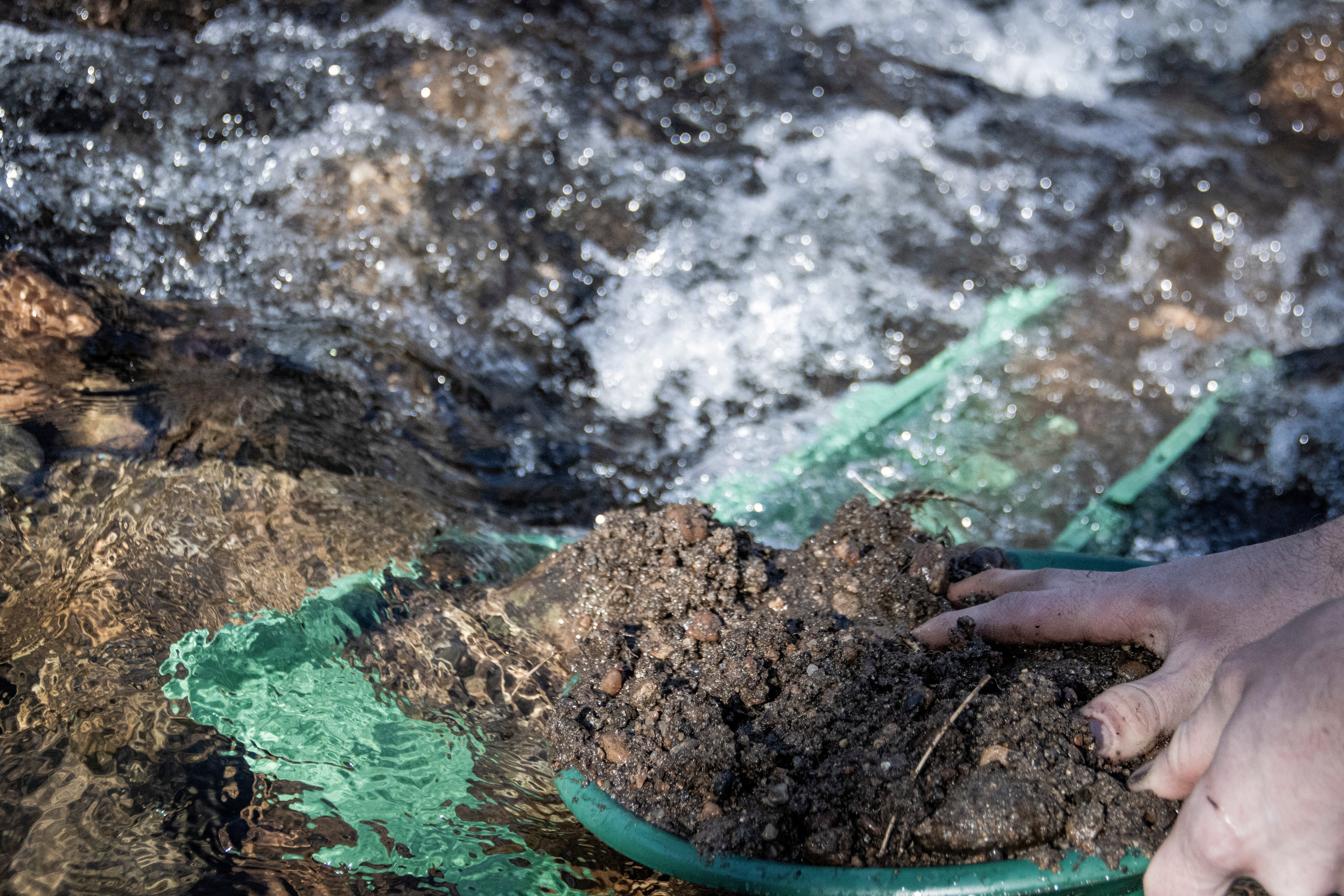
- Pan the fine fraction gently down to a heavy concentrate.
- Wave a rare-earth magnet through the concentrate to remove magnetic sand.
- Work in good light so you can see the fine flakes clearly.
- Isolate the remaining gold in a smooth dish for final cleanup.
Defeating Surface Tension
The single biggest reason people lose flour gold is surface tension. Tiny flakes are light enough to sit on top of the water and float away with the waste, which feels maddening because you often never even see them go.
The fix is simple: add a drop of rinse aid to your finishing water. It lowers the surface tension so the flakes break through and settle instead of floating. Combined with gentle, patient water motion, this small trick dramatically improves how much fine gold you keep during the final stages.
- Add a drop of rinse aid to the water in your finishing dish.
- Use gentle, smooth motion rather than sharp agitation.
- Give flakes plenty of time to settle before removing waste.
- Use a smooth-bottomed dish so gold does not cling to the surface.
- Do this final stage in calm, clear water for the best control.
Recommended Reading
Finish Slowly and Collect Carefully
Fine gold recovery is won or lost in the final minutes. Once you are down to gold and a little black sand, slow way down. Swirl your concentrate gently in a smooth dish so the black sand forms a tail you can remove, and lift stubborn grains with a suction pipette.
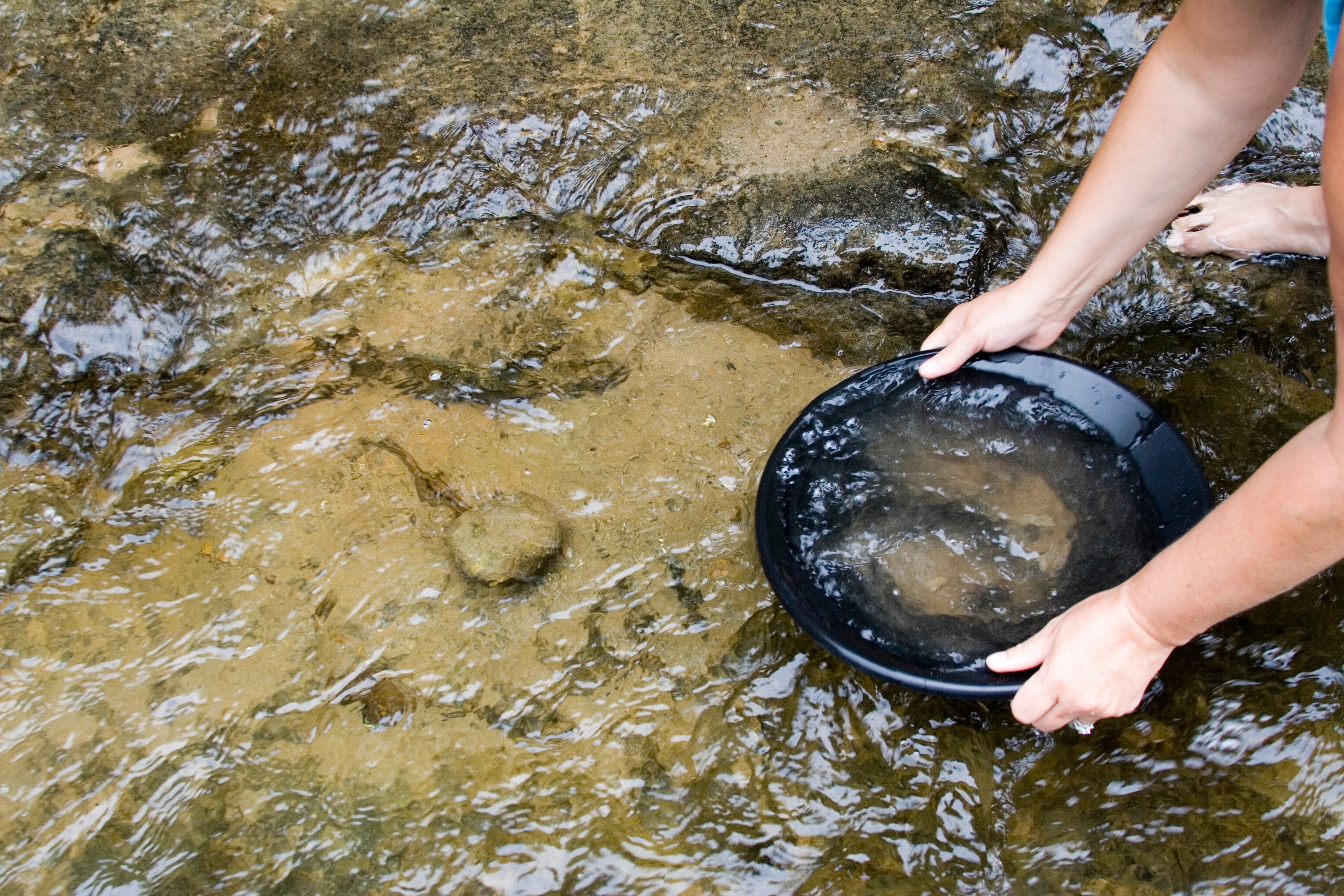
Collect the cleaned gold with a snuffer bottle straight into a vial so nothing is lost in transfer, and do the whole process over land rather than open water. Patience here is everything; the flakes you are protecting are exactly the ones careless cleanup washes away. Take your time, and the payoff is gold that most prospectors never manage to keep.
Resources for Fine Gold Recovery
- U.S. Geological Survey (USGS) – Information on placer gold and gold-bearing gravels.
- USGS Mineral Resources Online Spatial Data – Searchable maps of documented gold occurrences.
- Bureau of Land Management (BLM) – Land status and rules for prospecting on public lands.
- Gold Prospectors Association of America (GPAA) – Clubs, claims, and education for prospectors.
- TreasureNet – Community forums where prospectors share fine gold techniques.
Conclusion
The gold most prospectors leave behind is the fine gold, and it is often the bulk of what a stream holds. By classifying tightly, removing black sand with a magnet, defeating surface tension with a drop of rinse aid, and finishing slowly and carefully, you capture flakes that others simply wash away.
None of it requires expensive gear, just patience and good technique. Build these habits and you will keep pulling gold from ground that looks tapped out to everyone else. That is the reward of mastering fine gold recovery.
Frequently Asked Questions – Mastering Fine Gold Recovery
Why bother with fine gold?
Because most streams hold far more fine gold than nuggets. It adds up fast for anyone who can keep it, so recovering flour gold well can multiply what you take home from the exact same ground.
Why does fine gold float away?
Tiny flakes are light enough that the surface tension of water holds them on top, and they drift off with the waste. This is the single biggest reason people lose flour gold without ever seeing it go.
How do I stop fine gold from floating?
Add a drop of rinse aid to your finishing water. It lowers surface tension so the flakes break through and settle instead of floating. Pair it with gentle, patient water motion for the best results.
Why classify before recovering fine gold?
Separating your material into narrow size ranges lets you handle the finest fraction gently, instead of treating it like coarse gravel. Tight classification makes the delicate final recovery far more controllable and effective.
How do I remove black sand from fine gold?
Pan down to concentrate, then wave a rare-earth magnet through it to pull out the magnetic black sand. That leaves a smaller, cleaner batch where the fine gold is finally easy to see and isolate.
What tools help collect fine gold?
A smooth finishing dish, a suction pipette for stubborn grains, and a snuffer bottle to lift flakes straight into a vial. Good lighting also helps enormously, since the flakes you are protecting are very small.
Why is finishing slowly so important?
Fine gold recovery is won in the final minutes. Slowing down lets black sand form a removable tail and keeps gentle water from flushing flakes away. Rushing the last stage is exactly what loses the gold you worked to collect.
Do I need expensive equipment?
No. Fine gold recovery rewards patience and technique far more than money. A magnet, a smooth dish, rinse aid, a pipette, and a snuffer bottle are inexpensive and out-recover costly automated systems on small batches.
Keep Exploring
For the bigger picture, start with our Gold Panning Tips and Tricks guide.
⛏ Recommended Gear ⛏


* As an Amazon Associate I earn from qualifying purchases at no extra cost to you.
Subscribe to Our Newsletter

Ryan Conlon is the founder of Pan for Treasure.
A lifelong gold panning enthusiast, he created this site to help beginners learn the ropes and share practical tips from his own time on the creek. [email protected]