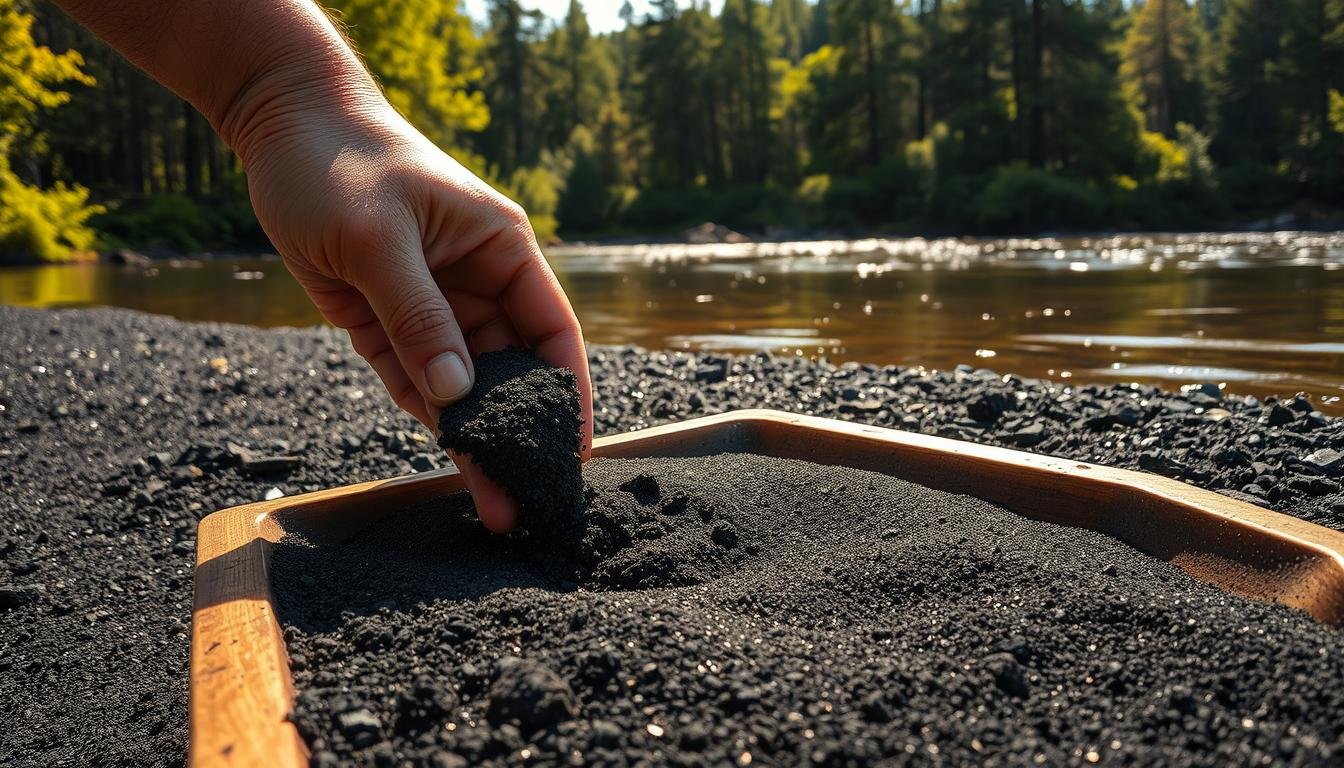
The role of black sand in gold panning is one of the most useful things a new prospector can understand, because that dark, heavy material is not just leftover waste, it is a clue. Black sand and gold share the trait of being much heavier than ordinary sand, so they settle together in the same places. Learning to read black sand tells you where gold is likely hiding and how to recover more of it.
TL;DR
- It’s an indicator: black sand often marks where gold concentrates.
- It’s mostly iron minerals: magnetite and hematite make it dark and heavy.
- Heaviness is the link: gold and black sand settle in the same spots.
- Gravity gathers both: panning and sluicing concentrate them together.
- A magnet separates them: magnetite pulls out, leaving gold behind.
- Managing it boosts recovery: handling black sand well means keeping more gold.
What Black Sand Is and Why It Matters
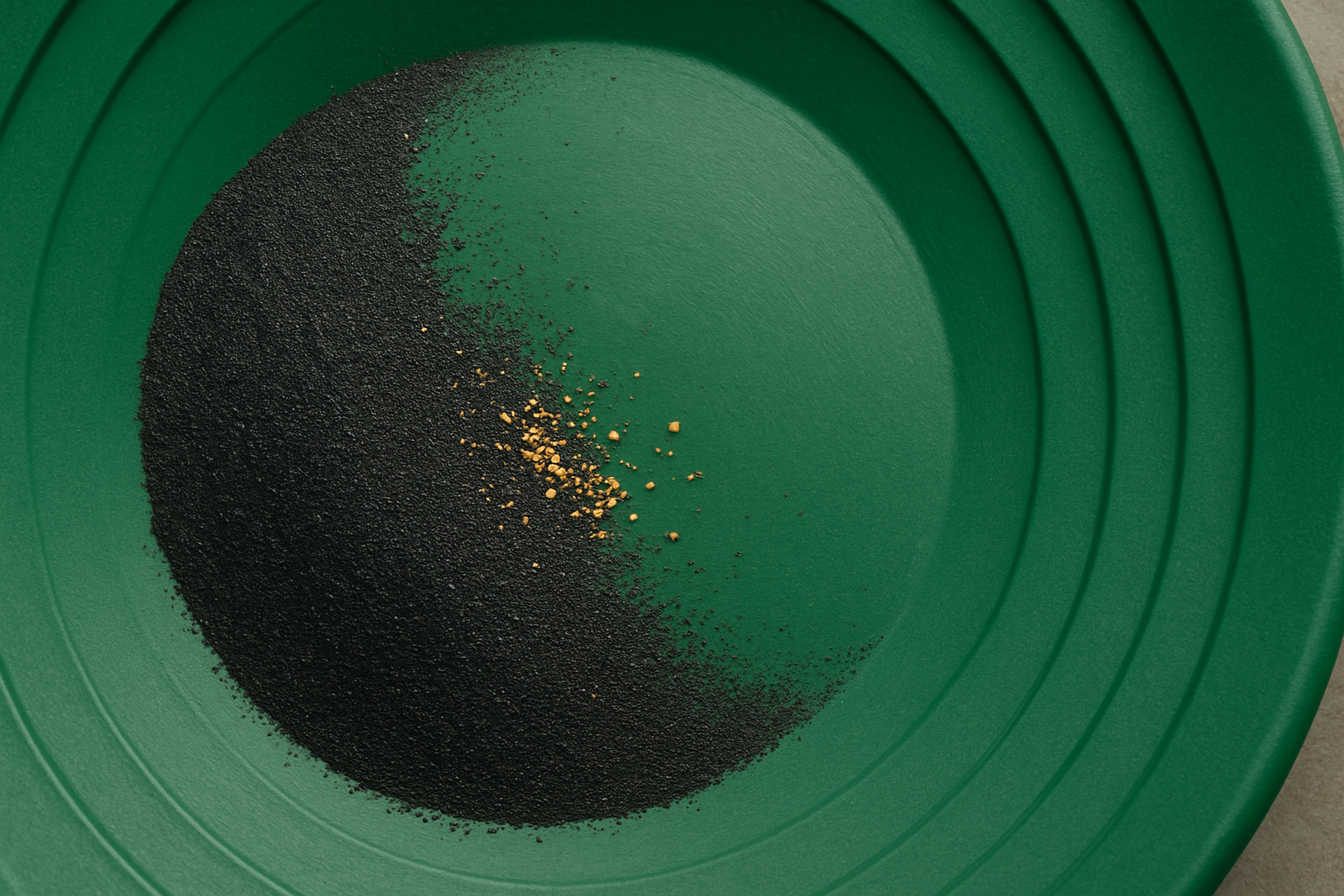
Black sand is the dark, dense material that collects at the bottom of your pan as the lighter sand and gravel wash away. It is made mostly of magnetite and hematite, two iron minerals that are heavy and durable enough to concentrate right alongside gold in a stream.
That is exactly why it matters. Because black sand is heavy, it gathers in the same low-energy spots where gold drops out of the current. Seeing black sand build up in your pan is a signal that you are working ground where heavies concentrate, and that is precisely where gold likes to hide.
| Feature | Black Sand | What It Tells You |
|---|---|---|
| Main minerals | Magnetite and hematite | Heavy, durable iron oxides |
| Weight | Much heavier than normal sand | Settles where gold settles |
| Magnetism | Magnetite is magnetic | Removable with a magnet |
| Presence in pan | Collects at the bottom | Sign of a good concentration spot |
The Connection Between Black Sand and Gold
The link between black sand and gold comes down to physics. Both are far denser than the ordinary sand and gravel that make up most of a streambed, so when moving water slows, both drop out and settle together in the same natural traps.
That shared behavior means the places you find heavy black sand, inside bends, behind boulders, on gravel bars, and in bedrock cracks, are often the same places gold collects. Prospectors have relied on this connection for generations, using black sand as a natural guide to promising ground rather than treating it as a nuisance.
- Moving water carries sand, gravel, gold, and black sand along.
- Where the current slows, the heaviest material drops first.
- Gold and black sand, both heavy, settle together in the same traps.
- These concentration spots become the best places to dig.
- Following black sand helps you locate those spots.
Separating Gold From Black Sand
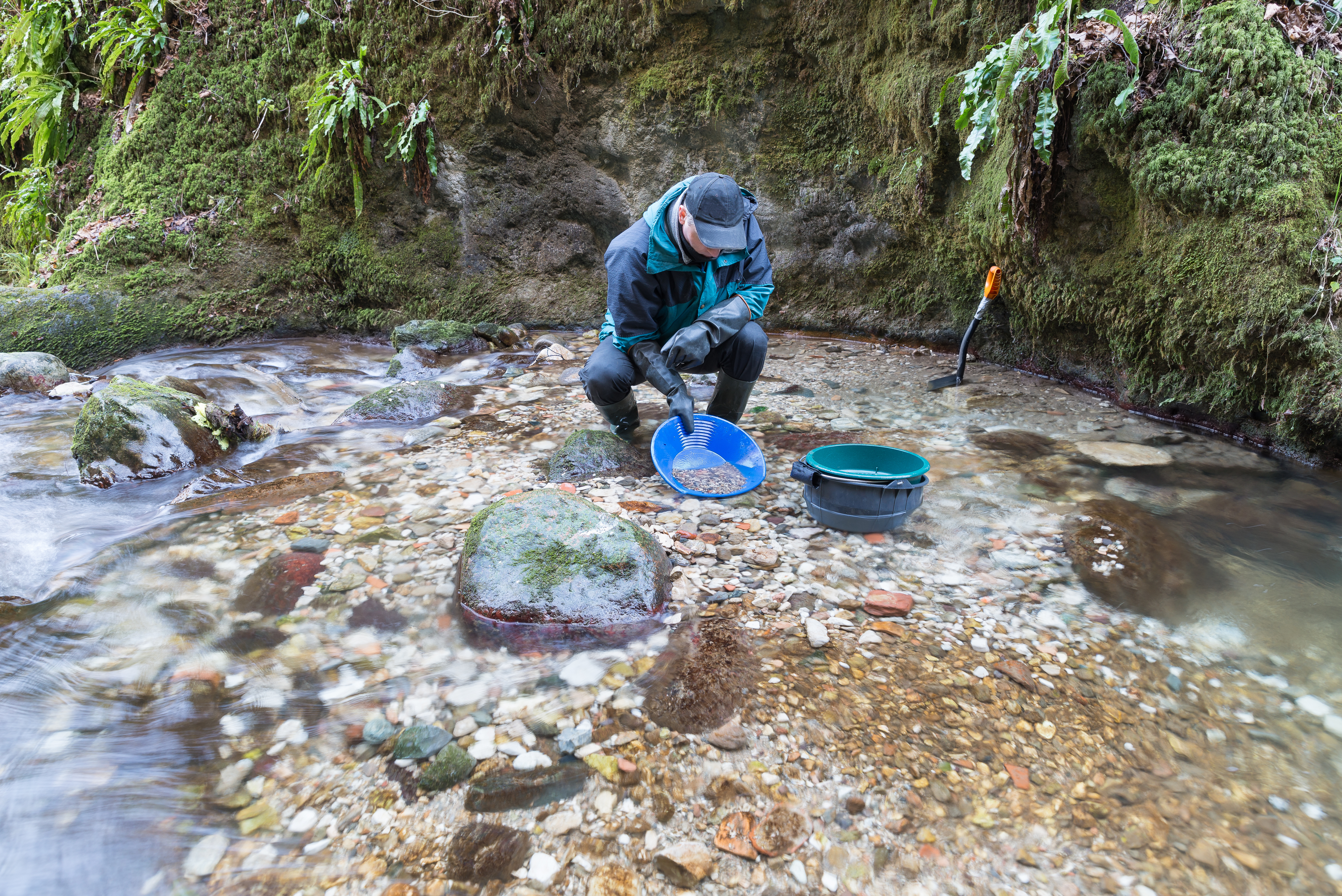
The same heaviness that makes black sand a helpful indicator also makes it cling right where your gold is, so knowing how to separate them is essential. Gravity methods like panning and sluicing concentrate all the heavies together, and then you refine from there.
Because magnetite is magnetic, a rare-earth magnet is your fastest tool: sweeping it through your concentrate pulls out the bulk of the black sand and leaves your gold behind. For the finer, non-magnetic material that remains, gentle hand-finishing in a smooth pan isolates the gold. For a deeper walkthrough of this process, see our guide on dealing with black sand.
- Concentrate the heavies with gravity by panning or sluicing.
- Sweep a rare-earth magnet through to remove magnetite.
- Check that no gold flakes cling to the removed sand.
- Finish the remaining non-magnetic material gently by hand.
- Use a drop of rinse aid so fine gold settles instead of floating.
Managing Black Sand for Better Recovery
Handling black sand well is directly tied to how much gold you keep. Since fine gold hides among the heavy sand, careless cleanup that flushes the black sand away often flushes the gold with it. Managing the material patiently is what protects your finest flakes.
Take your time in the final stages, work over land rather than open water, and consider saving your black sand concentrate to re-check for missed fine gold later. Treating black sand as a valuable part of your concentrate, rather than trash to dump quickly, is one of the simplest ways to raise your overall recovery. Read it as a guide, separate it carefully, and it becomes an ally in your prospecting.
Resources for Black Sand and Gold Panning
- U.S. Geological Survey (USGS) – Information on placer deposits and heavy minerals.
- USGS Mineral Resources Online Spatial Data – Searchable maps of documented gold occurrences.
- Bureau of Land Management (BLM) – Land status and rules for prospecting on public lands.
- Gold Prospectors Association of America (GPAA) – Clubs, claims, and education for prospectors.
- TreasureNet – Community forums where prospectors discuss black sand.
Conclusion
Black sand is far more than a byproduct of panning. Its heavy iron minerals settle exactly where gold does, making it a reliable indicator of good ground, and managing it carefully protects the fine gold that careless cleanup would wash away.
Read it, follow it to the right spots, separate it with a magnet and patient finishing, and treat it as part of your concentrate rather than waste. Understood this way, the role of black sand in gold panning becomes one of your most valuable prospecting allies.
Frequently Asked Questions – Role of Black Sand in Gold Panning
What exactly is black sand?
It is the dark, dense material that collects at the bottom of your pan, made mostly of the iron minerals magnetite and hematite. These are heavy and durable enough to concentrate alongside gold as lighter sand and gravel wash away.
Why is black sand a good sign?
Because it is heavy, black sand settles in the same low-energy spots where gold drops out of the current. Seeing it build up in your pan signals you are working ground where heavies concentrate, which is exactly where gold hides.
How are black sand and gold connected?
Both are far denser than ordinary streambed material, so when water slows they drop out and settle together in the same natural traps. That shared behavior is why black sand reliably points toward the places gold collects.
How do I separate gold from black sand?
Concentrate the heavies by panning or sluicing, then sweep a rare-earth magnet through to remove the magnetic magnetite. Finish the remaining non-magnetic material gently by hand in a smooth pan to isolate the gold.
Does a magnet remove all of it?
It removes the magnetic portion, usually the bulk of the black sand. Some non-magnetic heavies and weakly magnetic hematite may remain, so a careful hand-finishing step is still needed to separate those last bits from your gold.
Can black sand cause me to lose gold?
Yes, if you handle it carelessly. Fine gold hides among the heavy sand, so flushing the black sand away quickly can carry gold with it. Patient cleanup over land, not open water, is how you protect your finest flakes.
Should I save my black sand?
Many prospectors do, then re-check it later for missed fine gold, since it can conceal tiny flakes. Reprocessing saved concentrate carefully at home, with good light and a magnet, sometimes turns up gold worth the extra effort.
Where am I most likely to find black sand?
In the same natural traps that catch gold: inside river bends, behind boulders, on gravel bars, and in bedrock cracks. Following black sand to these spots is a time-tested way to locate promising ground to dig.
Keep Exploring
For the bigger picture, start with our Gold Panning Tips and Tricks guide.
⛏ Recommended Gear ⛏


* As an Amazon Associate I earn from qualifying purchases at no extra cost to you.
Subscribe to Our Newsletter

Ryan Conlon is the founder of Pan for Treasure.
A lifelong gold panning enthusiast, he created this site to help beginners learn the ropes and share practical tips from his own time on the creek. [email protected]