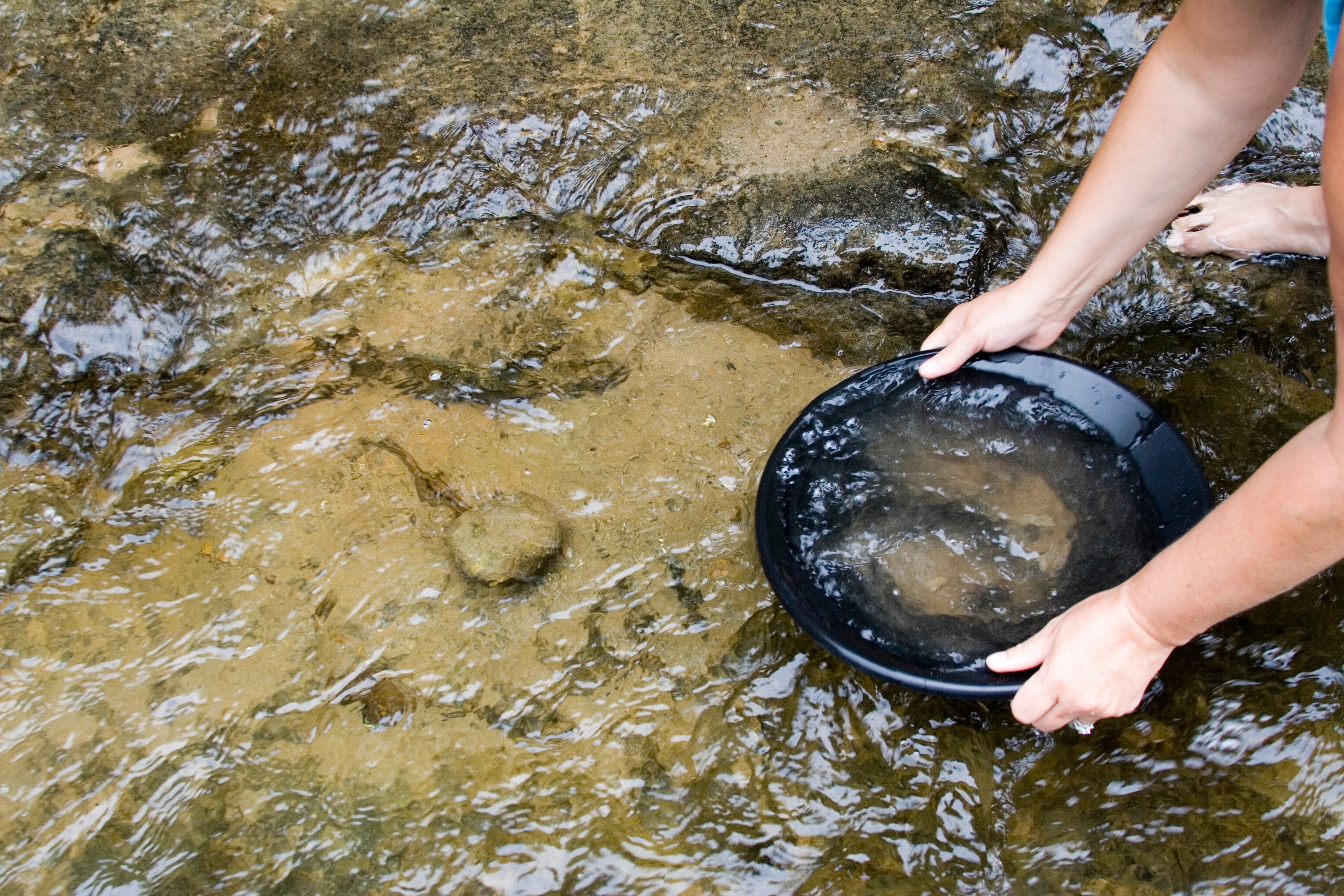
Gold panning techniques are what turn a beginner who occasionally gets lucky into a prospector who consistently recovers gold. The pan is simple, but the way you dig, classify, agitate, and finish makes an enormous difference in how much gold you keep versus how much washes away. Master a handful of core techniques and you will find more color, lose fewer fines, and work faster on every trip.
TL;DR
- Classify first: screen out big rocks so every pan is faster and cleaner.
- Let gold settle: agitate to stratify, then wash off the top waste gently.
- Control your tilt: a consistent pan angle keeps heavies in while lights wash out.
- Read the water: dig where gold concentrates, not just anywhere.
- Protect the fines: slow down at the end, where fine gold is easiest to lose.
- Practice the motion: a smooth, repeatable stroke beats fast, sloppy shaking.
Classify Your Material First
The most overlooked technique is also the most valuable: screen your material before you pan it. Running dirt through a classifier to pull out the larger rocks leaves you with finer material that pans quickly and lets gold settle reliably.
Big rocks take up room, trap gold, and force you to stop and fish them out. Removing them up front makes every pan easier to control and dramatically reduces the chance of losing fine gold to a crowded, hard-to-read pan.
| Without Classifying | With Classifying |
|---|---|
| Rocks crowd the pan and trap gold | Finer material settles cleanly |
| Hard to read and control | Easy to read the concentrate |
| Slower, with more mistakes | Faster and more reliable |
| Higher fine-gold loss | Better fine-gold recovery |
Core Gold Panning Techniques
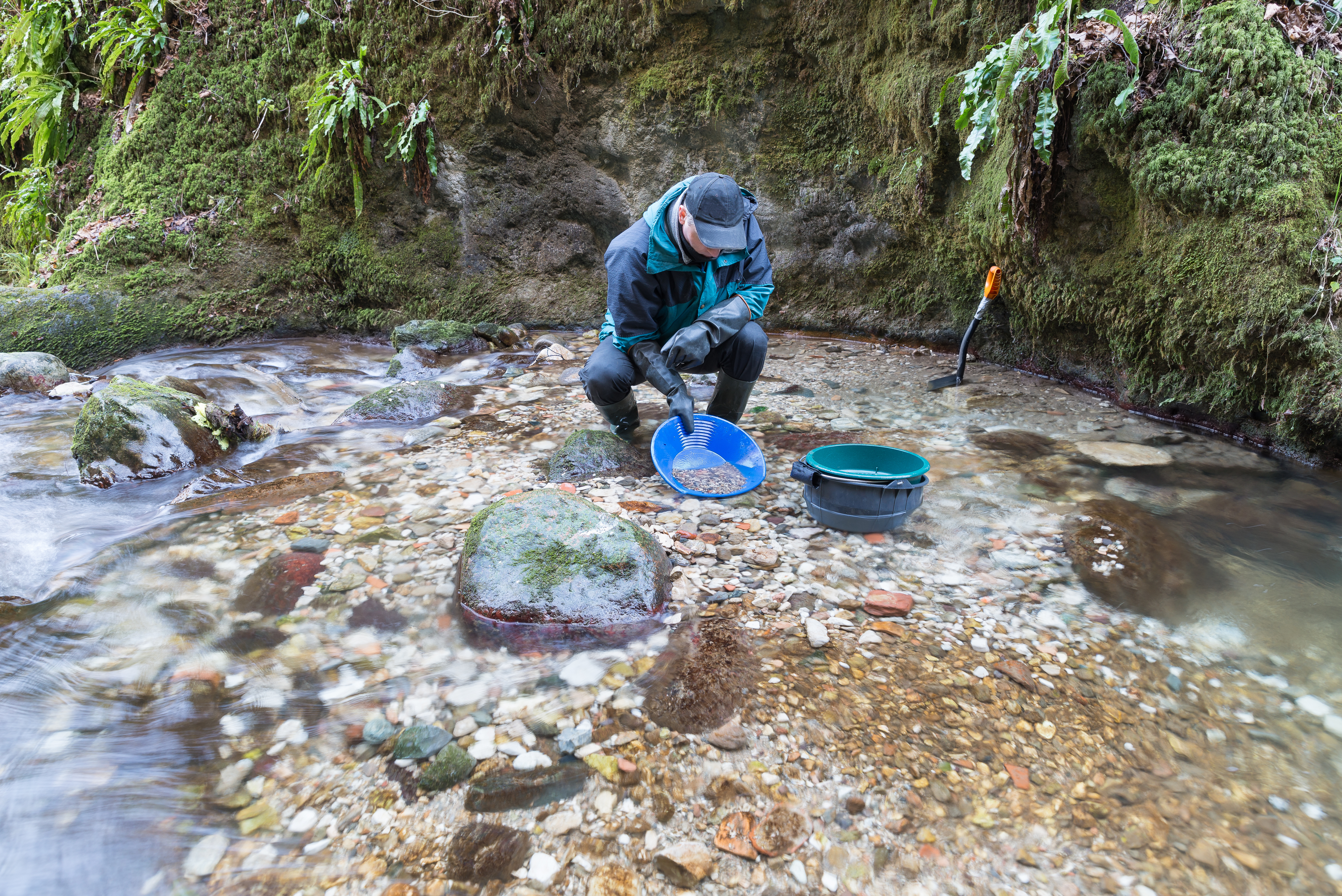
Once your material is classified, good panning is a rhythm of settling the gold and then removing waste without disturbing it. The motion should be smooth and deliberate, never a frantic shake.
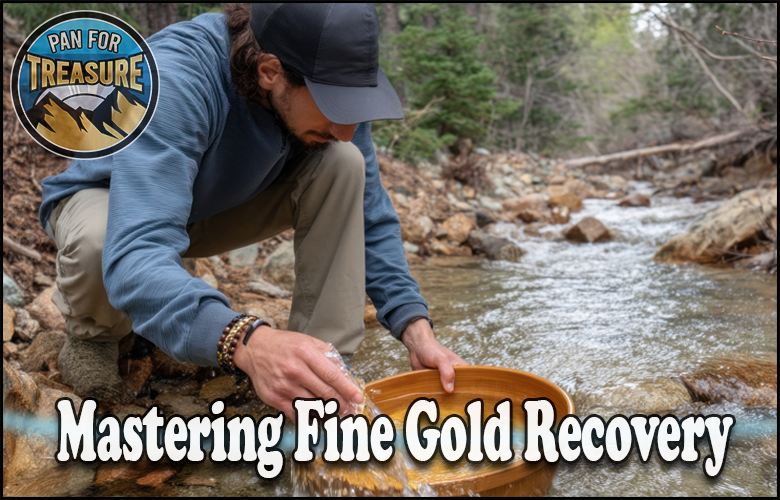
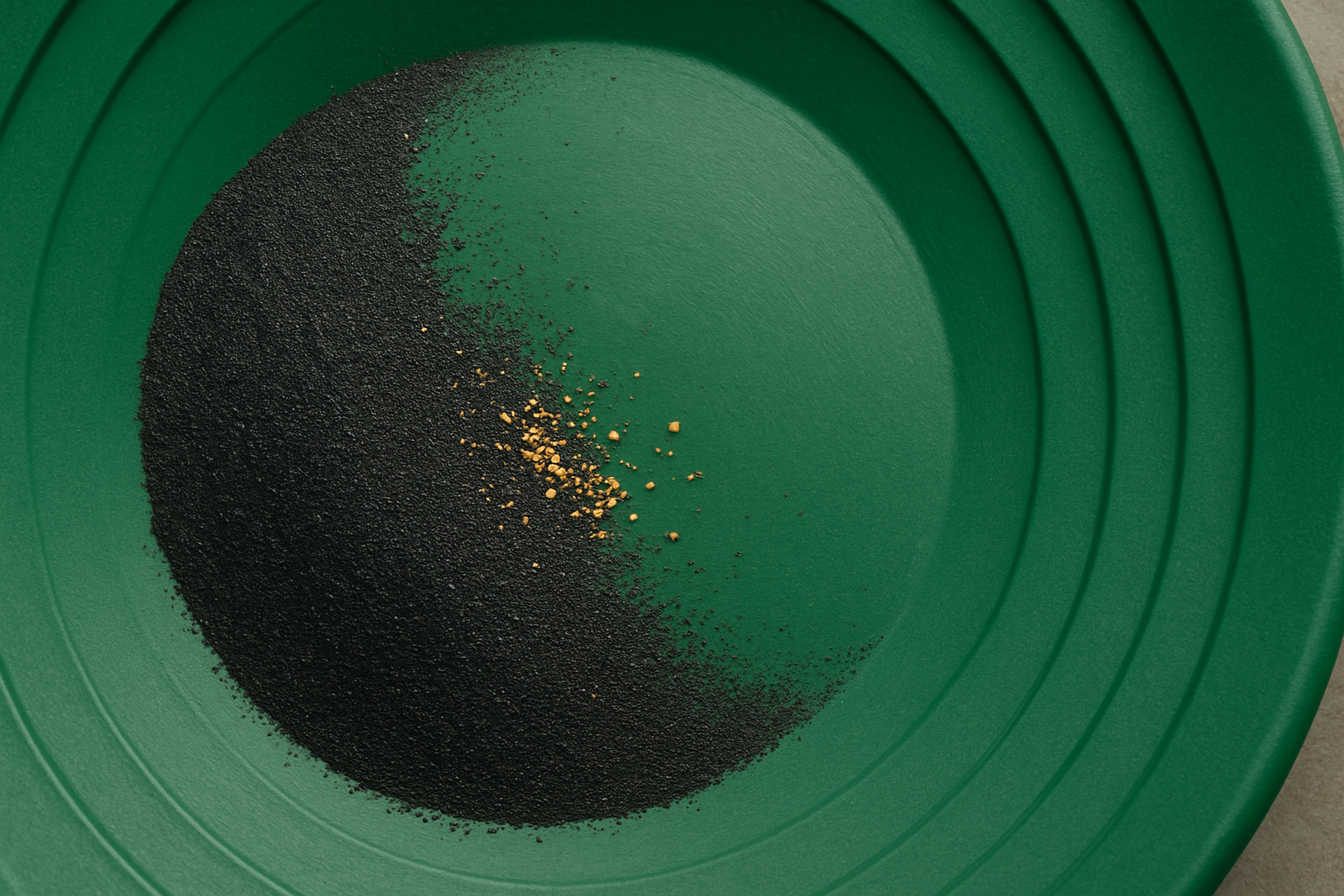
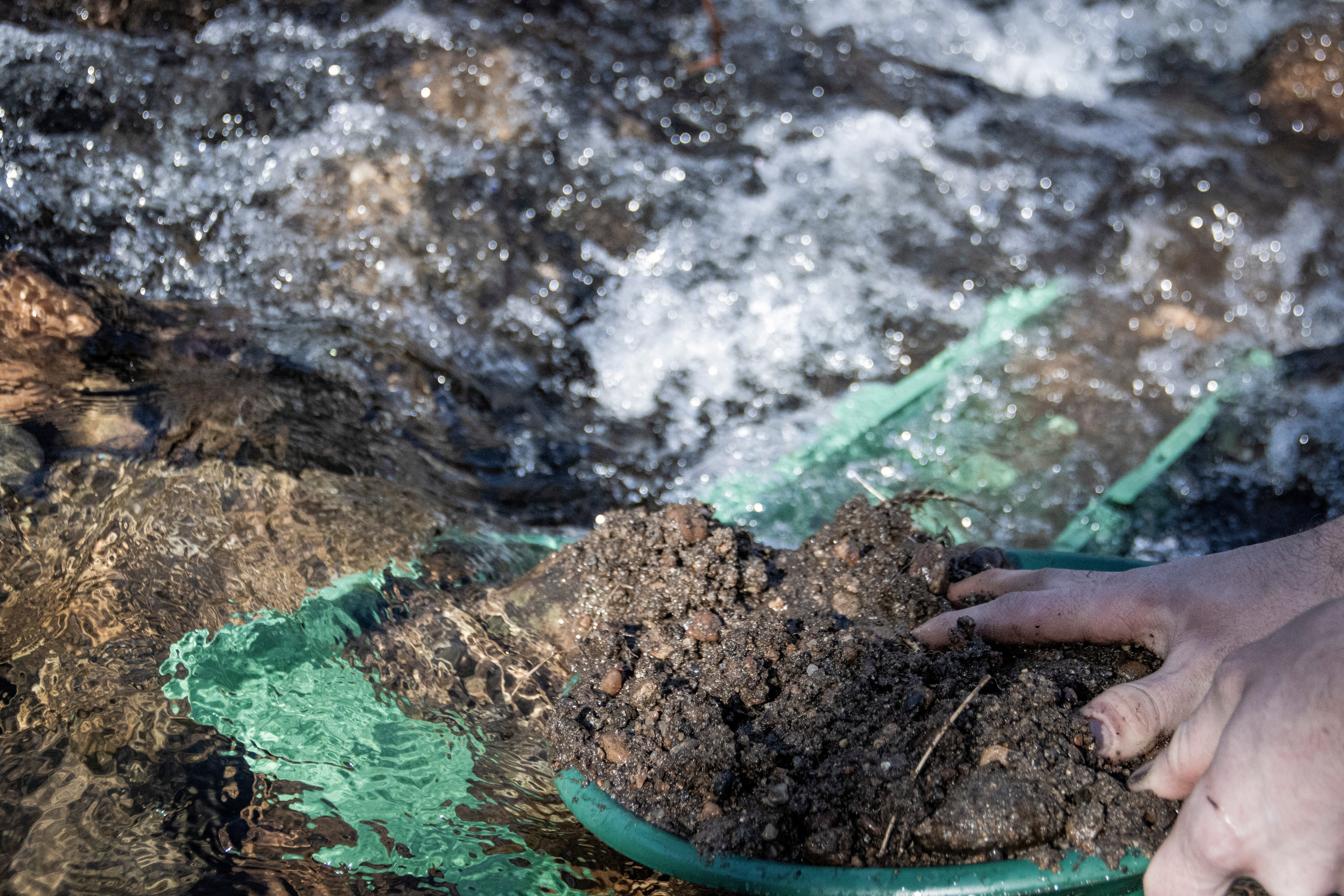
Agitate the pan to stratify the material, letting heavy gold work to the bottom. Then tilt the pan slightly and use gentle water action to carry off the top, lighter layers. Repeat that settle-and-wash cycle, and the gold steadily concentrates while everything else leaves.
- Submerge the pan and break up any clay or packed material by hand.
- Shake the pan in a smooth back-and-forth or circular motion to settle the gold.
- Tilt the pan forward and let gentle water action wash off the top waste.
- Level the pan and re-settle before each new wash.
- Repeat until only heavy concentrate and gold remain.
Protecting Your Fine Gold
Most gold in a typical stream is fine, and fine gold is exactly what sloppy technique loses. The last stage of a pan, when you are down to concentrate, is where flakes escape most easily, so that is where care matters most.
Slow down as the pan empties toward the final material. Keep your motions gentle, let everything settle fully before each wash, and avoid aggressive dumping. If you want to be thorough, keep more concentrate than you think you need and do a careful final separation later in clear water or at home.
- Ease off your speed as you reach the final concentrate.
- Let material settle completely before every wash.
- Wash gently rather than dumping water hard.
- Keep extra concentrate and refine it carefully later.
- Use a smooth-bottomed pan so fine gold does not cling.
Dig Where the Gold Is
Even flawless technique cannot recover gold that is not there, so pairing your panning skills with good spot selection is essential. Gold concentrates where moving water slows, so those are the places to dig.
Target the inside of bends, the downstream side of boulders, gravel bars, and exposed bedrock, cleaning out any cracks you can reach. Take test pans as you go, and when a spot shows good color, work it hard. Combining sound technique with smart location is what makes prospectors consistently successful. As always, confirm you have legal access before digging any spot.
Resources for Gold Panning
- U.S. Geological Survey (USGS) – Maps and geologic information on gold-bearing streams.
- USGS Mineral Resources Online Spatial Data – Searchable maps of documented gold occurrences.
- Bureau of Land Management (BLM) – Land status and rules for prospecting on public lands.
- Gold Prospectors Association of America (GPAA) – Clubs, claims, and education for prospectors.
- TreasureNet – Community forums where prospectors share panning techniques.
Conclusion
Good gold panning is a set of learnable habits: classify your material, settle the gold before washing, control your pan angle, protect the fines, and dig where gold concentrates. None of it is complicated, and all of it compounds into far better results.
Practice the smooth, deliberate motion until it feels natural, pair it with smart spot selection, and your recovery will climb trip after trip. That is the real payoff of mastering solid gold panning techniques.
Frequently Asked Questions – Gold Panning Techniques
What is the most important panning technique?
Classifying your material first. Screening out the large rocks leaves finer material that settles cleanly and pans quickly, making every other technique easier and reducing the fine gold you lose to a crowded, hard-to-read pan.
What is the basic panning motion?
Agitate the pan to settle heavy gold to the bottom, then tilt slightly and use gentle water action to wash off the top waste layers. Repeat this settle-and-wash cycle until only heavy concentrate and gold remain.
How do I keep from losing fine gold?
Slow down as the pan empties toward the final concentrate, where fine gold escapes most easily. Let material settle fully before each wash, wash gently, and use a smooth-bottomed pan so flakes do not cling.
Why does pan tilt matter?
A consistent tilt lets light material wash over the edge while keeping heavy gold safely in the pan. If the angle is too steep or your motion too aggressive, you risk flushing gold out along with the waste.
Should I finish every pan completely in the field?
Not necessarily. Keeping extra concentrate and doing a careful final separation later in clear water or at home lets your field panning stay efficient while protecting the fine gold that delicate cleanup can recover.
Does technique matter if I pick a bad spot?
Only so much. Even perfect technique cannot recover gold that is not there. Pairing good panning with smart spot selection, digging where water slows and gold concentrates, is what makes prospectors consistently successful.
Where should I dig for the best results?
Where moving water slows: the inside of bends, behind boulders, along gravel bars, and on or in bedrock. Take test pans as you go, and work hard wherever you find good color, after confirming you have access.
How long does it take to get good at panning?
The basic motion comes with a little practice, and most people improve quickly over their first several trips. Consistency in your stroke and patience with the fines are what separate steady producers from occasional finders.
Keep Exploring
For the bigger picture, start with our Gold Panning Tips and Tricks guide.
⛏ Recommended Gear ⛏


* As an Amazon Associate I earn from qualifying purchases at no extra cost to you.
Subscribe to Our Newsletter

Ryan Conlon is the founder of Pan for Treasure.
A lifelong gold panning enthusiast, he created this site to help beginners learn the ropes and share practical tips from his own time on the creek. [email protected]