
Buying recommended gold panning kits as a bundle saves you money over piecing tools together one at a time, and it gets you panning the same afternoon instead of waiting on three separate shipments.
A good starter kit gives you a couple of pans in different sizes, a classifier, a way to pick up flakes, and a vial to store them. That covers everything a first trip actually needs.
TL;DR
- Best all-around: a kit with a mini sluice, a magnet for black sand, two pans, and a vial covers real fieldwork, not just a photo op.
- Best for a first-timer: a simple two-pan kit with tweezers, a trowel, and vials keeps it cheap while you learn whether you like the hobby.
- What matters most: a green or black pan (flakes show up better), a classifier, and a snuffer bottle. Everything else is a bonus.
- Pan size: a 10 to 12 inch pan handles fine gold better than the big 14 inch pans a lot of kits ship with.
- Skip: kits that are mostly plastic vials and a magnifier with one tiny pan. That’s a toy, not a kit.
- Add later: a real classifier in a couple of mesh sizes and a sturdy snuffer bottle if the kit’s are flimsy.
What belongs in recommended gold panning kits
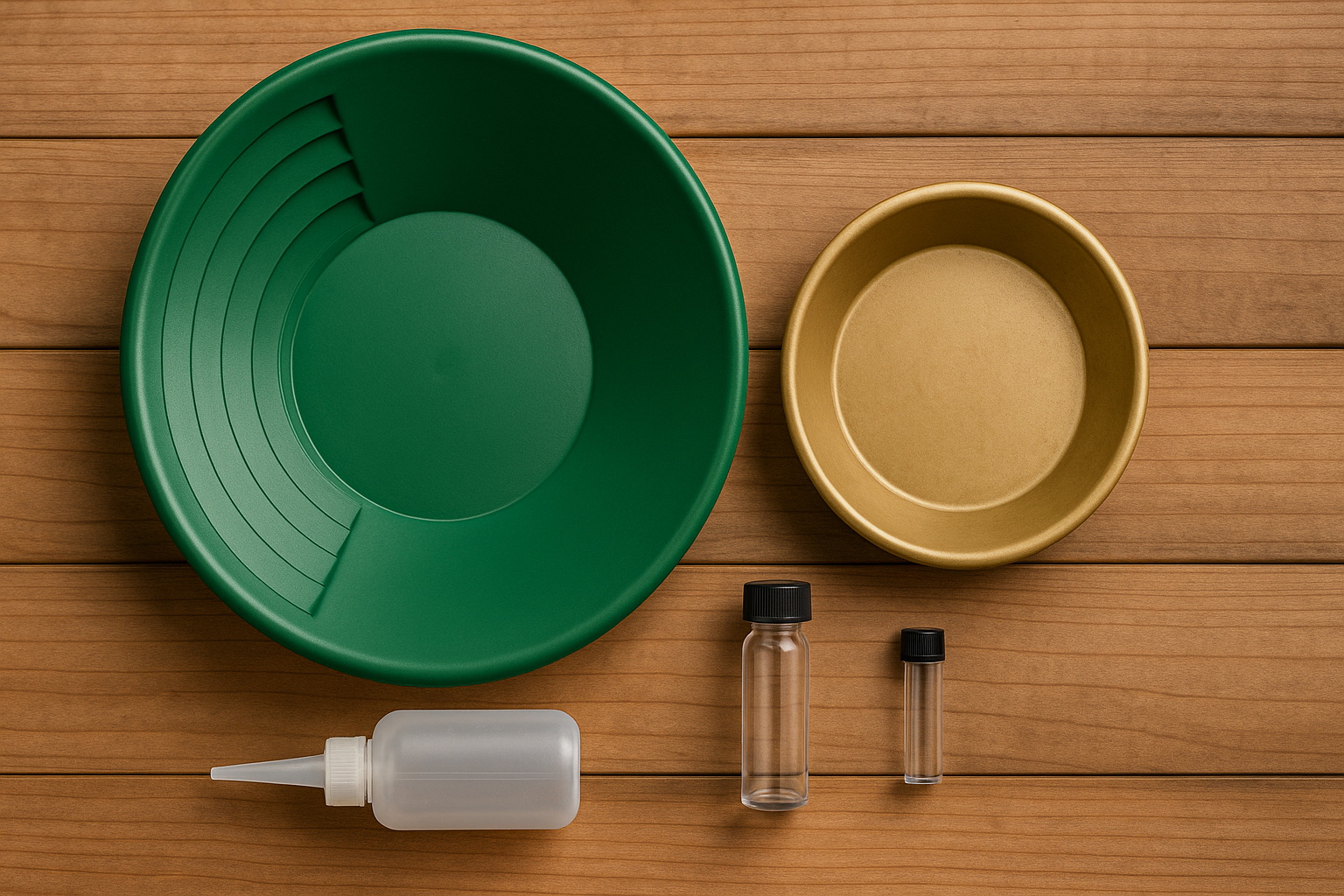
Every kit worth your money starts with pans. Two is better than one, because you use a large pan to work through material fast and a small finishing pan to clean up the concentrates.
Color matters more than people expect. Green and black pans make gold flakes jump out at you, while the old steel and blue pans wash everything into a muddy sameness.
A classifier is the second must-have. It’s a sieve that sits on top of your bucket or pan and screens out the rocks and gravel too big to hold gold, so you’re only working the material that counts.
After that you want a way to grab and keep what you find. That means fine-tip tweezers, a snuffer bottle to suck up flakes too small to pinch, and a vial or two to store them safely.
Some kits toss in a mini sluice box or a magnet for pulling black sand off your gold. Those are genuinely useful and worth paying a little more for.
The pieces to check before you buy
- Pan count and size: two pans beat one, and a 10 to 12 inch pan handles fine gold better than an oversized 14 inch pan.
- Pan color: green or black, not blue or steel.
- Classifier: a real screen, ideally sized to sit on a 5 gallon bucket.
- Recovery tools: tweezers, a snuffer bottle, and at least one storage vial.
- Extras that earn their place: a magnet for black sand, a mini sluice, a hand trowel.
Our Favorite Posts
Best all-around kit
The kits I’d point a serious hobbyist toward include a 12 inch mini sluice box, a paydirt separator magnet, two small pans, tweezers with a built-in magnifier, and storage vials. The Sluice Fox 25227 is a common example of this layout.
That combination matters because the mini sluice lets you run more material than a pan alone, and the magnet handles the black sand that always shows up with fine gold. Black sand is heavy magnetite, and pulling it off your concentrates with a magnet saves a lot of squinting.
The pans in this style of kit are light and small, easy for anyone to handle, from a kid on their first trip to an older prospector whose wrists don’t love a heavy steel pan.
If you’re going to keep at this past the first season, a kit built around a mini sluice and a magnet keeps earning its spot in your pack.
Best kit for beginners
If you’re brand new and not sure the hobby will stick, keep it simple and cheap. A basic mining kit with two gold pans, precision tweezers with a magnifier, a hand trowel, and a couple of vials will get you through your first several trips just fine.
The Stansport Mining Kit is a typical example, usually priced under $50, which is about right for testing the water. You learn the motion of panning, the feel of working a riffle, and whether you actually enjoy standing in cold creek water for a few hours before you sink real money into gear.
Once you know you’re hooked, that’s when you upgrade the pieces that matter. Most beginner kits ship with pans and a classifier that are fine to start but not what you’ll want long term.
For the technique side of things, our gold panning techniques for beginners guide walks through the actual motion so your first kit doesn’t go to waste.
Recommended Reading
Affordable kits that still work
You don’t need to spend a lot to get a usable kit. Several budget options give you the core tools without the padding.
Look for a kit with a sifting pan, a couple of gold pans, tweezers with a magnifier, and a snuffer bottle. An 11 piece mining kit around $30 covers all of that and works as a backup set for the truck.
A two-pack of 12 inch green pans with a vial and a snuffer bottle runs cheaper, sometimes under $20. Green pans make flakes easy to see, and two pans let you work material and finish concentrates without swapping.
How the budget kits compare
| Kit type | Typical price | What you get |
|---|---|---|
| 11 piece mining kit | around $30 | Sifting pan, gold pans, tweezers with magnifier, snuffer bottle, and small extras |
| Two-pack 12 inch green pans | around $20 | Two 12 inch green pans, a vial, and a snuffer bottle |
The catch with the cheapest kits is durability. The plastic tools can be thin, and the vials sometimes leak. If you pan often, plan to replace the snuffer bottle and add a metal classifier before long.
Tools worth adding to any kit
Even a good kit leaves a few gaps. Here’s the order I’d add pieces in, most useful first:
- A metal classifier sized for a 5 gallon bucket, since it does the most to speed up panning.
- A sturdy snuffer bottle, because the cheap ones crack and it saves the most fine gold.
- Fine-tip tweezers with a magnifier for grabbing flakes you’d otherwise lose.
- A leakproof storage vial you trust for the drive home.
1. Classifier
A classifier screens material by size so you only pan the fraction likely to hold gold. If your kit came with a flimsy plastic sifter, a metal classifier sized for a 5 gallon bucket is a real upgrade.
2. Tweezers with a magnifier
Fine-tip tweezers with a built-in magnifying lens let you pick up flakes you’d otherwise lose. The magnifier matters more than you’d think, since a lot of placer gold is smaller than a grain of rice.
3. Snuffer bottle
A snuffer bottle sucks up the tiny flakes that are too small to pinch. You squeeze the air out, touch the tip to the flake in your pan, and let it draw the gold in. It’s the single tool that saves the most fine gold, and cheap kit versions crack fast, so a sturdy one is money well spent.
4. Storage vial
A leakproof vial keeps your gold safe on the drive home. Some prospectors add a little water to the vial so flakes don’t cling to the sides and cap. Check the seal before you trust it with a season’s worth of finds.
| Tool | What it does |
|---|---|
| Classifier | Screens material by size so you only pan the fraction that can hold gold. |
| Tweezers with magnifier | Picks up small flakes and helps you spot them in the pan. |
| Snuffer bottle | Draws up fine flakes too small to pinch by hand. |
| Storage vial | Keeps collected gold secure and leakproof for transport. |
For the full rundown of what each tool does and how to use it, our guide to the best tools for gold panning goes deeper, and if you want to understand mesh sizing before buying a classifier, start with our gold classifiers guide.
Resources for buying and using a gold panning kit
- USGS: How gold gets deposited Background on where placer gold concentrates, so your kit ends up in the right spot.
- BLM: Recreational mining Rules for panning on federal land, including what hand tools are allowed.
- USFS: Minerals and mining Guidance for recreational panning on National Forest land.
- GPAA Prospecting association with claims, outings, and gear advice for members.
- TreasureNet Long-running forum where prospectors compare kits and tools.
Picking the kit that fits you
Match the kit to how serious you are. A first-timer testing the hobby is fine with a cheap two-pan kit, while someone who already knows they love it should buy a set built around a mini sluice and a magnet.
Whatever you choose, judge it on the pieces that do the work: green or black pans in a sensible size, a real classifier, and solid recovery tools. A good snuffer bottle and a metal classifier are the first upgrades worth making.
Get those basics right and one of these recommended gold panning kits will have you finding color on your very first trip to the creek.
Frequently Asked Questions – Gold Panning Kits
What should a beginner gold panning kit include?
At minimum: two gold pans, a classifier, tweezers, a snuffer bottle, and a storage vial. Two pans let you work material in the large one and finish concentrates in the small one, and the classifier saves you from panning gravel that can’t hold gold.
What size gold pan is best?
A 10 to 12 inch pan is the sweet spot for most people. It holds enough material to be efficient but isn’t so heavy it wears out your wrists, and it handles fine gold better than the oversized 14 inch pans some kits ship with.
Do the pan color and material matter?
Yes. Green and black plastic pans make gold flakes far easier to spot than old steel or blue pans, and plastic won’t rust. Almost every good modern kit uses a dark plastic pan for this reason.
Are cheap gold panning kits worth it?
For learning, yes. A $20 to $30 kit teaches you the motion and tells you whether you enjoy the hobby. The tradeoff is durability, so expect to replace the snuffer bottle and add a metal classifier if you keep at it.
What’s a snuffer bottle and do I need one?
It’s a squeeze bottle with a thin tip that sucks up fine flakes too small to pinch with tweezers. You do need one, because a lot of placer gold is tiny and you’ll lose it without one. It’s the tool that saves the most gold for the least money.
Do I need a mini sluice box in my kit?
Not to start, but it’s a worthwhile upgrade. A mini sluice lets you run more material than a pan alone, which matters once you’re finding enough gold to want more speed. Kits that include one are a step up for serious hobbyists.
How do I keep the gold I find?
Store flakes in a leakproof vial, and consider adding a little water so they don’t cling to the sides. Check the seal before you trust it, since cheap vials sometimes leak on the drive home.
⛏ Recommended Gear ⛏


* As an Amazon Associate I earn from qualifying purchases at no extra cost to you.
Subscribe to Our Newsletter

Ryan Conlon is the founder of Pan for Treasure.
A lifelong gold panning enthusiast, he created this site to help beginners learn the ropes and share practical tips from his own time on the creek. [email protected]