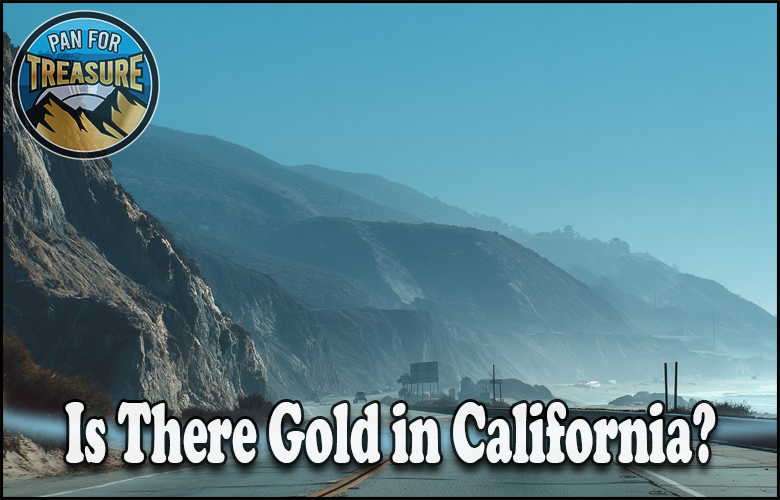
Is there gold in California? Absolutely. California is the most famous gold state in the United States and one of the most productive gold regions in world history. An estimated 118 million ounces of gold have been recovered from the state since James Marshall’s discovery at Sutter’s Mill in 1848.
The California Gold Rush drew more than 300,000 people from around the world and permanently transformed the American West. But the gold did not end with the rush. California’s gold belt stretches over 300 miles through the Sierra Nevada, and significant deposits also exist in the Klamath Mountains of the far north and the desert ranges of Southern California.
Today, recreational prospectors still find gold in California’s rivers and streams, and several commercial mines continue to operate. Whether you are panning the American River at Coloma or metal detecting the dry washes near Randsburg, California remains one of the best places on the planet to look for gold. For panning regulations, see our gold panning laws in California guide.
TL;DR
- Gold Present: Yes, in enormous quantities. California has produced an estimated 118 million ounces of gold, more than any other U.S. state.
- Best Region: The Mother Lode belt in the Sierra Nevada foothills, stretching 120 miles from Georgetown to Mariposa. The Klamath Mountains in the far north are the second most productive region.
- Gold Type: Every type: placer flakes and nuggets, lode gold in quartz veins, fine flour gold in valley sediments, and spectacular crystalline gold specimens.
- Top Spot: The American River system (North, Middle, and South Forks), where the Gold Rush began and where recreational prospectors still find gold today.
- Active Mines: Several commercial operations remain active, including the Mesquite Mine (Imperial County), Lincoln Mine (Amador County), and the Original Sixteen to One Mine (Sierra County).
- Legal Note: Recreational gold panning with non-motorized hand tools is legal on most public lands. Suction dredging has been banned in California since 2016. Always check local regulations before prospecting.
- Verdict: California is arguably the greatest gold prospecting state in the world. Finding at least some gold is not difficult if you are in the right areas with the right equipment.
Geology
Gold-bearing quartz veins along the Melones Fault Zone in metamorphic rocks of the Sierra Nevada. Formed when the Smartville Block accreted onto North America 160 to 150 million years ago.
Historical Production
Approximately 118 million ounces total. The Mother Lode alone produced over 13 million ounces through 1959. More than a third of all U.S. gold has come from California.
Best Area
The Mother Lode belt in El Dorado, Nevada, Placer, Amador, Calaveras, Tuolumne, and Mariposa Counties. The Grass Valley-Nevada City district produced 12.6 million ounces alone.
Active Claims
Thousands of active placer and lode claims across the state. Sierra, Nevada, Placer, and Plumas Counties rank among the top gold claim counties in the entire United States.
Primary Gold Type
Placer gold (flakes, nuggets, flour gold) and lode gold in quartz veins. California also produces exceptional crystalline gold specimens from the Alleghany district.
Best Season
Late spring through fall for Sierra Nevada rivers. After winter storms and high water recede, fresh gold is deposited in new locations. Desert regions are best in cooler months (October through April).
Where Is There Gold in California?
California ranks #3 of 50 for gold potential.
Quick reference below – details on each location follow, or jump to the California map.
| Location / Area | River / Creek | County | Gold Type | Land Access |
|---|---|---|---|---|
| American River | American River, South Fork, North Fork | El Dorado, Placer, Sacramento | Not listed | Recreation area; Public access |
| Yuba River System | Yuba River, South Yuba River | Sierra, Nevada | Placer gold | State park |
| Feather River | Feather River, North Fork, Middle Fork | Plumas, Butte | Not listed | Public access |
| Klamath River | Klamath River | Siskiyou | Not listed | National forest; Public land |
| Merced River | Merced River | Mariposa | Lode gold | Not listed |
| Mokelumne River and Stanislaus River | Mokelumne River, Stanislaus River | Calaveras, Tuolumne | Placer gold | Not listed |
| Trinity River and Salmon River | Trinity River, Salmon River | Trinity, Siskiyou | Not listed | Check for claims |
| East Fork San Gabriel River | East Fork, San Gabriel River | Los Angeles | Not listed | Not listed |
Is there gold in California in nearly every corner? Almost. Gold has been found in the majority of California’s 58 counties, but production is heavily concentrated in three main regions. The Sierra Nevada foothills contain the lion’s share of the state’s gold, followed by the Klamath Mountains in the far north and the scattered desert districts of Southern California.
The Mother Lode (Sierra Nevada Foothills)
The Mother Lode is the most famous gold belt in the Western Hemisphere. It runs roughly 120 miles from Georgetown in El Dorado County south to Mormon Bar in Mariposa County, following the Melones Fault Zone through the western Sierra Nevada foothills.
The belt is 1.5 to 6 miles wide and contains hundreds of mines and prospects. Gold occurs in quartz veins that formed along the suture where the Smartville Block, a Jurassic oceanic terrane, accreted onto North America. Hydrothermal fluids deposited gold-bearing veins during the Early Cretaceous, roughly 127 to 108 million years ago.
Through 1959, the Mother Lode produced more than 13 million ounces of gold. The Empire Mine in Grass Valley alone produced 5.8 million ounces over its 106-year operating life from a network of tunnels stretching 367 miles underground.
Grass Valley and Nevada City (Nevada County)
The Grass Valley-Nevada City district in Nevada County is the second largest gold-producing district in California, and some argue it rivals the Mother Lode itself. Through 1959, the district produced 10.4 million ounces of lode gold and 2.2 million ounces of placer gold.
This area is home to several legendary mines, including the Empire Mine (5.8 million ounces), the North Star Mine, and the Idaho-Maryland Mine. Nevada County produced more gold than any other county in the Gold Country region.
The Northern Mines (Sierra, Plumas, and Butte Counties)
North of Nevada City, the gold belt continues through Downieville, Alleghany, and the upper Feather River drainage. This area includes some of the richest placer deposits ever found and exceptionally high-grade lode deposits.
The Alleghany district in Sierra County is known for extraordinarily rich ore shoots. The Original Sixteen to One Mine produced an estimated one million ounces of gold, including pockets that yielded thousands of ounces from a single small ore body.
Downieville was one of the first areas mined during the Gold Rush and remains one of the most active placer mining districts in California. The Yuba River system, including the South Yuba and North Yuba, has been one of the state’s greatest gold producers.
The Klamath Mountains (Siskiyou, Trinity, and Shasta Counties)
The Klamath Mountains in northwestern California form the state’s second most important gold region. Gold nuggets were discovered here in 1851, and thousands of miners migrated north from the Sierra Nevada.
The Klamath River corridor from Interstate 5 to the town of Orleans stretches approximately 120 miles and forms one of California’s most extensive gold-bearing areas. The Trinity River, Salmon River, and Scott River are all significant producers.
Weaverville in Trinity County was a major Gold Rush boomtown that many prospectors overlook today. The area around Weaverville, including Weaver Creek and its tributaries, still produces good gold.
Southern California
Southern California has produced far less gold than the Sierra Nevada or Klamath regions, but it has a longer mining history and many districts that remain active.
The Randsburg district in Kern County is Southern California’s largest historical gold producer. The Yellow Aster Mine alone produced approximately $12 million in gold through 1957 (roughly 500,000 ounces at the prices of the time). A 156-ounce gold nugget was found near Randsburg in the late 1970s.
Kern County as a whole produced about 1.78 million ounces of gold from 1880 through 1959. Other significant Southern California gold areas include the East Fork of the San Gabriel River (Los Angeles County), Holcomb Valley near Big Bear (San Bernardino County), Lytle Creek, and the Julian district in San Diego County.
The Central Valley Dredge Fields
By the late 1890s, dredging technology made it economical to recover fine gold from the flat river bottoms and sandbars of California’s Central Valley. Over 20 million ounces of gold were recovered by dredging operations, nearly twice as much as the hydraulic mining era produced.
The Feather River, Yuba River, and American River floodplains were all heavily dredged. While large-scale dredging ended in the 1960s, the old dredge tailings still contain gold and are popular with recreational prospectors.
Best Places to Find Gold in California
Given that is there gold in California is essentially answered “everywhere,” here are the top locations for recreational prospectors, ranked by accessibility and gold potential.
- American River (El Dorado, Placer, and Sacramento Counties): The birthplace of the California Gold Rush remains one of the best recreational prospecting destinations in the state. The South Fork near Coloma at Marshall Gold Discovery State Historic Park allows panning on the northeast shore. The North Fork and Middle Fork are also productive. High waters refresh placer deposits each year, bringing new gold into reach. Auburn State Recreation Area provides additional public access.
- Yuba River System (Sierra and Nevada Counties): The Yuba River has produced some of the richest placer gold in California history. The South Yuba River State Park offers about 20 miles of river access for recreational panning. The area around Downieville on the North Yuba is legendary. Bucket dredges recovered enormous quantities of gold from the Yuba River gravels near Marysville, and the old dredge tailings still produce.
- Feather River (Plumas and Butte Counties): All forks of the Feather River contain gold. The North Fork near the town of Oroville and the Middle Fork through the Feather River Canyon are particularly productive. Recreational panning is available at several public access points.
- Klamath River (Siskiyou County): The Klamath River from Happy Camp to Orleans is one of the longest continuous gold-bearing stretches in California. The Klamath National Forest provides extensive public land access. Happy Camp has been an active gold mining center since the 1850s.
- Merced River (Mariposa County): The Merced River flows through Yosemite Valley and the southern Mother Lode. The Briceburg area off Highway 140 allows limited gold prospecting with non-motorized equipment. Even if you do not strike it rich, the scenery is among the best in the state.
- Mokelumne River and Stanislaus River (Calaveras and Tuolumne Counties): The Columbia Basin-Jamestown-Sonora district produced about 5.9 million ounces of gold. Columbia State Historic Park offers gold panning experiences, and the rivers in this area still contain significant placer gold.
- Trinity River and Salmon River (Trinity and Siskiyou Counties): These Klamath Mountain drainages are exceptionally rich. The Salmon River area has some of the highest placer claim densities in the state. Weaverville and surrounding creeks are accessible and productive.
- East Fork San Gabriel River (Los Angeles County): The most popular gold panning location in Southern California. The river near the Bridge to Nowhere has produced gold since the 1850s. It is estimated that $125 million worth of gold was found here between 1855 and 1902.
- Randsburg and Mojave Desert (Kern and San Bernardino Counties): Southern California’s richest gold district. The dry washes surrounding Randsburg, Johannesburg, and the El Paso Mountains produce nuggets for metal detectorists and drywashers. The Goler Wash area is where placer gold was first discovered in 1893.
- Cosumnes River and Bear River (El Dorado and Placer Counties): Less famous than the American and Yuba Rivers but still productive. These drainages flow through gold-bearing metamorphic terranes of the Mother Lode and offer less crowded prospecting than the major rivers.
California Gold Panning Map
History of Gold in California
The history of gold in California is, in many ways, the history of the American West. No single mineral discovery has shaped a state, a nation, or global migration patterns as profoundly as the California Gold Rush.
Before the Rush
Gold was known to exist in California before 1848. Spanish missionaries and Mexican rancheros found gold in Southern California as early as the 1770s. Francisco Lopez discovered placer gold in Placerita Canyon near present-day Newhall in 1842, six years before Sutter’s Mill.
But these earlier discoveries did not trigger a rush. California was sparsely populated, remote, and under Mexican control. That changed dramatically on January 24, 1848, when James W. Marshall spotted gold flakes in the tailrace of a lumber mill he was building for John Sutter on the South Fork of the American River at Coloma.
The Gold Rush (1848 to 1855)
News of the discovery spread slowly at first, then explosively. President James K. Polk confirmed the gold discovery in an address to Congress on December 5, 1848. By 1849, the “Forty-Niners” were arriving by the tens of thousands from every continent.
An estimated 12 million ounces of gold were recovered in the first five years of the Rush. Early prospectors used simple tools: gold pans, rockers, and sluice boxes. A man with a shovel and a pan could earn the equivalent of a year’s wages in a single day.
By 1853, the easy surface gold was becoming scarce, and mining evolved. Hydraulic mining began, using high-pressure water jets to blast apart entire hillsides of gold-bearing gravel. By the mid-1880s, an estimated 11 million ounces had been recovered by hydraulic methods.
The Environmental Reckoning
Hydraulic mining was devastatingly destructive. Enormous volumes of gravel, silt, and mercury were washed into California’s rivers, burying farmland in the Sacramento Valley and choking navigation channels.
The 1884 Sawyer Decision and subsequent federal legislation effectively ended large-scale hydraulic mining in California. This legal battle produced some of the nation’s first environmental protection laws and established precedents that echo through American environmental law to this day.
Hard Rock Mining and Dredging (1860s to 1960s)
As surface placers declined, miners followed the gold to its source in the bedrock. Hard-rock lode mining became the dominant production method from the 1880s through 1918. Mines like the Empire, North Star, and Kennedy reached thousands of feet underground.
By the late 1890s, dredging technology made it possible to recover fine gold from the Central Valley floodplains. Over 20 million ounces were eventually recovered by dredges, making it the single most productive extraction method in California history.
War Production Board Order L-208 shut down most gold mines in 1942 during World War II. Many never reopened. The last major hard-rock mine closed in 1965, and the last dredges ceased operation in 1968.
Modern Revival
When gold prices rose sharply in the 1970s and 1980s, interest in California gold returned. Several historic mines were surveyed and some reopened. Today, active mining operations include the Mesquite Mine in Imperial County (producing roughly 86,000 ounces annually), the Lincoln Mine in Amador County, and the Original Sixteen to One Mine in Sierra County.
The Castle Mountain Mine in San Bernardino County operated from 2020 to 2024 and is permitting a major Phase 2 expansion targeting 200,000 ounces per year. California’s gold mining industry is entering a new chapter.
What Type of Gold Can You Find in California?
California produces every type of gold a prospector could hope to find.
Placer gold is the most common type encountered by recreational prospectors. This includes flakes, pickers, and nuggets found in river gravels and stream sediments. The Sierra Nevada rivers, particularly the Yuba, American, and Feather, are world-famous placer gold producers.
Lode gold occurs in quartz veins throughout the Mother Lode and East and West Gold Belts. The quartz veins are characteristically milky white with ribboned texture. Gold can be visible as free gold in quartz or disseminated as microscopic particles that require crushing and processing.
Flour gold is extremely fine gold that was carried far from its source by ancient and modern rivers. The Central Valley dredge fields contain enormous quantities of flour gold. This type is difficult to recover with a pan but can be captured with careful sluicing techniques.
Crystalline gold specimens are California’s crown jewels. The Alleghany district in Sierra County is famous for producing spectacular crystallized gold, including intergrown octahedron crystals. The Fricot Nugget, found in 1865, weighs 201.4 troy ounces and is considered by some to be the finest specimen of crystallized gold in existence.
Nuggets are found throughout the state, with the largest concentrations in the upper reaches of Sierra Nevada rivers and in the desert districts of Southern California where metal detecting is the primary recovery method.
Tips for Gold Prospecting in California
- Understand the suction dredge ban. Suction dredging has been banned in California since 2016. Violations result in citations, prosecution, fines, and equipment seizure. Stick to non-motorized methods: panning, sluicing, crevicing, and hand tools. The status of highbankers and other motorized equipment has been a gray area, so check current regulations carefully.
- Research claim status before you prospect. California has thousands of active mining claims, and mining on someone else’s claim without permission is illegal. Use the BLM LR2000 database to check claim status for any area you plan to visit. Many prospecting clubs offer member access to claimed areas.
- Focus on areas with proven production. California had over a quarter million prospectors during the Gold Rush. They were excellent at finding gold but lacked modern equipment. Seek out areas with documented historical mining and use modern tools to recover gold the old-timers missed.
- Prospect after high water events. Winter storms and spring snowmelt move gold in California’s rivers every year. Prospecting immediately after water levels drop can put you on freshly deposited gold that was not accessible before.
- Pan to bedrock. In Sierra Nevada streams, the heaviest gold settles to bedrock and into cracks and crevices. Use a crevicing tool to clean out bedrock cracks and you will often be rewarded with concentrated gold.
- Try the old dredge tailings. The massive bucket-line dredges of the early 1900s were efficient but not perfect. Piles of dredge tailings along the Yuba, Feather, and American Rivers still contain recoverable gold. The tailings are easy to identify: long rows of cobble piles that look like the surface of the moon.
- Bring the right equipment. A quality gold pan, classifier screen, snuffer bottle, and a small sluice box will cover most recreational prospecting situations. For desert prospecting, a drywasher is a must since water is scarce.
- Join a prospecting club. The Gold Prospectors Association of America (GPAA) and local clubs like the Motherlode Goldhunters maintain claims across the state that members can use. Club access opens up some of the best prospecting areas that would otherwise be off-limits.
- Respect the environment. California’s environmental regulations are strict for good reason. Fill all holes, minimize disturbance, stay out of sensitive habitats, and pack out everything you bring in. The future of recreational prospecting depends on responsible practices.
- Try metal detecting in the desert. The Mojave Desert districts around Randsburg, the El Paso Mountains, and Holcomb Valley near Big Bear produce gold nuggets for metal detector operators. The dry conditions preserve shallow nuggets that would be swept away by water in wetter regions.
Resources
- Bureau of Land Management (BLM) Mining and Minerals for claim information and regulations on federal lands in California.
- California Geological Survey for geological maps, mineral resource reports, and information on gold-bearing formations.
- California Department of Fish and Wildlife for current suction dredge regulations and recreational mining rules.
- Western Mining History: Where to Find Gold in California for detailed maps, mine databases, and placer claim density analysis by region.
- Marshall Gold Discovery State Historic Park for visiting the site where the Gold Rush began and trying your hand at panning.
Conclusion
Is there gold in California? More than almost anywhere else on Earth. With an estimated 118 million ounces produced since 1848, California is the most storied gold state in the country. The Mother Lode, the Klamath Mountains, and the desert ranges of Southern California all contain significant gold deposits that continue to produce for both commercial miners and recreational prospectors.
Despite being prospected for nearly 180 years, California’s gold is far from exhausted. Winter storms replenish placer deposits annually, old dredge tailings still yield gold, and modern technology continues to reveal deposits the old-timers missed.
The state’s strict environmental regulations, including the suction dredge ban, mean that prospectors need to know the rules before heading out. But with proper equipment, research, and respect for the land, finding gold in California is not just possible. It is almost a certainty if you are in the right location.
Ready to explore more gold states? Check out our guides for neighboring states: Is There Gold in Oregon?, Is There Gold in Nevada?, Is There Gold in Arizona?, and Is There Gold in Colorado?. Or browse the full state directory to find gold near you.
Frequently Asked Questions – Is There Gold in CA
How much gold has been found in California?
An estimated 118 million ounces of gold have been recovered from California since the Gold Rush began in 1848. This makes California the most productive gold state in U.S. history, responsible for more than a third of all gold ever mined in the country.
Can you still find gold in California?
Yes. Recreational prospectors find gold in California every day. The Sierra Nevada rivers, Klamath Mountain streams, and desert districts all continue to produce gold. Winter storms and spring snowmelt replenish placer deposits annually, and old mining areas still contain recoverable gold that early miners missed.
Is it legal to pan for gold in California?
Recreational gold panning with non-motorized hand tools is legal on most public lands in California, including national forests and BLM land. However, suction dredging has been banned statewide since 2016. Always check local regulations, verify claim status, and get permission before prospecting on private land. For details, see our gold panning laws in California guide.
Where is the best place to pan for gold in California?
The American River system near Coloma (where the Gold Rush began) is the most accessible and productive recreational panning destination. The South Yuba River State Park offers 20 miles of river access. For experienced prospectors, the Klamath River in far Northern California and the upper Yuba River near Downieville are among the richest areas in the state.
Are there still active gold mines in California?
Yes. The Mesquite Mine in Imperial County produces roughly 86,000 ounces per year. The Lincoln Mine in Amador County and the Original Sixteen to One Mine in Sierra County both operate underground. The Castle Mountain Mine in San Bernardino County is permitting a Phase 2 expansion targeting 200,000 ounces per year.
What is the Mother Lode?
The Mother Lode is a 120-mile-long belt of gold-bearing quartz veins running through the western Sierra Nevada foothills from Georgetown to Mariposa. The term comes from the Spanish “veta madre” (mother vein), referring to the principal source of gold that erodes into streambeds. The Mother Lode produced over 13 million ounces of gold through 1959 and contains hundreds of historic mines.
⛏ Recommended Gear ⛏


* As an Amazon Associate I earn from qualifying purchases at no extra cost to you.
Subscribe to Our Newsletter

Ryan Conlon is the founder of Pan for Treasure.
A lifelong gold panning enthusiast, he created this site to help beginners learn the ropes and share practical tips from his own time on the creek. [email protected]