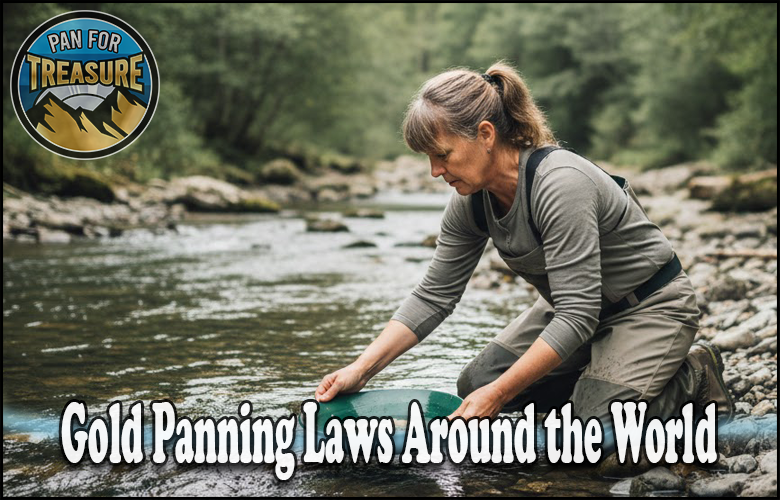
Gold panning laws around the world create a fascinating tapestry of regulations, cultural attitudes, and legal frameworks that vary dramatically from country to country.
While some nations welcome recreational prospectors with open arms, others maintain strict controls or outright prohibitions on gold panning activities, reflecting different approaches to mineral rights, environmental protection, and public land access.
This complete international directory explores gold panning regulations across six continents, helping prospectors understand the legal landscape wherever their treasure hunting adventures may take them.
TL;DR – Gold Panning Laws Around the World
- Most permissive: United States, Canada, Australia, and New Zealand offer extensive recreational opportunities
- Moderate restrictions: European countries allow limited panning with permits and seasonal restrictions
- Strict controls: Many developing nations restrict gold panning to protect mineral resources
- Tourist exceptions: Some countries allow guided gold panning experiences for visitors
- Environmental focus: Modern regulations emphasize ecological protection over mining access
- Research required: Laws change frequently – always verify current regulations before traveling
- Bottom line: Legal gold panning opportunities exist worldwide, but preparation and research are essential
Complete International Directory of Gold Panning Laws
Understanding gold panning laws around the world opens up incredible opportunities for international prospecting adventures while ensuring you stay within legal boundaries no matter where your travels take you.
North America: The Gold Panning Frontier
United States
Federal Framework
- General Mining Law of 1872: Establishes foundation for mineral rights on public land
- Multiple land agencies: BLM, Forest Service, and state agencies each have different rules
- ARPA protections: Archaeological Resources Protection Act restricts historical artifact removal
- State variations: Each state sets additional regulations for state lands and parks
Recreational Opportunities
- BLM lands: Most allow recreational panning with basic hand tools
- National Forests: Generally permit casual prospecting outside wilderness areas
- State parks: Varies dramatically by state – some very permissive, others restrictive
- Private operations: Numerous commercial sites offer guaranteed gold experiences
Canada
Provincial Jurisdiction System
- Provincial control: Each province regulates mining and prospecting independently
- Crown land access: Generally allows recreational panning on public land
- Indigenous rights: UNDRIP implementation requires consultation on traditional territories
- Environmental regulations: Strong environmental protections in most provinces
Notable Provincial Approaches
- British Columbia: Extensive recreational panning reserves and clear guidelines
- Yukon Territory: Rich gold history with accessible recreational opportunities
- Ontario: Hobby mineral collecting policy allows reasonable recreational activity
- Quebec: Recent changes require authorization for hydraulic equipment use
Mexico
Regulatory Framework
- Federal mining law: All mineral resources belong to the Mexican state
- Concession system: Legal mining requires federal concessions
- Tourist activities: Some locations offer supervised gold panning experiences
- Ejido lands: Community-owned lands require local permission
South America: Diverse Approaches
Brazil
Complex Legal Structure
- Federal regulation: National Mining Agency (ANM) oversees all mining activity
- Artisanal mining permits: Small-scale mining requires specific permits
- Environmental licensing: Strong environmental controls on mining activities
- Indigenous territories: Special protections for traditional lands
Recreational Limitations
- Permit requirements: Even recreational panning may require permits
- Tourist operations: Some commercial operations cater to visitors
- Regional variations: Different states may have additional restrictions
- Environmental sensitivity: Amazon region has particularly strict controls
Chile
Mining-Friendly Framework
- Constitutional mining rights: Strong protections for mineral exploration
- Small-scale mining support: Programs to support artisanal miners
- Tourist opportunities: Desert regions offer gold panning experiences
- Environmental regulations: Increasing focus on ecological protection
Argentina
Provincial Authority
- Provincial jurisdiction: Each province regulates mining independently
- Environmental concerns: Several provinces have banned certain mining activities
- Patagonian opportunities: Some areas allow recreational prospecting
- Tourist circuits: Organized gold panning tours in certain regions
Europe: Heritage and Regulation
Finland
Nordic Prospecting Paradise
- Right to roam: Traditional access rights allow recreational prospecting
- Lapland gold fields: Designated areas for recreational gold panning
- Seasonal considerations: Best opportunities during short summer season
- Indigenous rights: Respect for Sami traditional territories
Practical Implementation
- Hand tools only: Mechanical equipment requires permits
- Environmental protection: Must not damage natural areas
- Tourist services: Commercial operations offer equipment and guidance
- Cultural integration: Gold panning incorporated into cultural tourism
Norway
Similar Nordic Approach
- Allemansretten: Right of public access extends to mineral prospecting
- Hand prospecting allowed: Basic gold panning generally permitted
- Commercial restrictions: Larger operations require permits and licenses
- Environmental compliance: Must follow Leave No Trace principles
Germany
State-Level Regulation
- Länder authority: Each state (Land) sets mining regulations
- Rhine River tradition: Historical gold panning areas remain active
- Hobby prospecting: Small-scale activity generally tolerated
- Permit requirements: Commercial activity requires proper licensing
France
Restrictive Framework
- State ownership: All mineral resources belong to the French state
- Prefectural authorization: Regional prefects control mining permissions
- Tourist operations: Some commercial sites offer supervised experiences
- Environmental focus: Strong emphasis on ecological protection
United Kingdom
Crown Ownership System
- Crown Estate: Crown owns most mineral rights
- Scotland’s approach: More permissive attitude toward recreational prospecting
- Wales opportunities: Some areas allow recreational panning
- England restrictions: Generally more restrictive approach
Asia-Pacific: Varied Approaches
Australia
State-Based System
- State jurisdiction: Each state regulates mining and prospecting
- Recreational fossicking: Most states allow hobby prospecting
- Designated areas: Specific zones set aside for recreational activity
- Aboriginal considerations: Respect for indigenous cultural sites
State-Specific Highlights
- Victoria: Extensive fossicking areas and tourist operations
- Western Australia: Rich goldfields with recreational opportunities
- Queensland: Designated fossil and mineral collecting areas
- New South Wales: Historic goldfields open to recreational prospectors
New Zealand
Accessible Prospecting
- Crown minerals: Government owns mineral resources
- Recreational permits: Simple permit system for hobby prospecting
- South Island focus: Primary gold bearing areas in South Island
- Environmental compliance: Must follow conservation guidelines
Japan
Limited Opportunities
- Strict regulations: Mining requires extensive permits and licenses
- Tourist experiences: Some locations offer guided gold panning
- Historical sites: Former mining areas sometimes open for recreation
- Environmental sensitivity: High priority on environmental protection
China
State-Controlled System
- State ownership: All mineral resources belong to the state
- Licensing requirements: All mining activity requires government permits
- Tourist operations: Some commercial sites cater to international visitors
- Regional variations: Different provinces may have varying approaches
Africa: Resource Protection Focus
South Africa
Mineral Rights Framework
- State custodianship: Government holds mineral rights in trust
- MPRDA requirements: Mineral and Petroleum Resources Development Act governs mining
- Small-scale mining: Permits available for artisanal miners
- Tourist experiences: Gold Reef City and similar attractions offer panning
Ghana
Artisanal Mining Tradition
- Small-scale mining law: Regulations for traditional mining
- License requirements: Even small-scale mining requires permits
- Tourist opportunities: Some tour operators offer gold panning experiences
- Environmental challenges: Increasing focus on ecological protection
Tanzania
Dual Mining System
- Large and small-scale sectors: Different rules for different scales
- Primary mining license: Required for even small-scale operations
- Tourist circuits: Some safari operators include gold panning
- Cultural sensitivity: Respect for traditional mining communities
Middle East: Limited Opportunities
Regional Characteristics
- State control: Most countries maintain strict government control over mining
- Limited gold deposits: Fewer natural gold occurrences than other regions
- Tourist experiences: Some countries offer cultural gold panning experiences
- Archaeological concerns: High priority on protecting historical sites
International Travel Considerations
Legal Research Requirements
Pre-Travel Preparation
- Embassy consultation: Contact embassies for current mining regulations
- Tourist office information: National tourism offices often have mining tour information
- Local legal advice: Consider consulting local legal experts for complex situations
- Insurance considerations: Verify travel insurance covers prospecting activities
Documentation Needs
- Permits and licenses: Obtain required documentation before arrival
- Equipment declarations: Declare prospecting equipment at customs
- Export restrictions: Understand rules about taking gold finds home
- Cultural sensitivity: Research local customs and attitudes toward mining
Equipment and Transportation
International Equipment Transport
- Airline regulations: Check policies on mining tools in luggage
- Customs declarations: Properly declare all prospecting equipment
- Local procurement: Consider buying equipment at destination
- Shipping options: International shipping of equipment may be easier
Cultural and Language Barriers
- Local guides: Consider hiring knowledgeable local guides
- Translation services: Have important documents translated
- Cultural respect: Understand local attitudes toward foreigners and mining
- Communication tools: Apps and tools for language barriers

Environmental and Cultural Considerations
International Environmental Standards
Global Best Practices
- Leave No Trace principles: Apply universally regardless of local standards
- Water quality protection: Avoid contaminating local water sources
- Wildlife respect: Understand local ecosystems and protected species
- Habitat preservation: Minimize impact on sensitive environments
Cultural Sensitivity
Respecting Local Communities
- Traditional mining areas: Respect indigenous and traditional mining communities
- Sacred sites: Avoid areas with cultural or religious significance
- Economic impact: Consider using local guides and services
- Community relations: Engage positively with local communities
Commercial Gold Panning Tourism
International Tourist Operations
Organized Tour Benefits
- Legal compliance: Tour operators handle permits and regulations
- Cultural integration: Learn about local mining history and culture
- Equipment provision: No need to transport tools internationally
- Safety assurance: Professional guidance and safety measures
Popular International Destinations
- Alaska and Yukon: Classic gold rush territory experiences
- Australian goldfields: Historic mining regions with tourist facilities
- Lapland expeditions: Nordic gold panning adventures
- South American tours: Andes mountain prospecting experiences
Future Trends and Developments
Evolving Regulatory Landscape
Global Trends
- Environmental emphasis: Increasing focus on ecological protection
- Indigenous rights: Growing recognition of traditional land rights
- Tourism integration: Mining heritage increasingly incorporated into tourism
- Technology regulation: New rules for modern prospecting equipment
Emerging Opportunities
New Destinations
- Central Asia: Former Soviet states opening to tourism
- African development: Increasing tourism infrastructure in mining regions
- Arctic access: Climate change opening new northern areas
- Digital integration: Online permit systems and virtual guidance
Frequently Asked Questions
Can I legally pan for gold in any country as a tourist?
Many countries allow recreational gold panning for tourists, but regulations vary widely. Some require permits, others only allow supervised activities, and some prohibit it entirely. Always research specific country regulations before travel.
Do I need special permits to bring gold panning equipment internationally?
Most countries allow basic gold panning tools like pans and small shovels, but you should declare them at customs. Some countries restrict or prohibit metal detectors or other electronic equipment.
Can I take gold I find in other countries back home?
Export regulations vary by country. Some allow small amounts for personal use, others require export permits, and some prohibit taking any minerals. Check both departure and arrival country regulations.
Which countries offer the best legal gold panning opportunities for visitors?
The United States, Canada, Australia, New Zealand, and Nordic countries generally offer the most accessible legal opportunities for recreational gold panning, with good infrastructure and clear regulations.
How do I research gold panning laws before traveling internationally?
Contact the destination country’s embassy, tourism office, and mining ministry. Join international prospecting forums, consult travel guides, and consider hiring local legal advice for complex situations.
Are there international organizations that help with gold panning regulations?
While there’s no single international body, prospecting associations, mining institutes, and tourism organizations often provide helpful information. UNESCO World Heritage sites and similar organizations also provide guidance on protected areas.
Conclusion
Gold panning laws around the world reflect the incredible diversity of approaches to mineral rights, environmental protection, and public land access that exist across different cultures and legal systems.
While the regulatory landscape can seem complex, opportunities for legal recreational gold panning exist on every continent, from the permissive frameworks of North America and Australia to the guided experiences available in more restrictive countries.
The key to successful international gold panning lies in thorough research, respect for local laws and customs, and understanding that regulations continue to evolve as countries balance resource protection with tourism and recreational access. By approaching international prospecting with proper preparation and cultural sensitivity, gold panners can enjoy incredible adventures while contributing positively to local communities and conservation efforts.
As environmental awareness grows and indigenous rights gain recognition, gold panning laws around the world will continue to evolve, generally toward more sustainable and culturally respectful approaches that can preserve these opportunities for future generations of international treasure hunters.
Sources and References
- United Nations – International Environmental and Cultural Protection
- World Bank – Mining and Development Resources
- International Council on Mining and Metals – Global Mining Standards
- United Nations Environment Programme – Environmental Protection Guidelines
- UNESCO World Heritage Centre – Cultural and Natural Site Protection
- World Tourism Organization – Sustainable Tourism Development
Information verified as of February 2026. International regulations subject to frequent change – always verify current laws before travel.
Subscribe to Our Newsletter