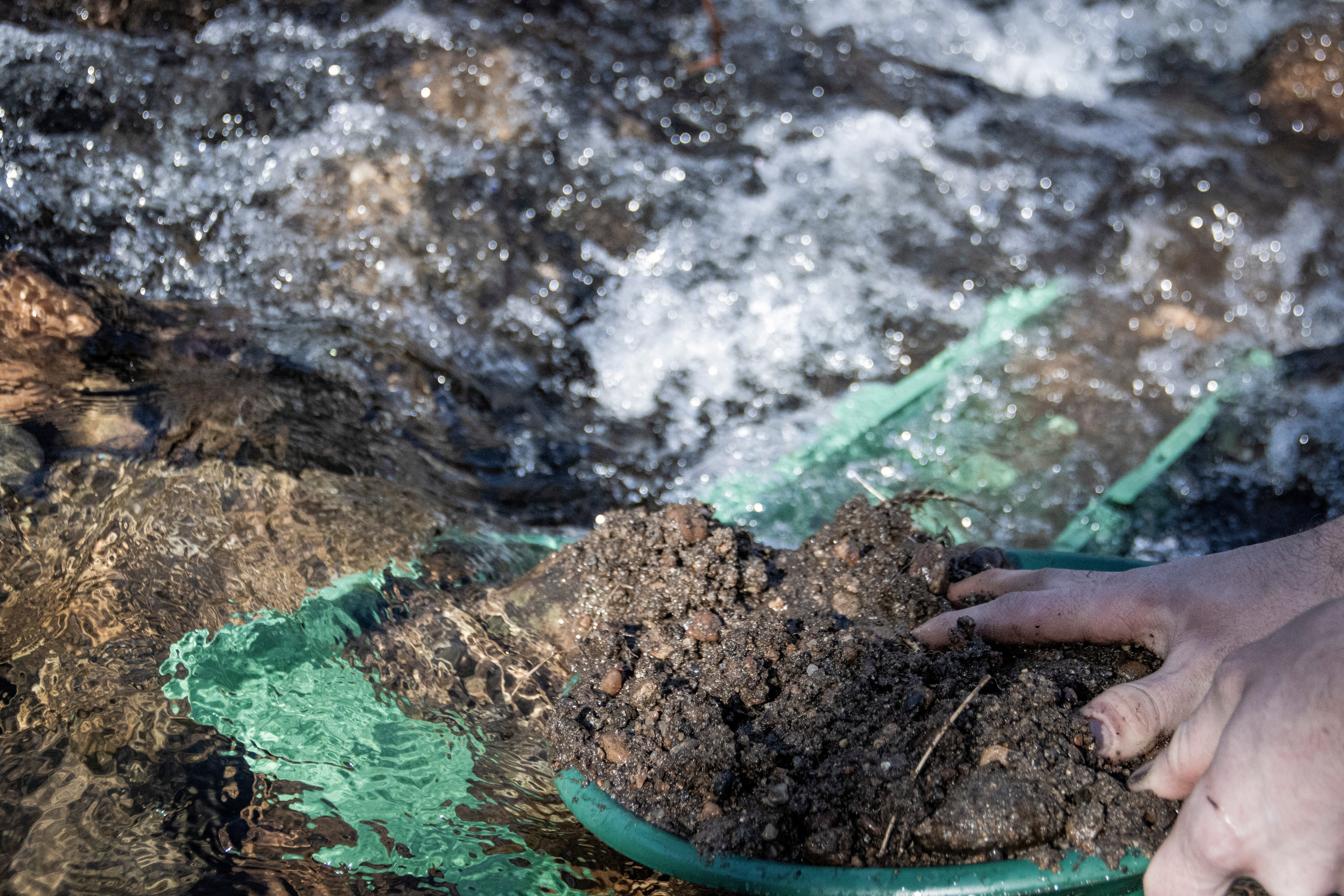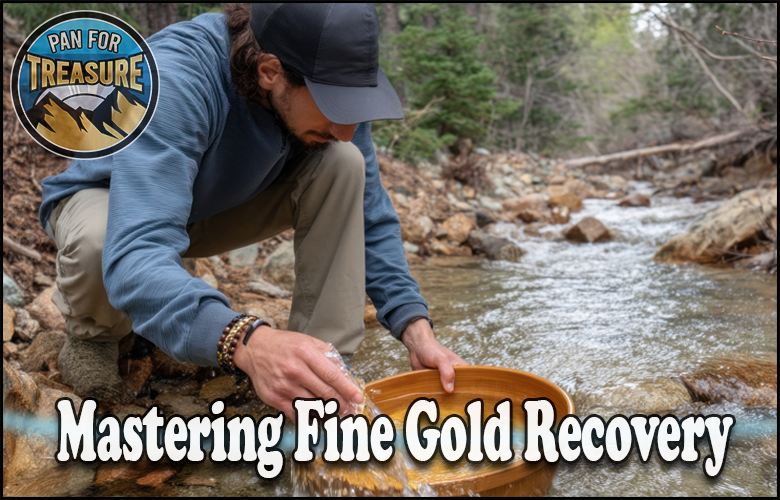
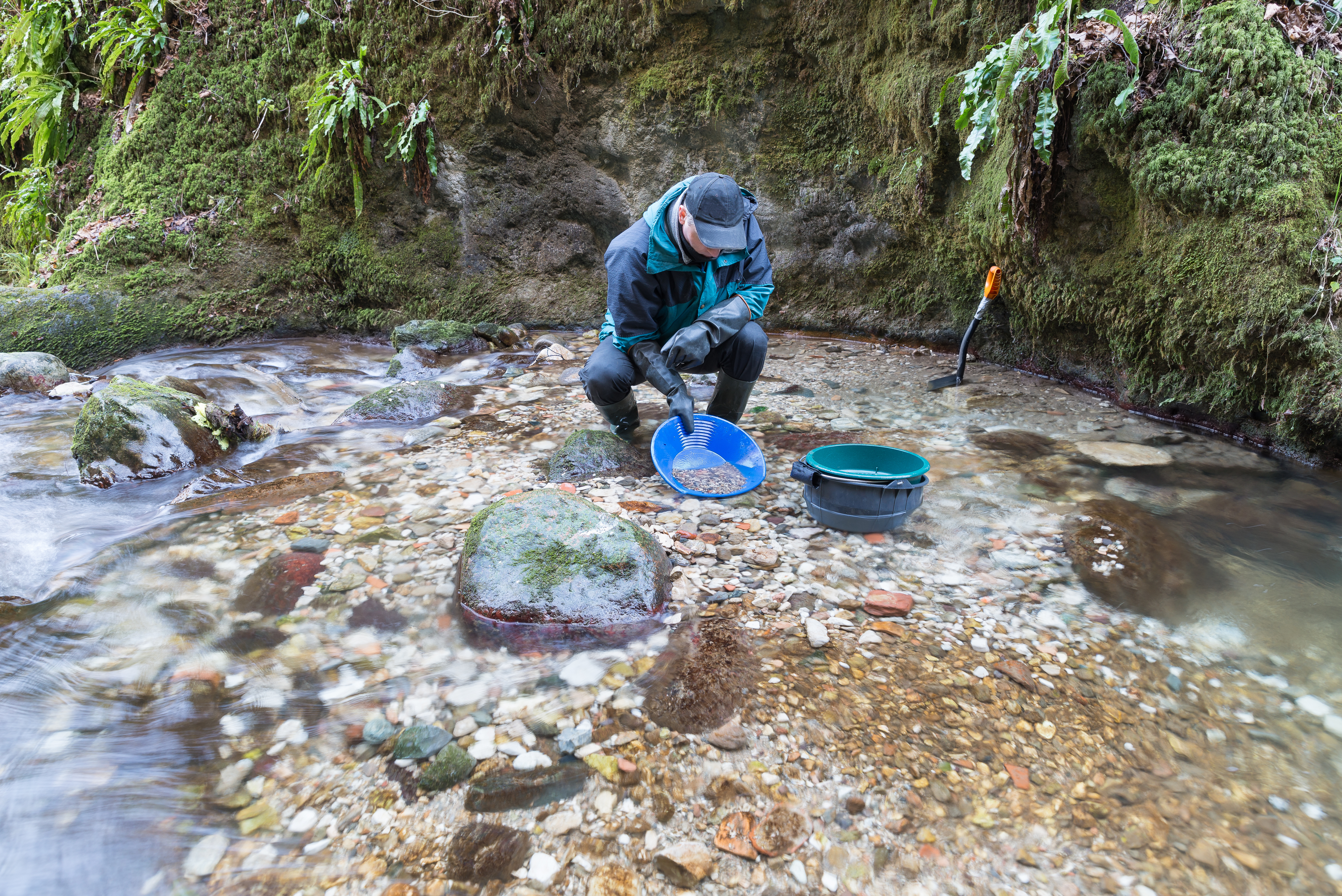
Gold panning is the simplest and most accessible way to find real gold, using nothing more than a pan, water, and patience to separate heavy gold from lighter sand and gravel. It is the foundation of all placer prospecting: cheap to start, easy to learn, and genuinely rewarding once you understand how gold behaves in moving water. Whether you are chasing a fun weekend hobby or building skills toward more serious prospecting, it all begins with the pan.
TL;DR
- What it is: separating heavy gold from sediment by swirling material and water in a pan.
- Why it works: gold is far denser than sand and gravel, so it sinks and stays put.
- Minimal gear: a pan, a classifier, a scoop, and vials will get you started.
- Location is everything: gold concentrates in specific spots, so read the water.
- Know the rules: always confirm land access and local regulations before you dig.
- Grows with you: panning is the gateway to sluicing and other placer methods.
How Gold Panning Works
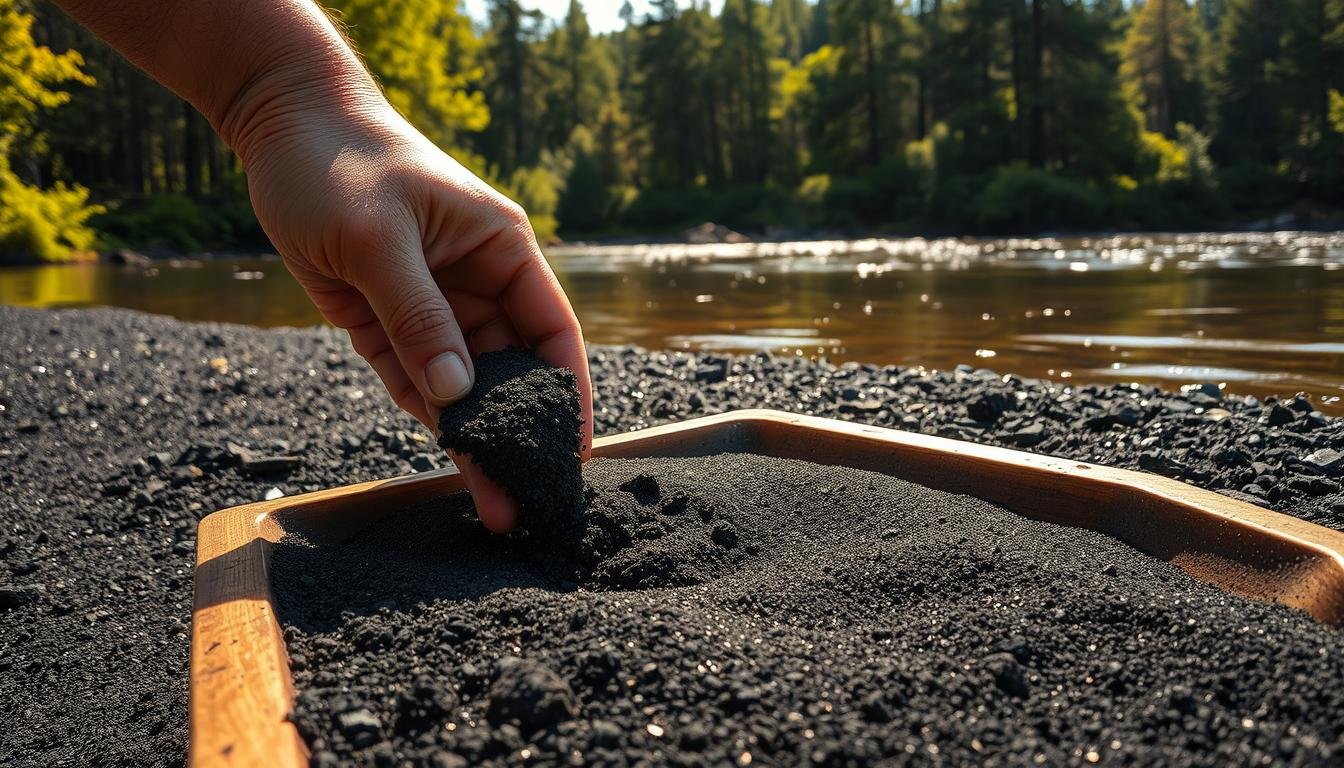
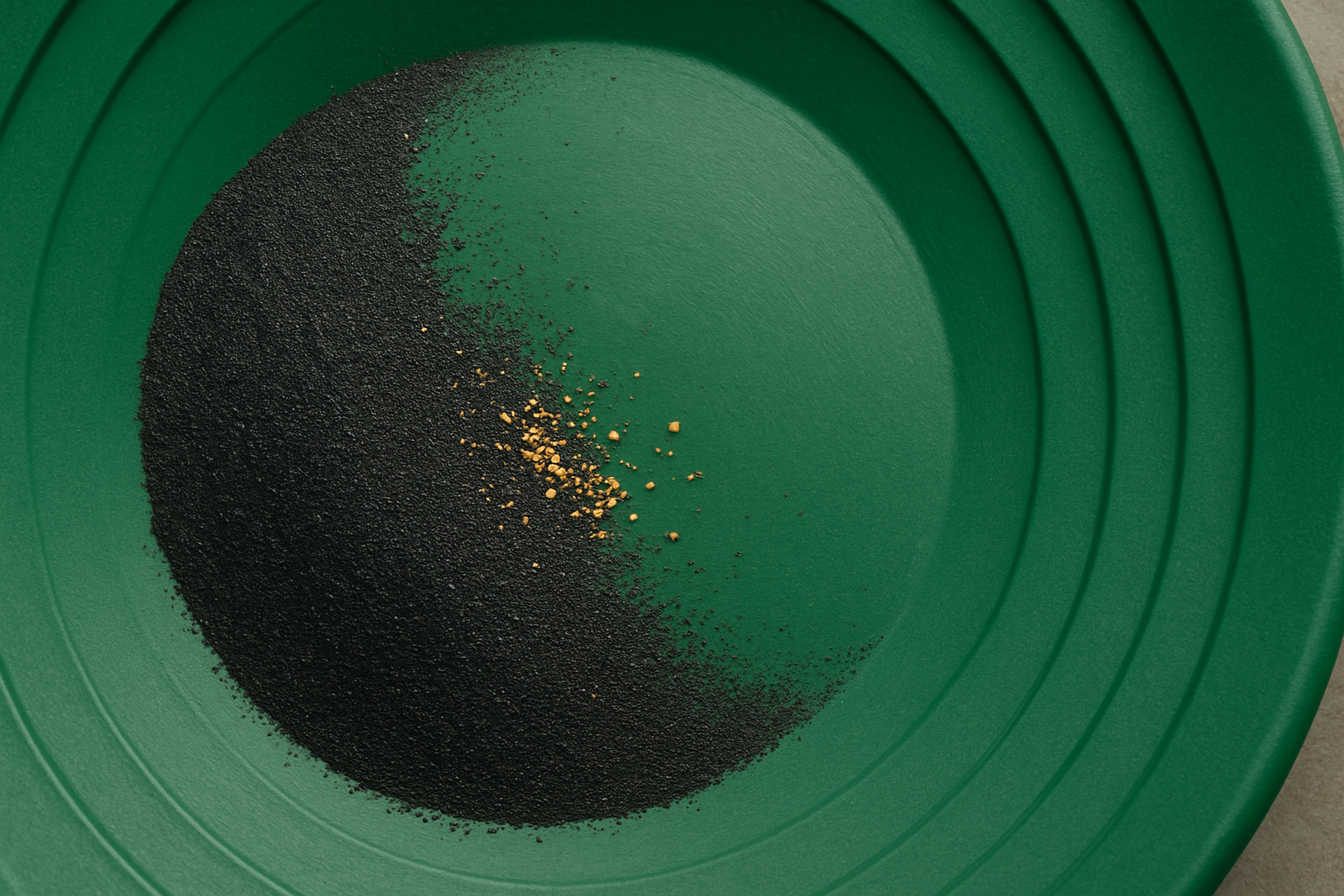
The whole method rests on one fact: gold is much heavier than almost everything else in a streambed. When you agitate a pan of gravel and water, the light material lifts and washes away while the dense gold sinks to the bottom and stays there. Master that idea and everything else is refinement.
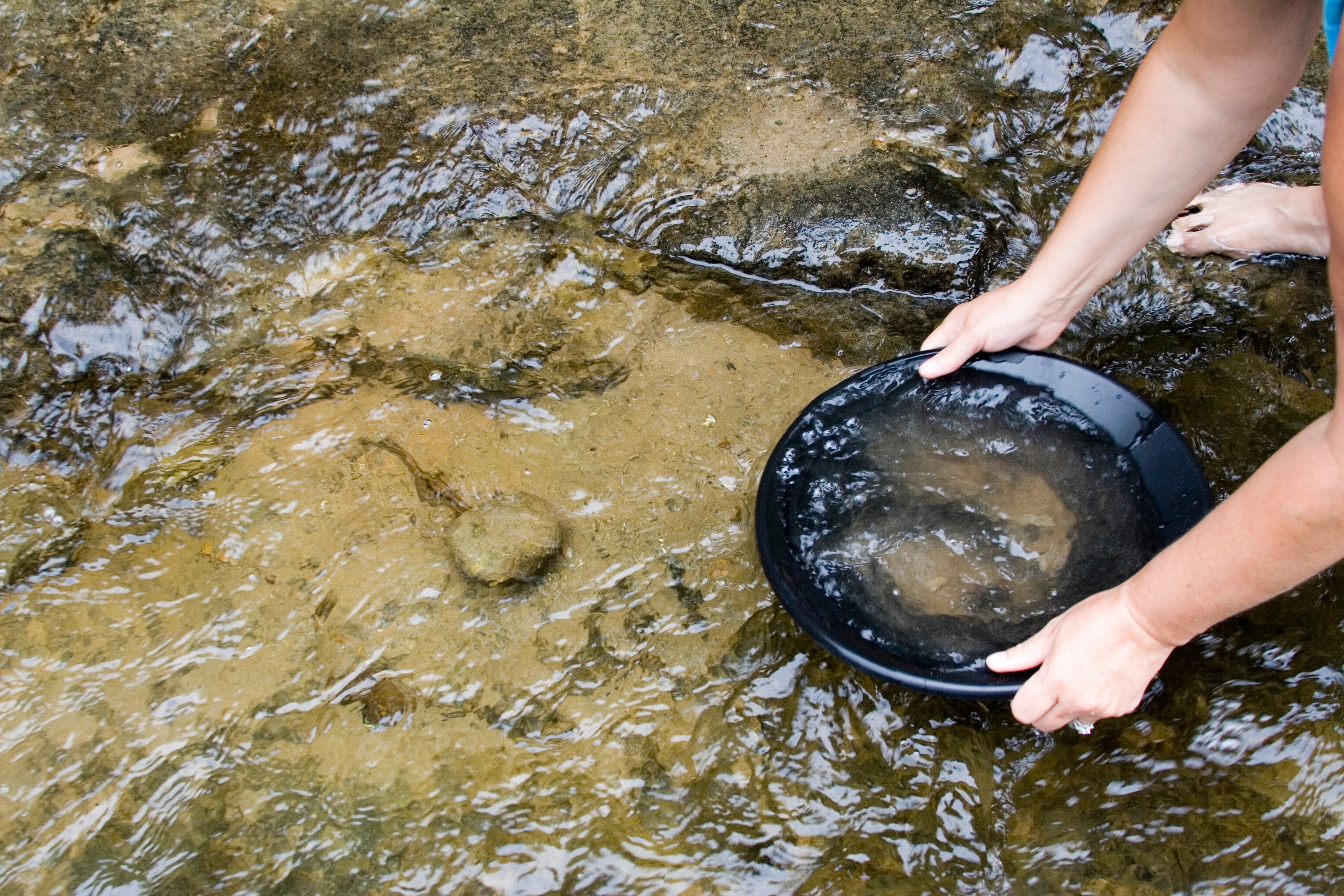
A pan does the same job a river does naturally, just faster and under your control. You are simply speeding up the sorting that moving water performs over centuries, concentrating the gold into the bottom of your pan where you can collect it.
| Material | Behavior in the Pan | Result |
|---|---|---|
| Gold | Very heavy, sinks fast | Settles and stays on the bottom |
| Black sand | Heavy but lighter than gold | Concentrates near the gold |
| Sand and gravel | Light, easily suspended | Washes out over the edge |
| Organic debris | Very light, floats | Rinses away first |
Our Favorite Posts
Basic Gold Panning Gear
One of the best things about this hobby is how little you need to begin. A modern plastic pan with molded riffles, a classifier screen, a small scoop, and a vial to store your gold will cover a first outing.
As you continue, you can add tools that make cleanup easier and let you process more material, but none of it is required to find your first color.
- A gold pan, ideally plastic with built-in riffles for catching fine gold.
- A classifier screen to remove large rocks before panning.
- A small scoop or trowel for digging material.
- A snuffer bottle and vials for collecting and storing gold.
- A magnet to help remove black sand during cleanup.
Where Gold Concentrates
Gold is not spread evenly through a stream. It collects wherever moving water slows down and loses the energy to carry it. Learning to read those spots is what separates productive panning from random digging.
Focus on the inside of bends, the downstream side of boulders, gravel bars, and any exposed bedrock. Bedrock especially, since gold sinks until something stops it, and cracks in bedrock are the ultimate trap. Testing these low-energy pockets gives you the best odds of finding color.
- Inside bends, where the current eases and drops heavies.
- Behind boulders and obstructions, in the calm water.
- Gravel bars, especially toward their upstream ends.
- On and just above bedrock, and in its cracks and crevices.
- Where fast water empties into slower pools.
Recommended Reading
Rules, Access, and Responsible Panning
Before you dig anywhere, make sure you are allowed to. Land can be public, private, or claimed, and each carries different rules. Confirming access and local regulations up front keeps the hobby legal and protects the spots everyone shares.
Public land agencies, local clubs, and county resources can help you understand where recreational panning is permitted and what methods are allowed. Practice good stewardship too: fill in your holes, pack out trash, and disturb as little as possible. Responsible panning keeps waters open and welcoming for the next person.
This is general information, not legal advice, so always verify the current rules for the specific place you plan to visit.
Resources for Gold Panning
- Bureau of Land Management (BLM) – Land status, claims, and rules for recreational prospecting on public lands.
- U.S. Geological Survey (USGS) – Maps and geologic information on gold-bearing areas.
- USDA Forest Service – Regulations for panning on National Forest lands.
- USGS Mineral Resources Online Spatial Data – Searchable maps of documented gold occurrences.
- Gold Prospectors Association of America (GPAA) – Clubs, claims, and education for prospectors.
Conclusion
Few outdoor hobbies deliver the thrill of seeing real gold appear in the bottom of your pan. The gear is cheap, the physics is simple, and the skills grow naturally from your very first outing toward sluicing and beyond.
Learn how gold moves, read the water for the spots where it collects, respect the rules and the land, and you will be set up for success. That is the enduring appeal of gold panning.
Frequently Asked Questions – Gold Panning
How does gold panning actually work?
Gold is much heavier than sand and gravel, so when you swirl material and water in a pan, the light stuff washes away while the dense gold sinks and stays on the bottom. You are speeding up the same sorting a river does naturally.
What equipment do I need to start?
Very little: a gold pan with riffles, a classifier screen, a small scoop, and a vial to store your gold. A snuffer bottle and a magnet help with cleanup. You can add more tools later, but this is enough to begin.
Do I need a plastic or metal pan?
A modern plastic pan with molded riffles is a great choice for beginners. It is lightweight, does not rust, and the riffles help catch fine gold. Many experienced panners use plastic pans for exactly these reasons.
Where should I look for gold in a stream?
Wherever moving water slows down: the inside of bends, behind boulders, along gravel bars, and on or in bedrock. These low-energy spots are where heavy gold drops out and concentrates, so they give you the best odds.
Why is bedrock so important?
Gold sinks until something stops it, and cracks in bedrock are the ultimate trap. Cleaning out crevices in exposed bedrock often produces the best results, so it is well worth digging down to reach it when you can.
Do I need permission to pan for gold?
Often, yes. Land may be public, private, or claimed, each with different rules. Always confirm access and local regulations before you dig. This is general information, not legal advice, so verify the rules for your specific spot.
Is gold panning hard to learn?
No. The basic motion takes just a little practice, and the underlying idea, letting heavy gold settle while light material washes away, is simple. Most people recover their first color within their first few trips.
Can panning lead to other prospecting methods?
Yes. Panning is the foundation of all placer prospecting. Once you are comfortable, the same principles carry over to sluicing and other methods that let you process more material and recover more gold.
Keep Exploring
For the bigger picture, start with our Gold Panning Tips and Tricks guide.
⛏ Recommended Gear ⛏


* As an Amazon Associate I earn from qualifying purchases at no extra cost to you.
Subscribe to Our Newsletter

Ryan Conlon is the founder of Pan for Treasure.
A lifelong gold panning enthusiast, he created this site to help beginners learn the ropes and share practical tips from his own time on the creek. [email protected]