

Sluice box efficiency comes down to four variables you control: box angle, water velocity, material classification, and feed rate.
Get those four right and a basic 24 inch aluminum sluice will hold most of the recoverable gold that passes through it. Get them wrong and the most expensive box on the market will blow gold out the back end all day.
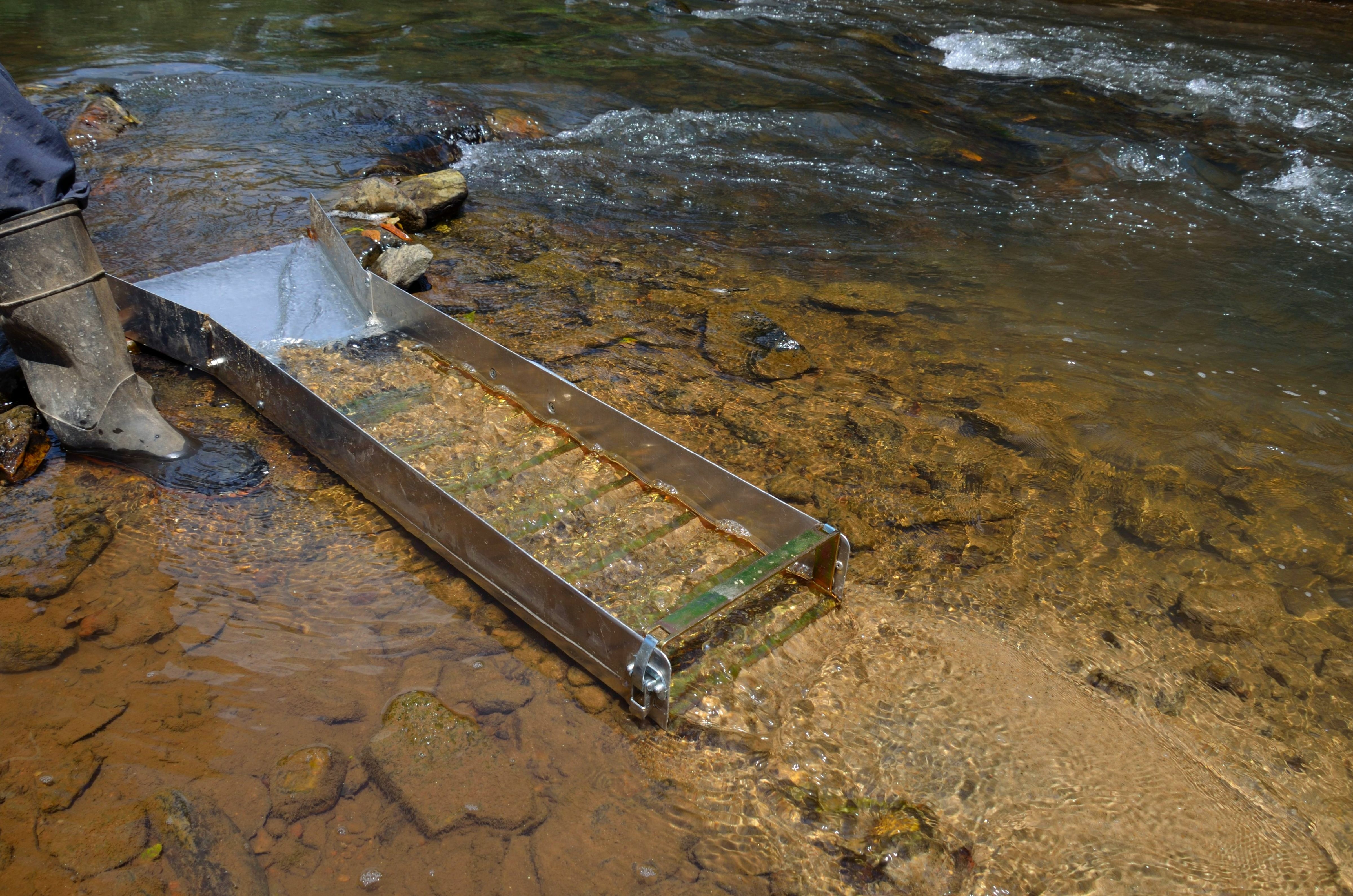
A sluice box is a long, narrow channel with riffles across the bottom. Water carries your gravel through, the current stalls in the low pressure pockets behind each riffle, and heavy gold drops out while lighter rock keeps moving.
That exchange behind the riffles is the whole machine. Everything in this article is about protecting it.
TL;DR
- Angle first. Set roughly 1 inch of drop per foot of box length, then fine tune by watching the riffles.
- Water speed check. The right flow moves a walnut sized rock through in 3 to 5 seconds and keeps the riffles half exposed, half loaded.
- Classify your feed. Screening to half inch or quarter inch before it hits the box is the single biggest efficiency gain available.
- Feed slow and steady. Dumping a full shovel at once buries the riffles and flushes fine gold.
- Read the concentrates. Gold behind the first third of the riffles means the box is tuned; gold near the discharge end means you are losing some.
- Clean up before the riffles pack. A riffle packed solid with black sand stops exchanging and stops catching.
How a Sluice Actually Catches Gold
Gold is dense, around 19 times heavier than water and roughly 7 times heavier than the average creek gravel it travels with.
When flowing water hits a riffle, it forms a rolling vortex on the downstream side. That vortex constantly stirs the material sitting behind the riffle, kicking out light sand and letting anything heavy settle deeper.
Prospectors call this exchange. A healthy sluice shows loose, lively material dancing behind each riffle, with the heaviest layer, black sand and gold, hugging the bottom.
The matting under the riffles does the fine work. Ribbed rubber, miner’s moss, or vortex cell mats give flour gold thousands of tiny dead zones to hide in. We compare the options in our guide to sluice mat materials.
The Four Controls of Sluice Box Efficiency
- Angle. Start at 1 inch of drop per foot. A 36 inch box gets about 3 inches of fall from feed end to discharge. Too steep and the vortexes blow out; too flat and sand packs the riffles solid.
- Water velocity. You want enough current to clear a small rock in a few seconds. In a creek, that means placing the box where flow narrows, not necessarily where it looks fastest on the surface.
- Classification. Screen the feed. A quarter inch classified feed lets you run a gentler flow, and gentler flow holds more fine gold. Rocks larger than the riffle height roll through and gouge out your concentrates on the way.
- Feed rate. Add material in half scoops, waiting until the previous scoop has mostly cleared. The riffles should never disappear under gravel for more than a second or two.
Each control interacts with the others. Coarser feed needs more water, more water needs a shallower angle, and a shallow angle needs a slower feed. Tune one variable at a time and watch the riffles after every change.
Sluice Types and What They Trade Off
| Type | Typical Size | Water Source | Best For |
|---|---|---|---|
| Stream sluice | 24 to 50 inches | Natural current | Most prospectors, most creeks |
| Folding / backpack sluice | 24 to 36 inches folded to half | Natural current | Hike-in spots, travel |
| Highbanker | 36 to 60 inches with hopper | Gas or 12V pump | Working gravel above the waterline |
| Power sluice / dredge combo | 48 inches and up | Pump, high volume | Production work where legal |
For creek work, a standard aluminum stream sluice is the efficiency sweet spot: nothing to fuel, nothing to prime, and the whole rig weighs under 10 pounds.
Highbankers and power sluices process more yards per hour but add permits in many states, so check your local rules before buying one. Our sluice box roundup compares current models by these criteria.
What to Look For When Buying
Judge any sluice against measurable specs rather than marketing copy:
- Riffle design: Hungarian style angled riffles hold coarse gold well; paired with good matting they handle fines too.
- Riffle spacing around 2 to 4 inches: tighter spacing suits fine gold streams, wider suits coarse gold.
- Removable riffle tray with wing nuts or cam locks, because cleanup happens in moving water with cold hands.
- Flared feed end, which smooths the incoming flow and adds usable current in slow creeks.
- Aluminum body around 5 to 8 pounds: stiff enough not to twist, light enough to pack.
- Matting you can actually replace: standard widths beat proprietary inserts when a mat wears out mid season.
With gold trading around $4,000 per troy ounce, even a small improvement in fine gold retention pays for a good box quickly if you sluice regularly.
Resources for Sluice Box Prospectors
- USGS: Prospecting for Gold in the United States – placer gold basics and where sluicing methods came from.
- BLM Mining and Minerals Program – casual use rules for sluicing on BLM land.
- US Forest Service – regulations for prospecting in national forests, where many sluicing creeks sit.
- Gold Prospectors Association of America – member claims where sluicing is pre-approved, plus gear clinics.
- TreasureNet Forums – decades of sluice tuning threads and cleanup photos from real users.
Conclusion
A sluice box multiplies what a pan can do. The same hour that pans one bucket of gravel will sluice five or six, and a tuned box loses very little to the tailings pile.
Set the drop at an inch per foot, classify the feed, keep the scoops small, and read what the riffles tell you. For step-by-step field setup, see our full guide to sluicing best practices.
Master those habits and your sluice box efficiency will match gear costing five times as much.
Frequently Asked Questions – Sluice Box Efficiency
What angle should a sluice box be set at?
Start at 1 inch of drop per foot of box length and adjust from there. Steepen slightly for heavy clay feed, flatten slightly for fine gold streams.
How fast should water flow through a sluice?
Fast enough to move a walnut sized rock through in about 3 to 5 seconds. The riffles should stay visible with loose material churning behind them, never buried solid.
Do I need to classify material before sluicing?
It helps more than any other change. Screening to half inch or quarter inch lets you run gentler water, and gentler water holds far more fine gold.
How often should I clean up my sluice?
When the material behind the riffles packs hard or turns mostly black sand, usually every 1 to 3 hours of steady feeding. A packed riffle has stopped catching.
Where should gold sit in the sluice?
Mostly behind the first few riffles. If you find gold in the bottom third of the box during cleanup, slow your feed or flatten the angle because some is escaping.
Are longer sluice boxes more efficient?
Longer boxes give escaping gold more chances to settle, but a well tuned 36 inch box beats a poorly tuned 50 inch box. Tune before you upgrade.
Is a sluice box better than panning?
For volume, yes, roughly five times the gravel per hour. You still finish your concentrates in a pan, so the two tools work together rather than compete.
⛏ Recommended Gear ⛏


* As an Amazon Associate I earn from qualifying purchases at no extra cost to you.
Subscribe to Our Newsletter

Ryan Conlon is the founder of Pan for Treasure.
A lifelong gold panning enthusiast, he created this site to help beginners learn the ropes and share practical tips from his own time on the creek. [email protected]