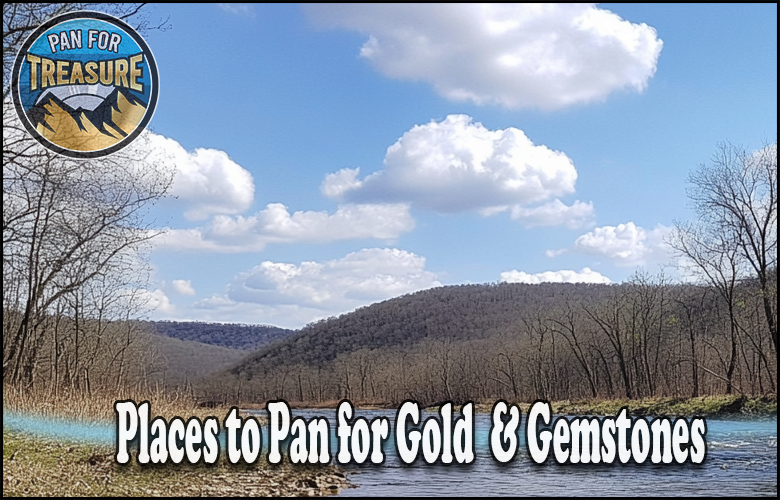

Is there gold in Connecticut? In very small amounts, yes. Connecticut has no recorded commercial gold production and has never experienced a gold rush, but fine glacial gold can be found in streams throughout the state. Most of this gold was carried south from Canada by glaciers during the last Ice Age and deposited in the state’s river gravels and glacial till.
Litchfield County in the northwestern corner of the state has the most documented gold occurrences. Leadmine Brook near Thomaston, the Farmington River northwest of Hartford, and Spruce Brook near Naugatuck have all produced fine gold for recreational prospectors.
Connecticut is not a gold destination by any measure. Panning for several hours in a known gold-bearing area might produce a few specks of flour gold if you are lucky. But for hobbyists who enjoy being outdoors and want to try their hand at prospecting close to home, there are options. For panning regulations, see our gold panning laws in Connecticut guide.
TL;DR
- Gold Present: Trace amounts only. No commercial gold production has ever been recorded in Connecticut.
- Best Region: Litchfield County in northwestern Connecticut, particularly Leadmine Brook near Thomaston and the Farmington River.
- Gold Type: Extremely fine flour gold (tiny flakes and dust) deposited by glaciers. No significant nuggets have been documented.
- Top Spot: Leadmine Brook, a tributary of the Naugatuck River north of Thomaston, is the most frequently cited gold-bearing stream in the state.
- Legal Note: Connecticut has very little public land compared to western states. Most land is privately owned, so permission is required. Check local regulations before panning in any waterway.
- Verdict: Connecticut is one of the weakest gold states in the country. Recreational prospectors should set expectations very low and consider it a fun outdoor hobby rather than a serious gold-finding endeavor.
Geology
Precambrian and Paleozoic metamorphic rocks with minor gold occurrences. Most placer gold is glacial in origin, transported from northern sources during the Pleistocene ice ages.
Historical Production
No recorded commercial gold production. Gold has been found as a trace mineral at a few mine sites and in scattered placer occurrences across the state.
Best Area
Litchfield County in northwestern Connecticut, where Precambrian crystalline rocks and glacial deposits combine to produce the state’s most consistent (though still very small) gold occurrences.
Active Claims
Virtually none. Connecticut has no BLM land and very little federal land open to mineral entry. The state’s gold potential has never attracted commercial mining interest.
Primary Gold Type
Extremely fine flour gold (microscopic flakes and dust) in stream gravels. Occasional lode gold traces in quartz veins associated with old cobalt and base metal mine sites.
Best Season
Late spring through fall when streams are accessible and water levels are moderate. After spring rains and snowmelt can expose fresh material in creek beds.
Where Is There Gold in Connecticut?
Connecticut ranks #44 of 50 for gold potential.
Quick reference below – details on each location follow, or jump to the Connecticut map.
| Location / Area | River / Creek | County | Gold Type | Land Access |
|---|---|---|---|---|
| Leadmine Brook | Leadmine Brook, Naugatuck River | Litchfield | Fine gold | Not listed |
| Farmington River | Farmington River, Connecticut River | Hartford, Litchfield | Fine placer gold | Public access |
| Spruce Brook | Spruce Brook, Naugatuck River | New Haven | Not listed | Not listed |
| Salmon River near Colchester | Salmon River | Middlesex | Placer gold | State forest; Public access |
| Housatonic River | Housatonic River | Litchfield, Fairfield | Flour gold | Not listed |
| East Haddam Area | Connecticut River | Middlesex | Fine gold | Not listed |
Is there gold in Connecticut in any meaningful concentration? The honest answer is barely. The state has no gold mining districts, no documented commercial production, and only scattered reports of trace gold from a handful of locations. However, geologists have confirmed that virtually every river and stream in Connecticut contains at least some gold, mostly of glacial origin.
Litchfield County (Northwestern Connecticut)
Litchfield County has the most documented gold occurrences in Connecticut. The county sits on Precambrian crystalline rocks, including some of the oldest formations in the Appalachian chain, dating back to the Grenville orogeny approximately 1.2 billion years ago.
These ancient metamorphic rocks, combined with glacial deposits that transported gold-bearing material from Canada, make this area the best bet for recreational prospectors. The towns of Thomaston, Harwinton, Torrington, and the surrounding area have the most reports.
The Naugatuck River Watershed
The Naugatuck River and its tributaries in western Connecticut have produced the most consistent reports of placer gold in the state. Leadmine Brook, Spruce Brook, and other small tributaries have all yielded fine gold for recreational panners.
The gold here is almost always extremely fine textured. Careful panning technique is required to retain the tiny flakes, and even experienced prospectors report finding only a few specks after hours of work.
The Connecticut River and Eastern Tributaries
The Connecticut River, the state’s largest waterway, and its tributaries have scattered gold reports. The Farmington River northwest of Hartford is a sizable tributary known to contain very fine placer gold deposits.
In the eastern part of the state, the Salmon River near Colchester and the Quinebaug River near Thompson have been mentioned as areas with prospecting potential, though documentation is sparse.
The Cobalt Discovery
One of the more interesting gold stories in Connecticut involves the old cobalt mines on Great Hill near the town of Cobalt, along the Connecticut River. Gold assaying as high as 6 ounces per ton was discovered in the quartzite overlying the cobalt deposit, a finding that had been completely overlooked by the original miners.
The USGS confirmed the assay results. The earlier miners had cut straight through the gold-bearing quartzite without realizing it was there. This site is on private property and is not being mined, but it raises questions about what other overlooked gold occurrences might exist in the state’s old mine workings.
Our Favorite Posts
Best Places to Look for Gold in Connecticut
Given that is there gold in Connecticut gets a very qualified “barely,” here are the locations most commonly mentioned by prospectors, ranked by the likelihood of finding anything.
- Leadmine Brook (Litchfield County): The most frequently cited gold-bearing stream in Connecticut. It is a tributary to the Naugatuck River just north of Thomaston and above the Thomaston Dam. The upper end of Leadmine Brook can be found in the Harwinton area along Birge Park Road and Hill Road. Fine gold can be found throughout the brook by carefully panning the gravels. Focus on bedrock crevices and areas where fine gold would naturally settle. A quality classifier screen will help you process material efficiently.
- Farmington River (Hartford and Litchfield Counties): A sizable tributary to the Connecticut River, the Farmington River northwest of Hartford is known to contain very fine placer gold deposits. The New York Times ran a story in 1990 about gold prospecting along the Farmington, documenting the tiny flakes of Connecticut gold found there. Public access is available at several points along the river.
- Spruce Brook (New Haven County): A small tributary to the Naugatuck River that caused brief excitement when gold was first discovered there. Located along the main road along the Naugatuck River just south of the town of Naugatuck, with the upper end intersecting Hunters Mountain Road. Like other Connecticut gold locations, quantities are very small.
- Salmon River near Colchester (Middlesex County): The Salmon River winds through forested areas and provides potential spots for finding small amounts of placer gold. Salmon River State Forest offers some public access. The area has interesting geology, with old mining sites nearby that may have contributed trace gold to local waterways.
- Housatonic River (Litchfield and Fairfield Counties): Connecticut’s largest river by volume flows through the gold-bearing geology of western Connecticut. While not heavily documented as a gold producer, the river drains areas with known mineralization and may reward persistent prospectors with fine flour gold.
- East Haddam Area (Middlesex County): Located on the eastern banks of the Connecticut River, this area has old mine workings and geological formations that suggest gold potential. Local glacial activity contributed to the presence of fine gold in area streams and tributaries.
Geology of Gold in Connecticut
Connecticut’s gold story is primarily one of glacial transport rather than local geology, though the state does have some native gold-bearing rock formations.
During the Pleistocene ice ages, massive glaciers advanced southward from Canada across New England, scraping up rock, soil, and mineral deposits as they moved. Some of this glacially transported material contained gold from gold-bearing formations in Quebec and northern New England. When the glaciers melted, they deposited this material across Connecticut as glacial till, eskers, and outwash plains.
Over thousands of years, streams and rivers have reworked this glacial material, concentrating the heaviest particles (including gold) in bedrock crevices, behind boulders, and in gravel bars. This is why virtually every stream in Connecticut contains at least trace amounts of gold.
Connecticut also has native gold occurrences in its bedrock. The Precambrian metamorphic rocks of northwestern Connecticut, particularly in Litchfield County, contain magnetite deposits that are known in other Appalachian states to carry trace gold. The old cobalt mine discovery near the town of Cobalt demonstrated that gold can occur in the state’s quartz veins and associated mineralization.
However, Connecticut lacks the large-scale hydrothermal systems, volcanic activity, and mountain-building events that create significant gold deposits in states like Colorado or California. The gold that exists here is diffuse, low-grade, and scattered.
Recommended Reading
What Type of Gold Can You Find in Connecticut?
The gold found in Connecticut is almost exclusively extremely fine flour gold. These are microscopic flakes and dust particles that are difficult to see with the naked eye and very challenging to recover, even with careful panning technique.
No significant nuggets or even visible pickers have been reliably documented from Connecticut streams. The gold is typically found mixed with fine black sand in the bottom of a gold pan after processing several buckets of gravel. Mica, which is abundant in Connecticut streams, can be easily confused with gold by beginners.
The Cobalt mine discovery represents an exception. The gold found in quartzite at that site assayed at up to 6 ounces per ton, which is high-grade by any standard. But this is a lode occurrence on private property, not something accessible to recreational prospectors.
Tips for Gold Prospecting in Connecticut
- Set realistic expectations. Connecticut is one of the weakest gold states in the country. Panning for several hours in a known gold-bearing area might produce a few specks of flour gold. Treat it as a fun outdoor hobby, not a gold-finding mission.
- Master fine gold recovery technique. Because Connecticut gold is so fine, you need excellent panning skills to retain it. Practice with a quality gold pan and learn to slow down during the final stages of panning. A snuffer bottle is helpful for picking up tiny flakes.
- Learn to distinguish gold from mica. Connecticut streams are loaded with mica flakes that glitter in the pan and can fool beginners. Gold stays in the bottom of your pan; mica floats and washes away easily. Gold does not break when pressed with a pin; mica crumbles.
- Respect private property. Connecticut has very little public land. Most streams and rivers flow through private property. Always get permission from landowners before panning on private land. Some state forests and parks may allow recreational panning, but check specific rules first.
- Focus on Litchfield County. If you are serious about finding gold in Connecticut, concentrate your efforts in northwestern Connecticut where the documented occurrences are strongest. Leadmine Brook and the Farmington River are your best bets.
- Pan to bedrock. In Connecticut streams, the finest gold settles to bedrock and clay layers. Dig down to these hard surfaces and clean out crevices with a crevicing tool. This is where the heaviest gold concentrates.
- Consider joining the Nutmeg Prospectors. The Nutmeg Prospectors is a GPAA chapter based in Canterbury, Connecticut. Local clubs can share knowledge about productive areas and provide access to claimed or permitted sites.
Resources
- Connecticut Department of Energy and Environmental Protection (DEEP) for information on state lands, fishing access areas, and regulations that may affect prospecting.
- Connecticut Geological Survey for geological maps and the Bedrock Geological Map of Connecticut, which is helpful for identifying gold-bearing formations.
- RareGoldNuggets.com: Gold in the Creeks and Rivers of Connecticut for a summary of known gold-bearing waterways.
- Gold Rush Nuggets: Gold in Connecticut for an overview of the state’s gold potential and prospecting tips.
- New England Towns: Gold and Gold Mining in New England for context on gold occurrences across the region.
Conclusion
Is there gold in Connecticut? Technically, yes. Virtually every stream in the state contains at least trace amounts of glacially deposited gold, and a handful of lode occurrences have been documented in the state’s older metamorphic rocks. But Connecticut has no commercial gold production history, and even the best locations produce only specks of flour gold after hours of panning.
For recreational prospectors in Connecticut, the best approach is to head to Litchfield County, focus on Leadmine Brook or the Farmington River, and enjoy the experience of being outdoors while learning to pan. If you want to find more gold, consider day trips to nearby states like Vermont or Maine, which have richer deposits and are not far away.
Ready to explore more gold states? Check out our guides for nearby states: Is There Gold in New York?, Is There Gold in Massachusetts?, Is There Gold in Rhode Island?, and Is There Gold in Vermont?. Or browse the full state directory to find gold near you.
Frequently Asked Questions – Is There Gold in CT
Has gold ever been found in Connecticut?
Yes, in very small amounts. Fine glacial gold has been found in streams throughout the state, particularly in Litchfield County. Gold assaying as high as 6 ounces per ton was also discovered in quartzite at the old cobalt mines near the town of Cobalt. However, Connecticut has no recorded commercial gold production.
Can you pan for gold in Connecticut?
Gold panning is possible in Connecticut, but most of the state is privately owned, so you need landowner permission in most cases. Some state forests may allow casual panning, but check specific rules. There is no BLM or federal land open to mineral entry as in western states.
Where is the most gold in Connecticut?
Litchfield County in northwestern Connecticut has the most documented gold occurrences. Leadmine Brook near Thomaston is the most frequently cited gold-bearing stream. The Farmington River northwest of Hartford and Spruce Brook near Naugatuck have also produced fine placer gold.
What kind of gold is found in Connecticut?
Nearly all gold found in Connecticut is extremely fine flour gold, meaning tiny microscopic flakes and dust deposited by glaciers during the Ice Age. No significant nuggets have been documented. The gold is typically recovered by carefully panning stream gravels in known gold-bearing areas.
Is Connecticut good for gold prospecting?
No. Connecticut is one of the weakest gold states in the country, with no commercial production history and only trace amounts of glacially deposited flour gold in its streams. Recreational prospectors can find a few specks of gold with patience and skill, but quantities are very small. Nearby states like Vermont and Maine offer better gold prospecting opportunities.
Where does Connecticut’s gold come from?
Most gold in Connecticut was transported from Canada and northern New England by glaciers during the Pleistocene ice ages. As the glaciers melted, they deposited gold-bearing material across the state. Streams and rivers have since reworked this glacial material, concentrating trace amounts of gold in bedrock crevices and gravel bars. The state also has minor native gold occurrences in its Precambrian metamorphic rocks.

⛏ Recommended Gear ⛏


* As an Amazon Associate I earn from qualifying purchases at no extra cost to you.
Subscribe to Our Newsletter

Ryan Conlon is the founder of Pan for Treasure.
A lifelong gold panning enthusiast, he created this site to help beginners learn the ropes and share practical tips from his own time on the creek. [email protected]