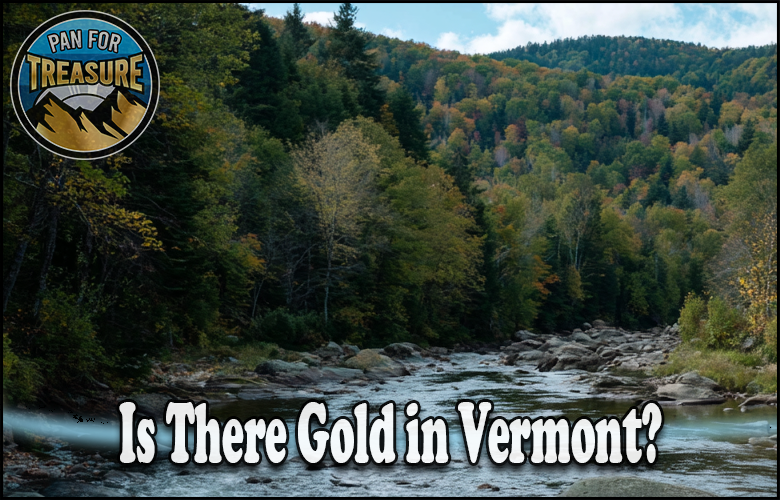
Is there gold in Vermont? Yes, and the Green Mountain State had its own mini gold rush that lasted over 30 years. Beginning in the 1850s, the Plymouth and Bridgewater area of south central Vermont became home to a mining boom. At its peak, over 100 people worked in Bridgewater gold mines (more than worked on farms), and by some accounts Vermont had 40 to 50 mines. The Rooks Mining Company reported extracting $68,070 in gold during its first year of operation in 1883, and stockholders received 12% returns.
Gold nuggets were first discovered in Vermont in 1826 in Newfane and Somerset. In 1851, returned California Forty Niner Matthew Kennedy discovered gold bearing ore in Buffalo Brook at Plymouth, sparking the rush. By 1855, prospectors had staked claims throughout the area, and Plymouth Five Corners grew into a bustling village with a gold mill, crusher, sawmill, boarding house, hotels, and saloons. In the 1880s, seven mining companies were operating simultaneously.
Today, Buffalo Brook at Camp Plymouth State Park remains a popular recreational gold panning destination. Gold flakes along the spine of the Green Mountains are mapped on historic 1861 geological surveys, and gold can still be found in streams throughout the Plymouth and Bridgewater area and across much of Vermont.
TL;DR
- Gold Present: Yes. The Plymouth/Bridgewater area saw 40 to 50 mines. The Rooks Mining Company earned $68,070 in gold in its first year (1883). William Hankerson reportedly recovered $13,000 in his first two years. An 1860 census listed 52 gold miners in Plymouth alone. Gold never commercially viable.
- Best Region: Plymouth and Bridgewater (Windsor County), east of Killington Peak. The Ottauquechee River and its tributaries. Buffalo Brook at Camp Plymouth State Park is the most popular spot. Gold Brook in Stowe. Streams throughout the Green Mountains.
- Gold Type: Both lode gold in quartz veins and placer gold in stream gravels. Lode mining (hard rock) was the primary method in Bridgewater. Placer mining (sluicing) dominated in Plymouth. Fine flakes to occasional nuggets in stream gravels.
- Top Spot: Buffalo Brook at Camp Plymouth State Park. The Ottauquechee River near Bridgewater. Broad Brook near Plymouth Five Corners. Gold Brook in Stowe (discovered by Captain Slayton, a returned Forty Niner, in 1855).
- Legal Note: Camp Plymouth State Park allows recreational gold panning. State forests and public waterways are generally accessible. Always check specific regulations. Private property requires permission. Many historic mine sites are on private land.
- Verdict: Vermont offers genuine gold prospecting with accessible public sites and a colorful history. The 30+ year mining boom produced real gold, and recreational prospectors still find flakes and occasional nuggets in Buffalo Brook and surrounding streams. Combined with Vermont’s scenic beauty, it is one of the best recreational prospecting experiences in New England.
Mining Boom
Over 100 people worked in Bridgewater mines, exceeding the farming workforce. Plymouth mining persisted for 30+ years (1851 to 1919). In the 1880s, seven companies operated simultaneously. An 1860 Burlington Times article reported 180 men working along the brook, earning $3 to $20 daily.
Rooks Mining Company
Organized 1882 in New York City. Purchased 400 acres in Plymouth. Built a large mine and refining mill. Reported $68,070 in gold in the first year. Stockholders received 12% returns. Issued a 47 page illustrated prospectus. Eventually went bankrupt in the late 1880s.
Discovery Story
1826: Gold nuggets found in Newfane and Somerset. 1851: Matthew Kennedy found gold bearing ore in Buffalo Brook. 1855: Captain Abial Slayton, returned California Forty Niner, found gold in Stowe (renamed “Gold Brook”). Enough gold coated the last spike of the Mount Mansfield Electric Railroad in 1887.
Plymouth Five Corners
William Hankerson (returned Forty Niner) found gold in 1855. In 1858 to 1859, washed several hundred dollars from a mill pond bottom. About $7,000 estimated mined in the town. A village grew: gold mill, crusher, sawmill, hotels, saloons, school, stores. Now a virtual ghost town with only cellar holes remaining.
Geology
1861 maps show gold lines along the spine of the Green Mountains, with concentrations near Plymouth and Bridgewater east of Killington Peak. Gold in quartz veins in metamorphic rocks of the Appalachian gold belt. Dr. C.T. Jackson (1854) said the “great Appalachian gold belt passed through Plymouth and Bridgewater.”
Henry Fox (The Gold Mine Hermit)
After the Rooks Mining Company went bankrupt, mine manager Henry Fox continued searching for gold alone. He became a hermit, living in the woods near the mine, and worked the site until his death in 1919. His persistence marked the end of active gold mining in Plymouth. The Fox Mine shaft can still be found in the woods.
Featured
Where Is There Gold in Vermont?
Vermont ranks #26 of 50 for gold potential.
Quick reference below – details on each location follow, or jump to the Vermont map.
| Location / Area | River / Creek | County | Gold Type | Land Access |
|---|---|---|---|---|
| Buffalo Brook at Camp Plymouth State Park | Buffalo Brook | Windsor | Fine gold | Not listed |
| Ottauquechee River near Bridgewater | Ottauquechee River | Windsor | Not listed | Not listed |
| Broad Brook near Plymouth Five Corners | Broad Brook | Windsor | Not listed | Not listed |
| Gold Brook in Stowe | Gold Brook, Hull's Brook | Lamoille | Not listed | Not listed |
| White River | White River, Connecticut River | Windsor, Orange | Not listed | Not listed |
| West River | West River | Windham | Not listed | Not listed |
| Mad River | Mad River | Washington | Not listed | Not listed |
| Lamoille River | Lamoille River | Lamoille | Not listed | Not listed |
Is there gold in Vermont that you can find today? Yes. The 1900 State Geologist concluded gold did not occur “in paying quantities” for commercial mining, but recreational prospectors regularly find gold flakes and occasional nuggets in Vermont streams. The Plymouth and Bridgewater area east of Killington Peak is the epicenter, and gold occurs along the spine of the Green Mountains.
Plymouth and Bridgewater (Windsor County)
This is the heart of Vermont’s gold country. Buffalo Brook, where Kennedy made his 1851 discovery, flows through Camp Plymouth State Park and remains the most popular panning destination. The Ottauquechee River near Bridgewater was a major mining area with over 100 workers. Broad Brook near Plymouth Five Corners was the scene of Hankerson’s successful sluicing operation, with 180 men working the brook in 1860.
Remnants of the old mines can still be found in the forest: mine shafts, tailing piles, ore cart tracks, and building foundations. The Rooks Mine on Buffalo Brook is accessible by walking upstream from Camp Plymouth State Park.
Green Mountain Streams
1861 geological maps show gold deposits along the spine of the Green Mountains from south to north. Gold has been found in many rivers and streams across Vermont, including the Cold River in Clarendon, Rock River in Newfane and Dover, West River in Townsend and Jamaica, Williams River in Ludlow, White River in Stockbridge and Rochester, Mad River in Warren and Waitsfield, Gold Brook in Stowe, Lamoille River in Johnson, and Missisquoi River in Lowell and Troy.
Our Favorite Posts
Best Places to Look for Gold in Vermont
- Buffalo Brook at Camp Plymouth State Park (Windsor County): The most famous and accessible panning site. Walk up the brook from the park to reach productive areas near the old Rooks Mine. Fine gold and occasional nuggets.
- Ottauquechee River near Bridgewater (Windsor County): One of the richest historic prospecting areas. Over 100 miners worked here. Gold throughout the river, with the Bridgewater area being most productive.
- Broad Brook near Plymouth Five Corners (Windsor County): Scene of Hankerson’s original discoveries. 180 men worked here in 1860. Now a ghost town with cellar holes, but the brook still carries gold.
- Gold Brook in Stowe (Lamoille County): Discovered by Captain Slayton in 1855. Originally called Hull’s Brook. Enough gold was found to coat a railroad spike in 1887. Popular tourist area with gold panning possibilities.
- White River (Windsor/Orange Counties): Major tributary of the Connecticut River. Flows through areas with potential gold from Green Mountain sources.
- West River (Windham County): Gold reported in Townsend and Jamaica. Southern Vermont gold area.
- Mad River (Washington County): Gold found in Warren, Waitsfield, and Moretown. Central Vermont location.
- Lamoille River (Lamoille County): Gold reported in Johnson area. Northern Vermont.
History and Geology of Gold in Vermont
Vermont’s gold story begins in 1826, when gold nuggets were first discovered in Newfane and Somerset. The California Gold Rush of 1849 prompted many Vermonters to head west, but it also inspired them to look more carefully at home. In 1851, Matthew Kennedy of Plymouth, while visiting his son in Bridgewater, noticed quartz specimens in a creek bed while hunting for bees. Professor Oliver Payson Hubbard of Dartmouth College identified them as gold bearing ore. Kennedy purchased the land where he made his find, sparking the Vermont Gold Rush.
By 1855, returned California Forty Niner William Hankerson set up an elaborate sluicing operation at Plymouth Five Corners, modeled on California methods. He reportedly recovered $13,000 in his first two years. The village of Five Corners boomed: a gold mill and crusher, sawmill, gristmill, boarding house, hotels, a post office, general stores, and saloons appeared. An 1860 newspaper reported 180 men working the brook, each earning $3 to $20 daily. The 1860 census listed 52 gold miners in Plymouth.
In Bridgewater, over 100 miners worked hard rock mines, making gold mining the community’s largest employer, surpassing farming. In 1854, Dr. C.T. Jackson of Boston reported opening a mine containing gold, silver, lead, and copper, and declared that the great Appalachian gold belt passed through Plymouth and Bridgewater.
The most ambitious venture was the Rooks Mining Company, organized in New York in 1882. They purchased 400 acres, opened a large mine, built a refining mill, and issued a 47 page illustrated prospectus. The company reported extracting $68,070 in gold during its first year and paying stockholders 12% returns. But the venture eventually went bankrupt in the late 1880s. After the collapse, mine manager Henry Fox became a hermit, living in the woods and searching for gold alone until his death in 1919.
Geologically, Vermont’s gold occurs in quartz veins within the metamorphic rocks of the Green Mountains, part of the Appalachian gold belt. Historic 1861 maps show thick gold lines along the mountain spine, with concentrations near Plymouth and Bridgewater. The placer gold in streams was derived from weathering of these quartz veins. The gold was real but never occurred in paying quantities for sustained commercial mining.
Recommended Reading
Tips for Gold Prospecting in Vermont
- Start at Camp Plymouth State Park. The park provides easy access to Buffalo Brook, Vermont’s most famous panning site. Walk upstream to reach more productive areas near the old mine sites. Remnants of the Rooks Mine are about a mile up.
- Bring proper gear. A gold pan, small shovel, and classifier are the basics. A sluice box greatly increases the volume of material processed. Focus on bedrock crevices and inside bends where heavy material settles.
- Explore the Bridgewater mines. Walk through the forest to find remnants of old mine shafts, tailing piles, and ore cart tracks. The Plymouth Notch to Bridgewater trail traverses mining country. Respect private property boundaries.
- Try the less prospected streams. Gold Brook in Stowe, the White River, and the West River are all documented gold producers. These get far less pressure than Buffalo Brook and may offer better finds to those willing to explore.
- Combine with a Vermont experience. The Plymouth area is near Killington ski resort, and Calvin Coolidge’s birthplace at Plymouth Notch is a short drive away. Vermont’s fall foliage, covered bridges, and local food make gold prospecting part of a larger adventure.
- Visit neighboring New Hampshire. The Ammonoosuc Gold District across the Connecticut River has more extensive gold deposits. Combine a Vermont trip with New Hampshire prospecting for the best New England gold experience.
Best Locations
- Is There Gold in Rhode Island? Top Locations and if It’s Worth the Trip
- Is There Gold in Washington? Top Locations and if It’s Worth the Trip
- Best Places to Pan for Gold and Gemstones in America
- Is There Gold in South Carolina? Top Locations and if It’s Worth the Trip
- Is There Gold in Oklahoma? Top Locations and if It’s Worth the Trip
Resources
- Legends of America: Vermont Gold for the complete history of Vermont’s gold rush, including the Cherokee maiden discovery legend and list of gold bearing streams.
- Rare Gold Nuggets: Vermont’s Placer Gold Deposits for detailed prospecting information on the Plymouth/Bridgewater area and other Vermont streams.
- Vermont Public: Gold in Vermont for modern reporting on Vermont’s gold history and current recreational prospecting.
Conclusion
Is there gold in Vermont? Yes, and the state’s 30+ year mining boom produced real results. Over 100 miners worked in Bridgewater alone, the Rooks Mining Company reported $68,070 in its first year, and returned California Forty Niners validated the deposits with their experienced eyes. Plymouth Five Corners grew into a village around gold mining before fading into a ghost town.
Today, Buffalo Brook at Camp Plymouth State Park is one of New England’s best recreational gold panning destinations. Gold flakes still wash from the Green Mountains into streams across the state. For the best Vermont gold experience, combine Buffalo Brook with exploring the historic mine ruins in the surrounding forest. For more New England gold, see Is There Gold in New Hampshire?, Is There Gold in Maine?, Is There Gold in Connecticut?, and Is There Gold in Massachusetts?. Browse the full state directory to find gold near you.
Frequently Asked Questions – Is There Gold in VT
Where is the best place to find gold in Vermont?
Buffalo Brook at Camp Plymouth State Park is the most popular and accessible site. The Ottauquechee River near Bridgewater and Broad Brook near Plymouth Five Corners are also excellent. Gold Brook in Stowe is a scenic secondary option.
Did Vermont really have a gold rush?
Yes. Beginning in the 1850s, the Plymouth and Bridgewater area saw a 30+ year mining boom. Over 100 miners worked in Bridgewater. Seven companies operated simultaneously in the 1880s. An 1860 newspaper reported 180 men working the brooks at Plymouth.
Is gold panning legal in Vermont?
Yes. Camp Plymouth State Park allows recreational panning. Public waterways are generally accessible. State forests may allow casual prospecting. Always check specific regulations and get permission on private property.
What type of gold is found in Vermont?
Both lode gold in quartz veins and placer gold in streams. Mostly fine flakes, but occasional nuggets are found. The gold weathers from quartz veins in Green Mountain metamorphic rocks.
⛏ Recommended Gear ⛏


* As an Amazon Associate I earn from qualifying purchases at no extra cost to you.
Subscribe to Our Newsletter

Ryan Conlon is the founder of Pan for Treasure.
A lifelong gold panning enthusiast, he created this site to help beginners learn the ropes and share practical tips from his own time on the creek. [email protected]