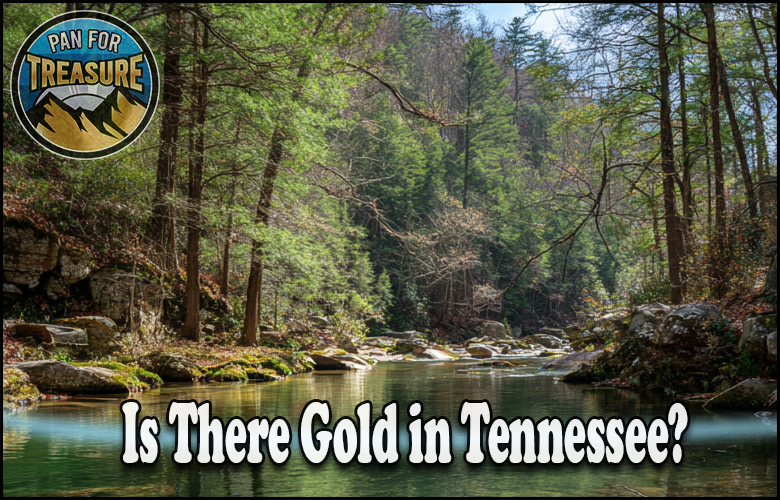
Is there gold in Tennessee? Yes, and the state’s gold story is concentrated in one remarkable area. Coker Creek in Monroe County, nestled in the Unicoi Mountains of the southern Appalachians, produced approximately 9,000 troy ounces of gold, which accounts for nearly all of Tennessee’s historical gold output. Gold was discovered here in 1827, while the area was still Cherokee land, and mining peaked from 1856 to 1860, when 600 to 700 prospectors worked the streams and uplands.
Tennessee’s first state geologist, Gerard Troost, visited Coker Creek in 1831 and found hundreds of miners engaged in “washing of the materials or rivulets, gulleys and other low places.” Official U.S. Mint tallies documented $269,422 in gold between 1831 and 1921, though local merchants estimated recovery at approximately $2 million by the 1890s. The Cherokee Indians had long known about the gold and feared white discovery. Legend says a Cherokee maiden revealed the secret at a dance in 1826 or 1827, changing the region’s history forever.
Today, sections of Coker Creek in the Cherokee National Forest are open for panning with a free permit. The GPAA maintains a claim on Coker Creek that is considered one of the better claims in the eastern United States.
TL;DR
- Gold Present: Yes. Coker Creek produced ~9,000 ounces, nearly all of Tennessee’s total output. U.S. Mint documented $269,422 (1831 to 1921). Local estimates suggest $2 million by the 1890s. Peak activity: 600 to 700 prospectors (1856 to 1860).
- Best Region: Coker Creek area in Monroe County (southeastern TN). The Tellico River and its tributaries. Streams draining the Unicoi Mountains along the North Carolina border. All within or near the Cherokee National Forest.
- Gold Type: Primarily placer gold in stream gravels. Occasional nuggets reported. Gold likely sourced from eroding quartz veins in the surrounding mountains, though no major lode source has been located. Fine to coarse placer gold.
- Top Spot: Coker Creek itself, particularly near Doc Rogers Field in the Cherokee National Forest. Buffalo Brook and Reading Pond Brook are also productive. The Tellico River may contain more gold than Coker Creek but is harder to prospect due to its size.
- Legal Note: Sections of Coker Creek in the Cherokee National Forest are open for panning with a free permit from the Forest Service. Register at the Coker Creek Welcome Center. GPAA maintains a claim on Coker Creek.
- Verdict: Tennessee offers genuine gold prospecting with excellent public access. Coker Creek is one of the best documented and most accessible placer gold sites in the Southeast. The Cherokee National Forest setting is beautiful. For more gold in the region, neighboring North Carolina and Georgia have larger deposits.
Production
About 9,000 troy ounces from the Coker Creek field, nearly all of Tennessee’s output. U.S. Mint tallied $269,422 (1831 to 1921). Local merchants estimated $2 million by the 1890s. All production came with light machinery only, suggesting remaining gold.
Cherokee Maiden Legend
The Cherokee Indians knew about the gold and feared white discovery. In 1826 or 1827, a Cherokee maiden at a dance reportedly showed a soldier a gold nugget dangling from her leather necklace and revealed it came from “Coqua” (Cherokee for Coker Creek). The discovery changed the region’s history.
Peak Mining
From 1856 to 1860, 600 to 700 prospectors (including enslaved people and freedmen) worked the streams and uplands. At Five Corners, William Hankerson washed several hundred dollars of gold from a mill pond bottom. About $7,000 was estimated washed in the town in 1858 to 1859.
Cherokee Removal
Gold discovery on Cherokee land was a factor in the Trail of Tears. Fort Armistead was built at Coker Creek to repel prospectors mining illegally on Cherokee land, but under President Andrew Jackson’s policy shift, the fort became a waypoint for Cherokee removal instead.
Famous Connections
Calvin Coolidge, 30th President, was born and grew up in nearby Plymouth, Vermont, but reportedly worked as a miner in the Coker Creek area as a young man. Tennessee’s eastern gold district also has a Pentecostal origin: the Christian Union (forerunner of the Church of God) was founded at Coker Creek in 1886.
Modern Prospecting
Cherokee National Forest sections of Coker Creek are open for panning with a free permit. Doc Rogers Field provides about 2/3 of a mile along productive sections. The GPAA maintains a claim considered one of the better eastern U.S. claims. Tellico River may have more gold but is harder to work.
Featured
Where Is There Gold in Tennessee?
Tennessee ranks #29 of 50 for gold potential.
Quick reference below – details on each location follow, or jump to the Tennessee map.
| Location / Area | River / Creek | County | Gold Type | Land Access |
|---|---|---|---|---|
| Coker Creek / Doc Rogers Field | Coker Creek | Monroe | Not listed | National forest |
| GPAA Coker Creek claim | Coker Creek | Not listed | Not listed | GPAA members only |
| Tellico River | Tellico River, Coker Creek | Monroe | Not listed | Not listed |
| Buffalo Brook and Reading Pond Brook | Buffalo Brook, Reading Pond Brook | Not listed | Not listed | Not listed |
| Streams near Coker Creek village | Coker Creek, Hiwassee River | Not listed | Not listed | Not listed |
| Citico Creek area | Citico Creek | Monroe | Not listed | National forest |
Is there gold in Tennessee that you can find today? Yes. The Coker Creek area remains an active recreational prospecting destination with free Cherokee National Forest permits available. The streams still carry placer gold washed from quartz veins in the surrounding mountains, and patient prospectors regularly find color.
Coker Creek (Monroe County)
Coker Creek is the undisputed gold center of Tennessee. The present stream gravels, together with bench and high terrace deposits, still hold placer gold, and occasionally nice sized nuggets are found. The gold is sourced from eroding quartz veins in the surrounding Unicoi Mountains, though no major lode source has been located. Doc Rogers Field in the Cherokee National Forest provides public access to some of the most productive stretches.
Tellico River
The Tellico River may actually contain more gold than Coker Creek, but its larger size makes prospecting more difficult. Dredgers have reported rich days working the river gravels, but the distribution of gold is spotty and requires extensive sampling. The river flows through the Cherokee National Forest, providing access.
Other Streams
Streams draining from Waucheesi Mountain and the Unicoi Mountains along the North Carolina border have potential for placer gold. The Hiwassee River, into which Coker Creek ultimately flows, may contain gold that has washed downstream over centuries.
Our Favorite Posts
- Best Places to Pan for Gold and Gemstones in America
- Is There Gold in Colorado? Top Locations and if It’s Worth the Trip
- Is There Gold in California? Top Locations and if It’s Worth the Trip
- Is There Gold in Idaho? Top Locations and if It’s Worth the Trip
- Is There Gold in Arizona? Top Locations and if It’s Worth the Trip
Best Places to Look for Gold in Tennessee
- Coker Creek / Doc Rogers Field (Monroe County): The most productive and accessible site. Free permits from Cherokee National Forest. About 2/3 mile of access along the most productive sections. Gets prospected heavily but still produces.
- GPAA Coker Creek claim: One of the better GPAA claims in the eastern U.S. Membership required. Access to sections of Coker Creek with known gold.
- Tellico River (Monroe County): Potentially more gold than Coker Creek but harder to work. A big river requiring sampling to locate rich spots. Sluice boxes recommended.
- Buffalo Brook and Reading Pond Brook: Tributaries near the historic mining area. Gold was washed from these streams during the original rush.
- Streams near Coker Creek village: Multiple streams in the surrounding mountains contain gold. Explore tributaries flowing from the Unicoi Mountains. The stream drops through a steep gorge on its way to the Hiwassee River.
- Citico Creek area (Monroe County): In the Cherokee National Forest. Bureau of Mines evaluated the mineral resources of this wilderness area.
History and Geology of Gold in Tennessee
The Cherokee Indians had long known about gold at Coker Creek, which they called “Coqua” (their word for butterfly weed). According to legend, at a dance in 1826 or 1827, a Cherokee maiden wearing a gold nugget on a leather necklace told a soldier that the gold came from the creek and that there was much more to be found. This revelation changed the course of history for the region.
By 1827, prospectors Jacob Peck and LeGrande Henderson began mining illegally on Cherokee land. Other settlers followed. Fort Armistead was built at Coker Creek to repel the prospectors, but under President Andrew Jackson’s policy shift toward Indian removal, the fort instead became a waypoint on the Trail of Tears. The connection between gold and the Cherokee removal is direct: the discovery of gold on Cherokee land accelerated the pressure for forced relocation.
Tennessee’s first state geologist, Gerard Troost, visited in 1831 and found hundreds of miners at work. Mining peaked from 1856 to 1860, with 600 to 700 prospectors including enslaved people and freedmen. The Civil War brought disruption, with both Confederate and Union forces passing through. After the war, mining continued until 1911.
Geologically, the Coker Creek gold lies within the southern Appalachian Mountains where quartz veins contain gold in a crossquilt pattern through the metamorphic rocks. The gold is found as placer deposits in stream gravels, bench gravels, and terrace deposits. No major lode source has been located, suggesting the veins may have completely eroded away, or they remain undiscovered in the surrounding mountains.
Recommended Reading
Tips for Gold Prospecting in Tennessee
- Get your free permit. Stop at the Coker Creek Welcome Center on Highway 68 to register and acquire your free Cherokee National Forest gold panning permit. The staff can provide maps and directions to accessible panning areas.
- Start at Doc Rogers Field. This Cherokee National Forest area provides access to about 2/3 of a mile of productive Coker Creek. It gets prospected heavily, but gold replenishes with each high water event.
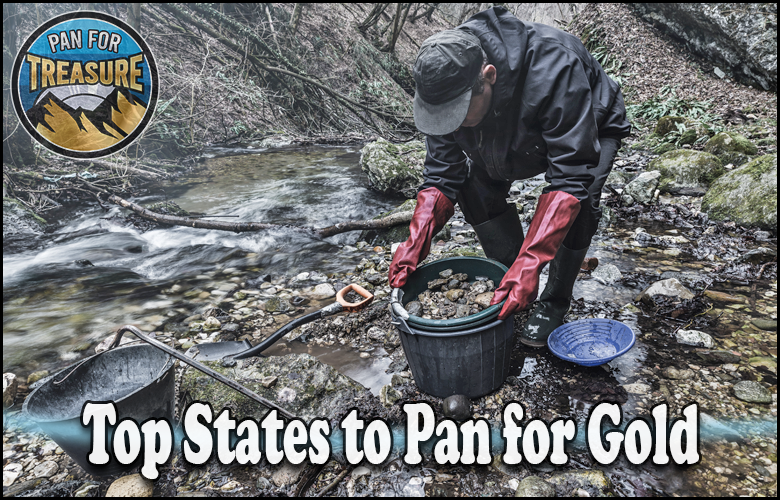
- Pan carefully for fine gold. Most Coker Creek gold is fine, though occasional nuggets are found. Use a gold pan with patient technique. A sluice box processes more material.
- Sample the Tellico River. If you have time, sample the Tellico River gravel bars. Gold distribution is spotty, so test multiple locations before committing to a spot. Dredgers have reported very productive days when they hit the right gravel.
- Combine with a scenic trip. The Cherokee National Forest is beautiful. The Unicoi Mountains, Tellico River, and surrounding area offer hiking, trout fishing, and scenic drives alongside gold prospecting.
- Visit neighboring states. Coker Creek is near the borders of both North Carolina and Georgia, both with larger gold deposits. Combine a Tennessee trip with Reed Gold Mine (NC) or Dahlonega (GA) for a southeastern gold tour.
Best Locations
- Is There Gold in Rhode Island? Top Locations and if It’s Worth the Trip
- Is There Gold in Washington? Top Locations and if It’s Worth the Trip
- Best Places to Pan for Gold and Gemstones in America
- Is There Gold in Massachusetts? Top Locations and if It’s Worth the Trip
- Is There Gold in South Carolina? Top Locations and if It’s Worth the Trip
Resources
- Rare Gold Nuggets: Coker Creek and Tellico Plains for detailed descriptions of Tennessee’s gold areas and prospecting advice.
- Tennessee Overhill: Coker Creek Gold Panning District for permit information and access details for the Cherokee National Forest panning areas.
- Historical Marker Database: Gold Mining at Coker Creek for the historical marker text and details about the mining peak and production estimates.
Conclusion
Is there gold in Tennessee? Yes, concentrated in the remarkable Coker Creek area of Monroe County. With 9,000 ounces of historic production, free Cherokee National Forest permits, and a legendary origin story involving a Cherokee maiden’s gold necklace, Coker Creek is one of the most accessible and interesting gold prospecting destinations in the Southeast.
The area produced gold using only light machinery, suggesting significant deposits remain. For more gold in the region, combine a Coker Creek trip with visits to North Carolina and Georgia. Browse the full state directory to find gold near you.
Frequently Asked Questions – Is There Gold in TN
Where is the best place to find gold in Tennessee?
Coker Creek in Monroe County, near Tellico Plains. Doc Rogers Field in the Cherokee National Forest provides the most popular public access. The Tellico River is a secondary target with potentially more gold but harder access.
Is gold panning legal in Tennessee?
Yes. Sections of Coker Creek in the Cherokee National Forest are open for panning with a free permit. Register at the Coker Creek Welcome Center on Highway 68. The GPAA also maintains a claim in the area.
How much gold has Tennessee produced?
About 9,000 troy ounces, nearly all from the Coker Creek field. U.S. Mint records show $269,422 (1831 to 1921). Local estimates suggest up to $2 million by the 1890s.
What type of gold is found in Tennessee?
Primarily placer gold in stream gravels. Fine to coarse gold with occasional nuggets. Gold sourced from eroding quartz veins in the Unicoi Mountains, though no major lode has been located.

⛏ Recommended Gear ⛏


* As an Amazon Associate I earn from qualifying purchases at no extra cost to you.
Subscribe to Our Newsletter

Ryan Conlon is the founder of Pan for Treasure.
A lifelong gold panning enthusiast, he created this site to help beginners learn the ropes and share practical tips from his own time on the creek. [email protected]