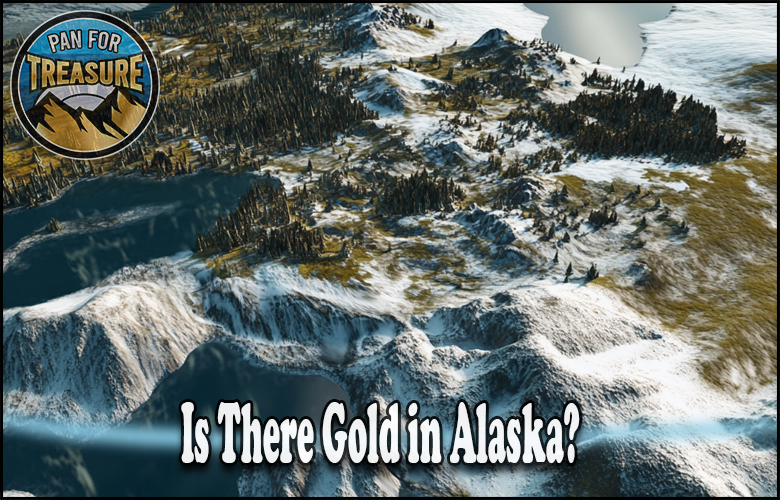
Is there gold in Alaska? Alaska is one of the richest gold territories on Earth. The state has produced over 46 million troy ounces of gold since 1880 and remains the second-largest gold-producing state in the country, behind only Nevada.
Gold has been found in virtually every region of Alaska except the swampy Yukon Flats and the Arctic coastal plain north of the Brooks Range.
Alaska is not just a historical gold state. It is an active one. In 2024, Alaska mines produced roughly 850,000 ounces of gold worth about $2 billion.
Large-scale operations like the Fort Knox mine near Fairbanks, the Pogo mine near Delta Junction, and the Kensington mine north of Juneau are all currently producing.
Alongside the big mines, hundreds of small-scale placer operations and recreational prospectors work Alaska’s creeks and rivers every summer.
The tradeoff is access. Alaska’s gold is spread across a massive, remote, and often rugged landscape. Many of the best areas require bush planes, boats, or long drives on unpaved roads. Weather, wildlife, and isolation are real factors.
But for the prospector willing to make the trip, Alaska offers gold potential that few other places can match. Start with our getting started guide and review the gold panning laws in Alaska before planning your trip.
TL;DR
- Gold Present: Yes, massive deposits. Alaska is the #2 gold-producing state in the U.S.
- Best Regions: Fairbanks, Nome, Juneau, the Kenai Peninsula, and the Fortymile River district.
- Gold Type: Placer gold (flour gold to large nuggets) and lode gold in quartz veins. Alaska’s largest nugget weighed 294 troy ounces.
- Top Spot: Nome Creek in the White Mountains National Recreation Area (road accessible, no claims, public land).
- Legal Note: Recreational panning with hand tools is allowed on most public land without a permit. Dredging requires permits from Fish & Game. State parks are limited to Chugach and Kenai Peninsula parks only.
- Best Season: Late May through mid-September. Many streams are frozen or inaccessible the rest of the year.
- Verdict: Alaska is a world-class gold destination with enormous potential, but remoteness, harsh conditions, and short seasons make it best suited for experienced and well-prepared prospectors.
Geology
Gold in Mesozoic granite intrusions, metamorphic belts, and extensive placer deposits across Interior, Western, and Southeast Alaska.
Historical Production
Over 46 million troy ounces since 1880. The Fairbanks district alone has produced over 7 million ounces.
Best Area
The Fairbanks mining district (largest historical producer), followed by Juneau and Nome.
Active Mining
Four major hard-rock gold mines currently operating (Fort Knox, Pogo, Kensington, Greens Creek), plus hundreds of placer operations.
Primary Gold Type
Placer gold in creeks and rivers (fine gold to large nuggets). Lode gold in quartz veins and massive sulfide deposits.
Best Season
Late May through mid-September. Many areas are snow-covered or frozen outside this window.
Featured
Where Is There Gold in Alaska?
Alaska ranks #2 of 50 for gold potential.
Quick reference below – details on each location follow, or jump to the Alaska map.
| Location / Area | River / Creek | County | Gold Type | Land Access |
|---|---|---|---|---|
| Nome Creek, White Mountains National Recreation Area | Nome Creek | Fairbanks North Star Borough | Fine gold | BLM land; Check for claims |
| Crow Creek Mine, Girdwood | Crow Creek | Municipality of Anchorage | Not listed | Not listed |
| Resurrection Creek, Hope | Resurrection Creek | Kenai Peninsula Borough | Fine gold | Not listed |
| Petersville Recreational Mining Area | Trapper Creek | Matanuska-Susitna Borough | Not listed | Not listed |
| Caribou Creek Recreational Mining Area | Caribou Creek | Matanuska-Susitna Borough | Not listed | Not listed |
| Fortymile River / Chicken area | Fortymile River | Southeast Fairbanks Census Area | Not listed | Check for claims |
| Fairbanks area creeks | Pedro Creek, Goldstream Creek, Cleary Creek | Fairbanks North Star Borough | Not listed | BLM land; Check for claims |
| Nome beaches and creeks | Not listed | Nome Census Area | Not listed | Public beach |
Is there gold in Alaska across the entire state? Nearly. Gold occurs and has been mined throughout Alaska, with the exception of the Yukon Flats and the North Slope. The chief lode deposits are associated with Mesozoic granite intrusions that cut through rocks of Precambrian, Paleozoic, and Mesozoic age. This belt of gold-bearing intrusive rocks extends from the Seward Peninsula to the Yukon Territory border. Placer gold, eroded from these lode sources over millions of years, fills creeks, rivers, and ancient gravel deposits across the state.
Interior Alaska (Fairbanks District)
The Fairbanks mining district is the largest gold-producing area in Alaska, with over 7 million troy ounces produced. Italian immigrant Felix Pedro discovered gold on Pedro Creek in 1902, leading to the founding of Fairbanks. The district’s deep placer deposits proved ideal for large-scale dredging, and bucket-line dredges operated here for decades. Today, the Fort Knox mine (owned by Kinross Gold) is a large open-pit operation and Alaska’s biggest gold producer. Placer mining continues on many creeks in the district. The nearby Circle, Livengood, and Rampart districts add to Interior Alaska’s gold output.
Western Alaska (Nome and Seward Peninsula)
The Nome district is the second-largest gold producer in Alaska, with over 5 million ounces. The famous Nome Gold Rush began in 1898 when the “Three Lucky Swedes” discovered rich placer deposits. Gold was famously found on the beaches of Nome, drawing tens of thousands of stampeders. Beach mining with small suction dredges continues at Nome today. The broader Seward Peninsula holds several additional districts including Council and Fairhaven.
Southeast Alaska (Juneau District)
The Juneau district has produced nearly 7 million ounces of lode gold and about 80,000 ounces of placer gold. Gold was discovered in 1880 at Gold Creek in Silver Bow Basin, leading to the founding of Juneau. The Treadwell mine complex on Douglas Island was once the largest hard-rock gold mine in the world. Today, the Kensington mine (Coeur Mining) operates north of Juneau, and the Greens Creek mine (Hecla Mining) produces gold as a byproduct of silver mining. The Chichagof district on nearby islands has produced about 800,000 ounces.
Southcentral Alaska (Kenai Peninsula and Matanuska-Susitna)
The Kenai Peninsula was among the earliest gold discoveries in Alaska, with gold found in 1888. The Hope and Sunrise mining districts along Resurrection Creek, Sixmile Creek, and other drainages produced significant placer gold. Crow Creek Mine near Girdwood is one of the most famous historic mining sites in the state and is now open for recreational panning. The Willow Creek district near Palmer produced notable lode gold, and the Independence Mine is now a State Historical Park. The Valdez Creek district contained the largest gold placer mine in North America at one point.
Fortymile and Eastern Interior
The Fortymile River district near the Canadian border was where Interior Alaska’s first gold rush began in 1886. The district has produced over 568,000 ounces. The town of Chicken, located on the Fortymile, is a popular destination for recreational prospectors. The Pogo mine, located northeast of Delta Junction, is a modern underground operation producing over 150,000 ounces per year from quartz veins.
Koyukuk and Brooks Range
Gold discoveries in the Koyukuk drainage in 1899 brought prospectors to the foothills of the Brooks Range, the northernmost extent of Alaska’s gold rushes. Mining camps sprang up at Coldfoot, Wiseman, and other remote locations. Small-scale placer mining continues in the area today, accessible via the Dalton Highway.
Our Favorite Posts
- Is There Gold in Georgia? Top Locations and if It’s Worth the Trip
- Is There Gold in Arizona? Top Locations and if It’s Worth the Trip
- Is There Gold in North Carolina? Top Locations and if It’s Worth the Trip
- Is There Gold in Nevada? Top Locations and if It’s Worth the Trip
- Is There Gold in Montana? Top Locations and if It’s Worth the Trip
Best Places to Find Gold in Alaska
Here are the top locations where is there gold in Alaska gets answered with real results, ranked by gold potential and accessibility.
- Nome Creek, White Mountains National Recreation Area (Fairbanks North Star Borough): One of the most accessible and productive recreational panning locations in Alaska. Located about 60 miles north of Fairbanks via the Steese Highway and a maintained gravel road. The creek flows through BLM land with no active claims in the recreational area. Gold pans, sluice boxes, and small dredges (with permits) are allowed. Good fine gold and occasional small nuggets.
- Crow Creek Mine, Girdwood (Municipality of Anchorage): A historic hydraulic gold mining operation established in 1896, now open for recreational panning. Located about an hour south of Anchorage in the Chugach Mountains. Pay-to-pan access with equipment provided. Real gold in every pan. A great option for families and beginners visiting Anchorage.
- Resurrection Creek, Hope (Kenai Peninsula Borough): A well-known placer gold creek in the historic Hope mining district. Panning is allowed in the creek without a permit. Located about 90 miles south of Anchorage on the Kenai Peninsula. The campground area near the footbridge is a popular starting point. Fine gold and occasional flakes.
- Petersville Recreational Mining Area (Matanuska-Susitna Borough): A designated recreational mining area on state land near Trapper Creek, about 115 miles north of Anchorage. Panning, sluicing, and small dredges are permitted. Multiple creek drainages are open for prospecting.
- Caribou Creek Recreational Mining Area (Matanuska-Susitna Borough): Another designated state recreational mining area, accessible from the Glenn Highway east of Palmer. Open to hand panning and sluicing. Gold-bearing gravels in the creek.
- Fortymile River / Chicken area (Southeast Fairbanks Census Area): The Fortymile district near the Canadian border has produced over 568,000 ounces. The town of Chicken is a base for recreational prospectors. Commercial outfitters offer guided dredging and prospecting trips on private claims. Remote but road accessible via the Taylor Highway (seasonal).
- Fairbanks area creeks (Fairbanks North Star Borough): Numerous gold-bearing creeks surround Fairbanks, including Pedro Creek, Goldstream Creek, and Cleary Creek. Many areas are under active claims, but Gold Dredge 8 offers a commercial panning experience, and some BLM land remains open. The Fairbanks district has produced over 7 million ounces.
- Nome beaches and creeks (Nome Census Area): Beach mining at Nome is a unique Alaskan experience. Small suction dredges are used to work gold-bearing sands along the Bering Sea coast. Some beaches are open to recreational mining. Fly-in access only (no road connection to the highway system). Over 5 million ounces have come from the Nome district.
- Chugach State Park / Indian Valley (Municipality of Anchorage): Gold panning is allowed in Chugach State Park with restrictions (pan and shovel only, no motorized equipment, anadromous streams open May 16 to July 14 only). Indian Valley Mine near the Seward Highway offers commercial panning. Close to Anchorage.
- Dalton Highway / Coldfoot area (Yukon-Koyukuk Census Area): The Koyukuk mining district near Wiseman and Coldfoot produced placer gold during the 1899 rush. Some BLM land along the Dalton Highway corridor is open to recreational prospecting. Very remote, but road accessible. Gold has been found in several area creeks.
For full legal details, read our gold panning laws in Alaska guide.
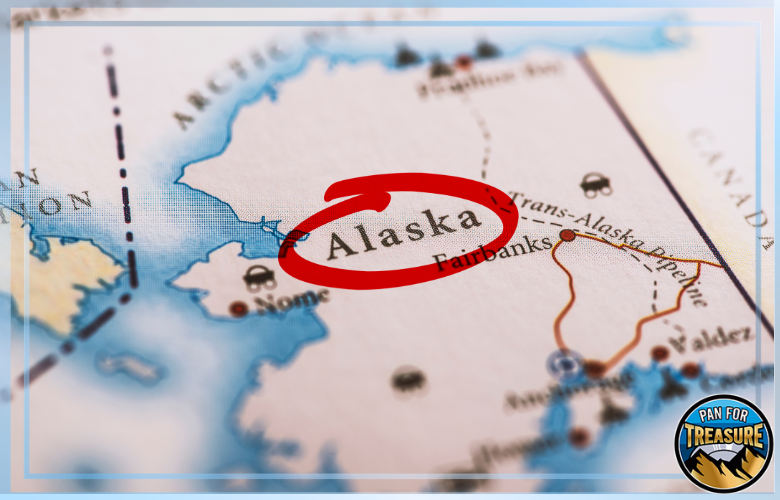
Alaska Gold Panning Map
Recommended Reading
Gold Mining History in Alaska
Russian explorers first noted placer gold in the Kenai River in 1848, but no significant mining followed. Commercial gold mining in Alaska began around 1870 from placer deposits southeast of Juneau. The major breakthrough came in 1880, when Chief Kowee revealed gold deposits in Silver Bow Basin to prospectors Joe Juneau and Richard Harris. The resulting Juneau Gold Rush led to the development of the Treadwell mine on Douglas Island, which became the largest hard-rock gold mine in the world, employing over 2,000 people and operating until 1922.
The Klondike Gold Rush of 1897-98 in Canada’s Yukon Territory brought tens of thousands of stampeders through Alaska, and many stayed to prospect. The discovery of gold on the beaches of Nome in 1898 triggered another massive rush. By 1902, Felix Pedro’s discovery on Pedro Creek had founded Fairbanks, which quickly became the largest gold-producing district in the state. The Iditarod district, discovered in 1908, produced 1.5 million ounces and prompted what is sometimes called “The Last Great Rush.”
Gold mining peaked in Alaska around 1906 and again in the 1930s after the gold price was raised to $35 per ounce. World War II dealt a devastating blow when Executive Order L-208 shut down nearly all U.S. gold mines in 1942. Many Alaska operations never reopened. After gold prices were deregulated in the 1970s, interest slowly revived. The Fort Knox mine opened near Fairbanks in 1996 and has since produced millions of ounces. The Pogo and Kensington mines followed in the 2000s.
In 1998, the largest gold nugget ever found in Alaska was discovered near the town of Ruby. Named the Alaska Centennial Nugget, it weighed 294.10 troy ounces (over 20 pounds).
Best Locations
- Is There Gold in Rhode Island? Top Locations and if It’s Worth the Trip
- Is There Gold in Massachusetts? Top Locations and if It’s Worth the Trip
- Is There Gold in South Carolina? Top Locations and if It’s Worth the Trip
- Is There Gold in Oklahoma? Top Locations and if It’s Worth the Trip
- Is There Gold in Nebraska? Top Locations and if It’s Worth the Trip
What Type of Gold Can You Find in Alaska?
Alaska produces every type of gold a prospector could hope for. Placer gold ranges from fine flour gold in creek beds to chunky flakes, rough nuggets, and occasionally very large specimens. The Fairbanks district, Nome, and the Fortymile area are all known for producing nuggets. Metal detecting in Alaska’s goldfields can be extremely productive for those willing to reach remote areas.
Lode gold occurs in quartz veins associated with Mesozoic granite intrusions throughout the state. The Juneau district’s massive vein systems produced millions of ounces from underground mines. Modern mines like Fort Knox, Pogo, and Kensington continue to work lode deposits.
For recreational prospectors, the gold you are most likely to find is fine to medium placer gold in creek gravels. In well-known areas like Nome Creek, Resurrection Creek, and Crow Creek, consistent fine gold can be recovered with a pan and sluice box. Check our what does gold look like in a pan guide to know what to look for. In more remote areas, particularly around Fairbanks and the Fortymile, coarser gold and nuggets are possible.
Tips for Finding Gold in Alaska
- Plan for the short season. Most Alaska prospecting happens between late May and mid-September. Outside this window, streams are frozen, daylight is limited, and access roads may be closed. Plan your trip accordingly.
- Prepare for remote conditions. Many of Alaska’s best gold areas are far from services. Bring extra fuel, food, water purification, bear spray, and first aid supplies. Cell service is nonexistent in most prospecting areas. Let someone know your plans before heading out.
- Check land status carefully. Alaska’s land ownership is complex, with a patchwork of federal (BLM, Forest Service, NPS), state, Alaska Native corporation, and private lands. Use the Alaska DNR’s land status maps or the BLM’s LR2000 system to verify that the area you plan to prospect is open. Native corporation lands are private and off-limits without permission.
- Start with designated recreational mining areas. Nome Creek, Petersville, and Caribou Creek are set up for recreational prospectors with public access and clear rules. These are the easiest and safest places to start. Learn more about gold panning techniques before your trip.
- Use the right gear for Alaska conditions. Waterproof boots or waders are a must, since Alaska’s streams are cold year-round (often near freezing). Neoprene gloves help protect your hands. A sturdy gold pan and sluice box are the basics. If you plan to dredge, get permits from Fish & Game first.
- Watch for bears. Black bears and grizzly bears are common in Alaska’s gold country. Make noise, carry bear spray, store food properly, and know how to respond to an encounter. This is not optional.
- Work bedrock and inside bends. Gold settles into bedrock cracks and on the inside bends of streams where the current slows. Look for exposed bedrock in the creek and clean out crevices with a crevicing tool. These spots often hold the best concentrations.
- Respect fish habitat. Alaska’s salmon streams are protected by strict regulations. Many gold-bearing creeks are also anadromous fish streams with seasonal restrictions on mining activity. Check with Alaska Department of Fish & Game for stream-specific rules and timing windows.
- Consider a guided trip. If you are new to Alaska prospecting, commercial operations like Crow Creek Mine, Gold Dredge 8 in Fairbanks, and outfitters near Chicken offer guided experiences on proven ground. This is a great way to learn the basics before heading out on your own.
- Bring mosquito protection. Alaska’s mosquitoes are legendary, especially in Interior and Western Alaska during June and July. A head net, long sleeves, and DEET-based repellent are strongly recommended.
Resources
- Alaska Division of Geological & Geophysical Surveys (DGGS): Publishes detailed reports on gold deposits, placer districts, and mineral resources across Alaska. Their Information Circular 18, “Amateur Gold Prospecting,” is a classic reference. Visit Alaska DGGS.
- Alaska Department of Natural Resources, Division of Mining, Land & Water: Manages state lands open to recreational mining, including designated recreational mining areas. Provides land status information and mining permits. Visit Alaska DNR Mining.
- Bureau of Land Management (BLM) Alaska: Manages federal public land including the White Mountains National Recreation Area (Nome Creek). Provides claim and land status information. Visit BLM Alaska.
- Alaska Public Lands Information Centers: Provides consolidated information on gold panning and recreational mining regulations across all land types in Alaska. Visit Alaska Public Lands Info.
- Gold Prospectors Association of America (GPAA): Holds claims in Alaska and offers membership access. Visit GPAA.
Conclusion
Is there gold in Alaska? More than almost anywhere else in the United States. With over 46 million ounces of historical production, four active large-scale gold mines, and hundreds of small placer operations still running every summer, Alaska is a gold state in every sense of the word. From the beaches of Nome to the creeks around Fairbanks to the lode mines of Juneau, gold is woven into the history, economy, and identity of the Last Frontier.
The challenge is getting to it. Alaska’s best gold is often in remote, difficult-to-access areas with harsh weather, dangerous wildlife, and a very short working season. But for road-accessible options, Nome Creek near Fairbanks, Crow Creek Mine near Anchorage, and Resurrection Creek on the Kenai Peninsula all offer real gold in stunning settings. Whether you are a first-time panner visiting on vacation or a serious prospector planning a summer-long expedition, Alaska delivers.
Ready to explore more states? Check out our guides: Is There Gold in Washington?, Is There Gold in Oregon?, Is There Gold in California?, Is There Gold in Colorado?, and Is There Gold in Idaho?. Or browse the full state directory to find gold near you. Alaska is also one of the best places to pan for gold in America.
Frequently Asked Questions – Is There Gold in AK
Has gold ever been found in Alaska?
Yes. Alaska has produced over 46 million troy ounces of gold since 1880, making it the second-largest gold-producing state in U.S. history. Gold has been found in virtually every region of the state. The Fairbanks district alone has produced over 7 million ounces, and the Juneau district is close behind. Alaska remains an active gold-producing state with four major mines currently operating.
Can you pan for gold in Alaska?
Yes. Recreational gold panning with hand tools (pans, shovels, manually fed sluice boxes) is allowed on most public land in Alaska without a permit. Designated recreational mining areas like Nome Creek, Petersville, and Caribou Creek are specifically set up for public prospecting. In Chugach and Kenai Peninsula State Parks, equipment is limited to one pan, one shovel, and one small sluice box. Suction dredges require permits from Alaska Department of Fish & Game.
Where is the most gold in Alaska?
The Fairbanks mining district has produced the most gold in Alaska, with over 7 million troy ounces. The Juneau district is a close second with nearly 7 million ounces (mostly from lode mines). Nome has produced over 5 million ounces, primarily from placer deposits. Other significant districts include the Iditarod (1.5 million ounces), Fortymile (568,000 ounces), and Chichagof Island (800,000 ounces).
What kind of gold is found in Alaska?
Alaska has both placer and lode gold in abundance. Placer gold ranges from fine flour gold in creek beds to large nuggets. The Alaska Centennial Nugget, found near Ruby in 1998, weighed 294.10 troy ounces (over 20 pounds) and is the largest nugget ever found in the state. Lode gold occurs in quartz veins associated with granite intrusions, particularly in the Juneau and Fairbanks districts. Modern mines extract gold from both deposit types.
Do you need a permit to pan for gold in Alaska?
For casual hand panning with a gold pan, shovel, and small sluice box on open public land, no permit is required. Suction dredges require a permit from the Alaska Department of Fish & Game, and dredges with nozzles over four inches require a Notice of Intent filed with the Division of Mining. In state parks, only Chugach and Kenai Peninsula parks allow recreational mining, with specific equipment limits. National parks allow hand panning only, with no digging tools permitted. Always verify land status before prospecting.
Is Alaska good for gold prospecting?
Alaska is one of the best gold prospecting destinations in the world, but it comes with significant challenges. The gold potential is enormous, with deposits spread across the state and gold still being actively produced. However, many areas are remote and accessible only by bush plane or boat. The prospecting season is short (roughly late May through mid-September), weather can be extreme, and bears are a real concern. For prepared prospectors, Alaska offers unmatched opportunity. For beginners, road-accessible spots like Nome Creek, Crow Creek Mine, and Resurrection Creek provide real gold in manageable settings.
⛏ Recommended Gear ⛏


* As an Amazon Associate I earn from qualifying purchases at no extra cost to you.
Subscribe to Our Newsletter

Ryan Conlon is the founder of Pan for Treasure.
A lifelong gold panning enthusiast, he created this site to help beginners learn the ropes and share practical tips from his own time on the creek. [email protected]