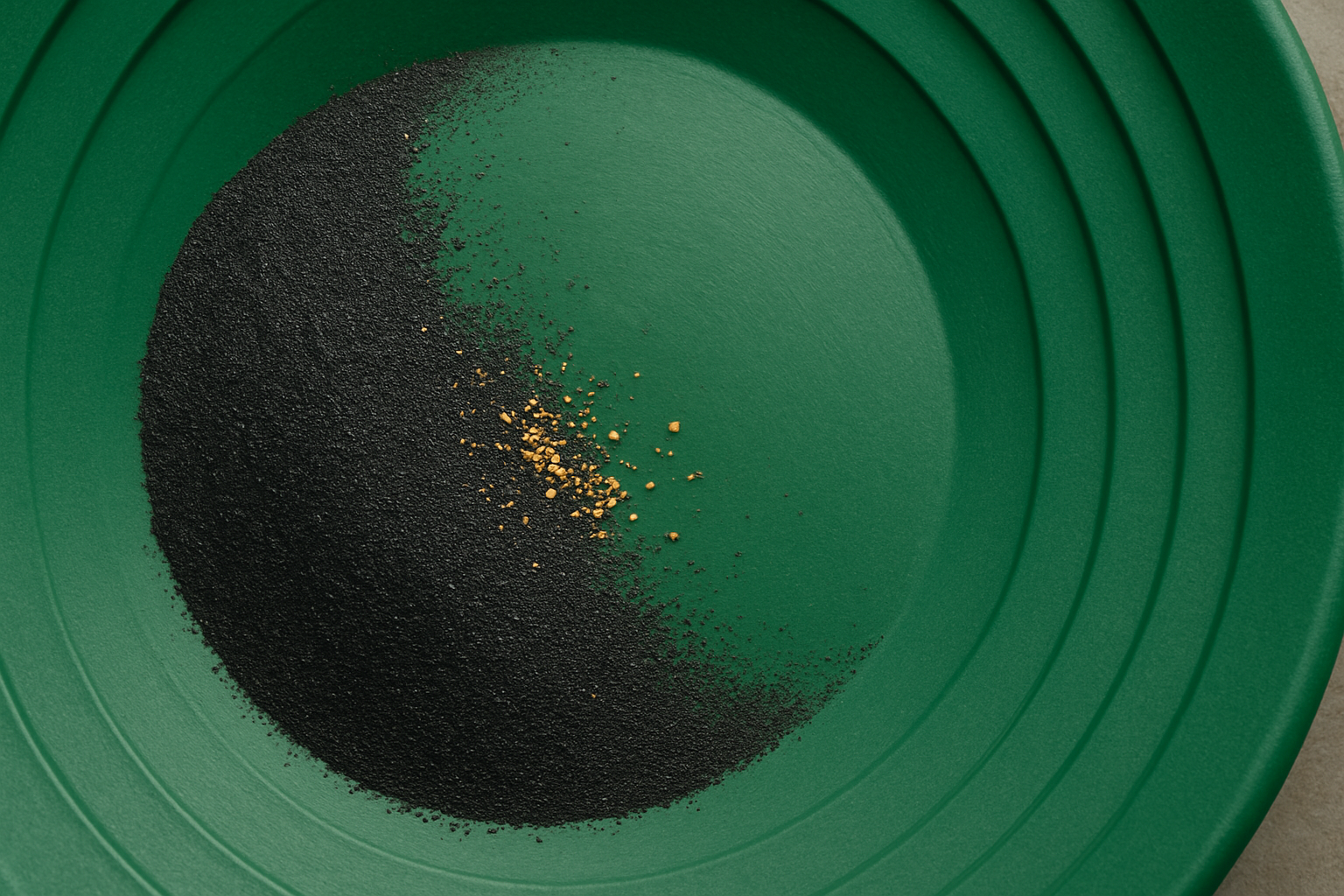
Dealing with black sand is one of the trickiest parts of gold recovery, because the same dense, heavy material that concentrates alongside your gold is exactly what makes the gold hard to see and separate. Black sand is mostly magnetite and hematite, iron minerals heavy enough to settle right next to gold in a pan or sluice. The good news is that with the right sequence of gravity separation, magnets, and careful finishing, you can remove the black sand and keep nearly all of your gold.
TL;DR
- Know what it is: black sand is mainly magnetite and hematite, heavy iron minerals.
- It’s a good sign: black sand often marks where gold concentrates too.
- Use gravity first: panning and sluicing concentrate the heavies together.
- Pull the magnetics: a rare-earth magnet removes most black sand fast.
- Finish gently: careful cleanup separates the last sand from fine gold.
- Protect the fines: slow, patient technique keeps flour gold from escaping.
Featured
Understanding Black Sand
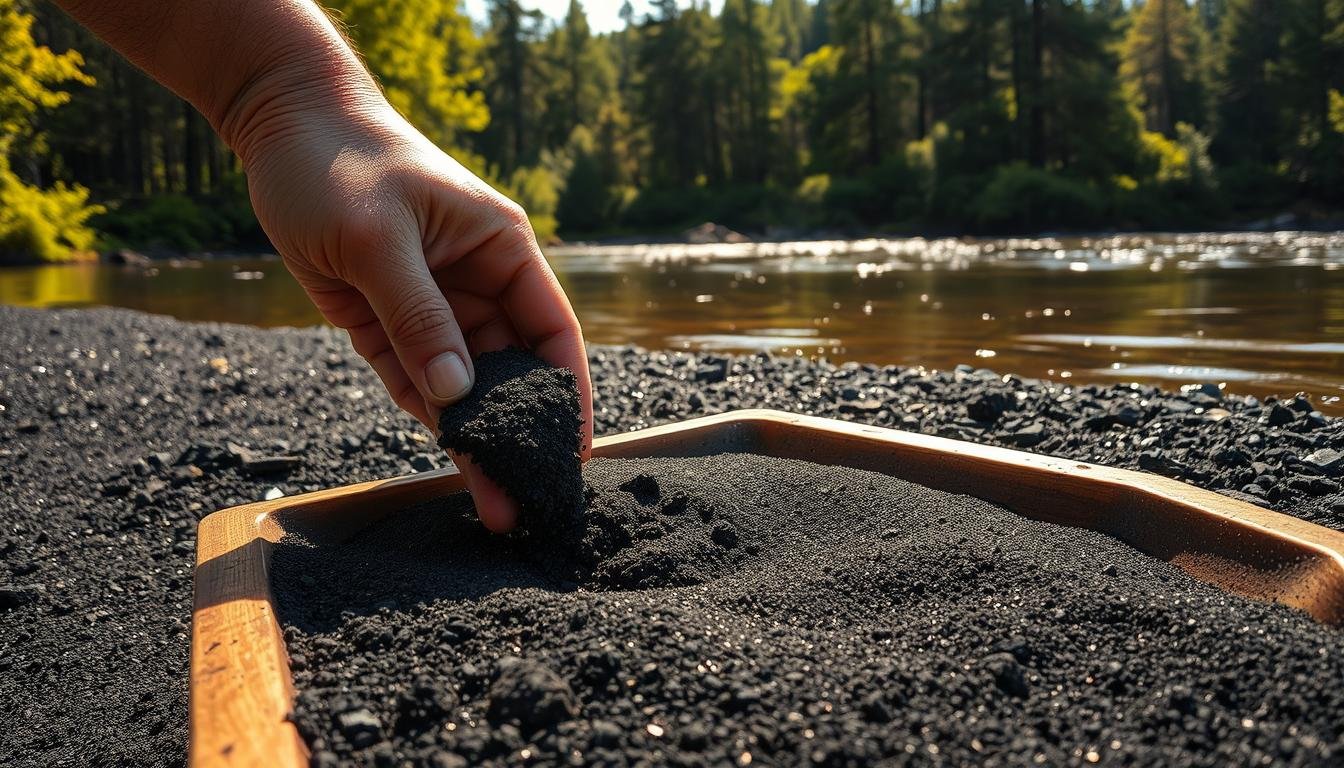
Black sand is the dark, heavy material that collects in the bottom of your pan, and understanding it is the first step to dealing with it. It is composed primarily of magnetite and hematite, two iron oxides that are dense enough to settle alongside gold in placer deposits. Depending on the region, it can also carry other heavy minerals.
Because black sand and gold are both heavy, they concentrate in the same places, which is why finding black sand is often a good sign. The challenge is simply that its density and, in the case of magnetite, its magnetism make it cling right where your gold is. Knowing what you are dealing with in your particular location shapes the best way to remove it.
| Mineral | Property | Effect on Recovery |
|---|---|---|
| Magnetite | Heavy and magnetic | Removable with a magnet |
| Hematite | Heavy, weakly magnetic | Needs gravity and careful finishing |
| Other heavies | Dense, non-magnetic | Separated in final cleanup |
| Gold | Very heavy, non-magnetic | Stays put through every step |
Our Favorite Posts
Gravity Separation First
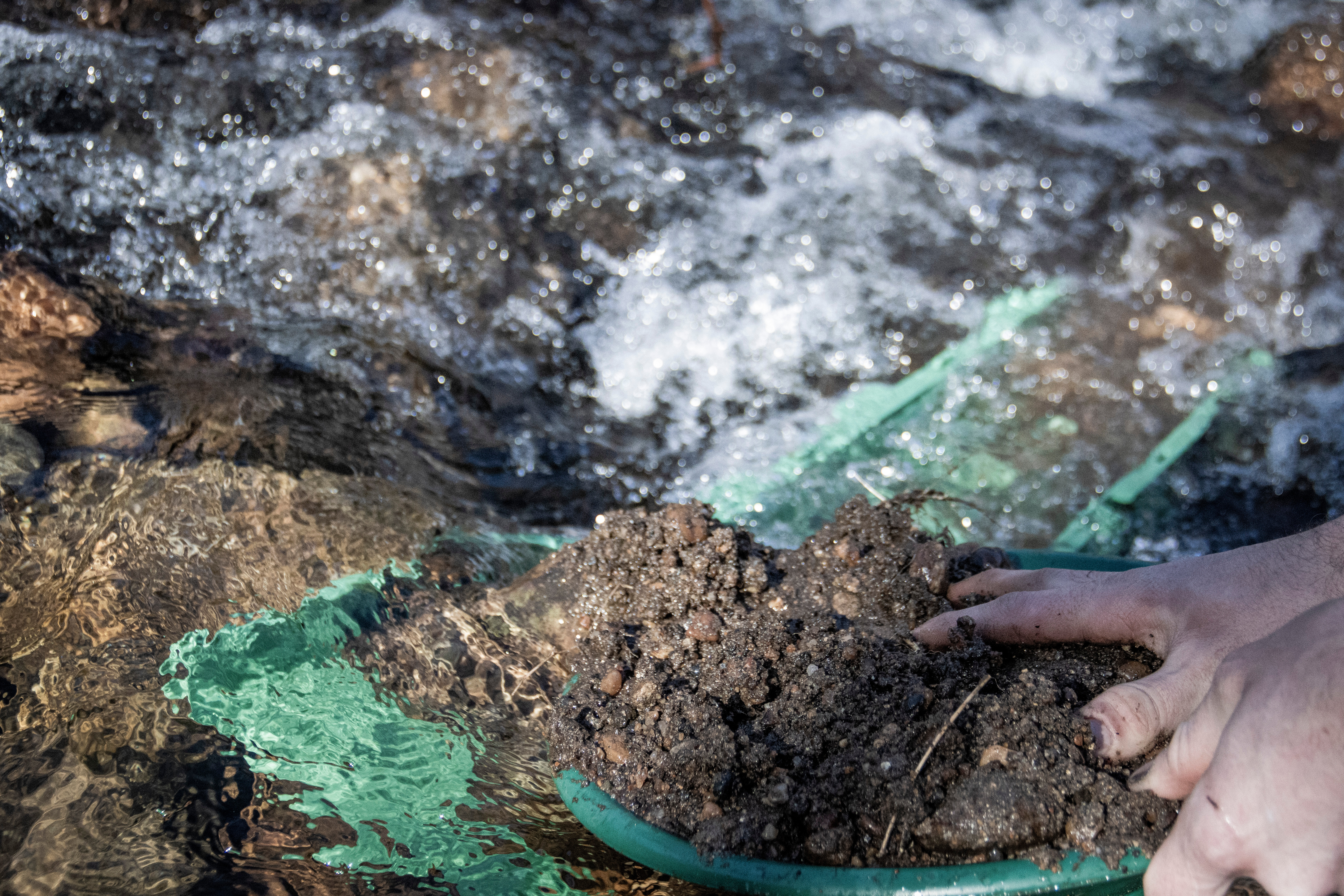
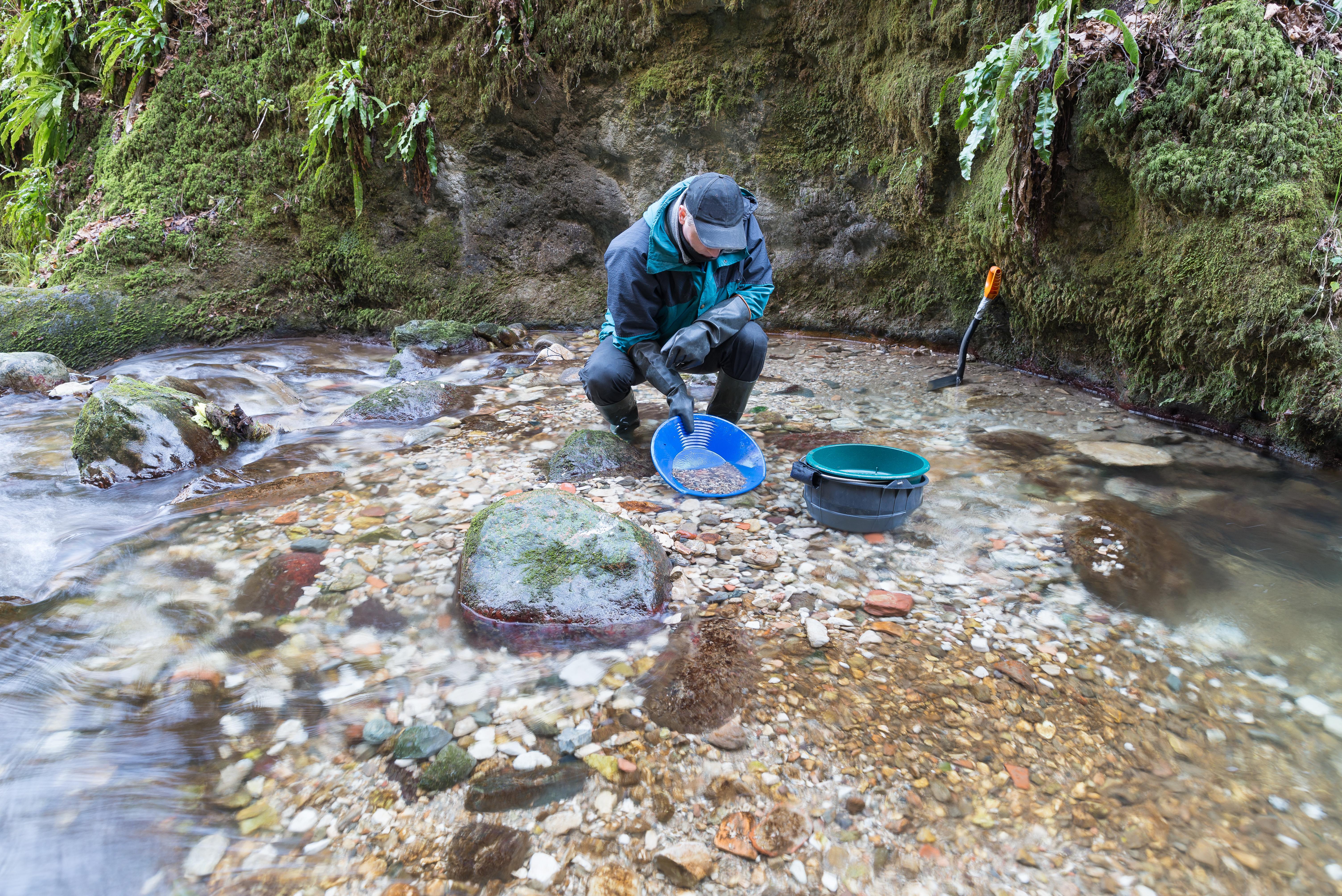
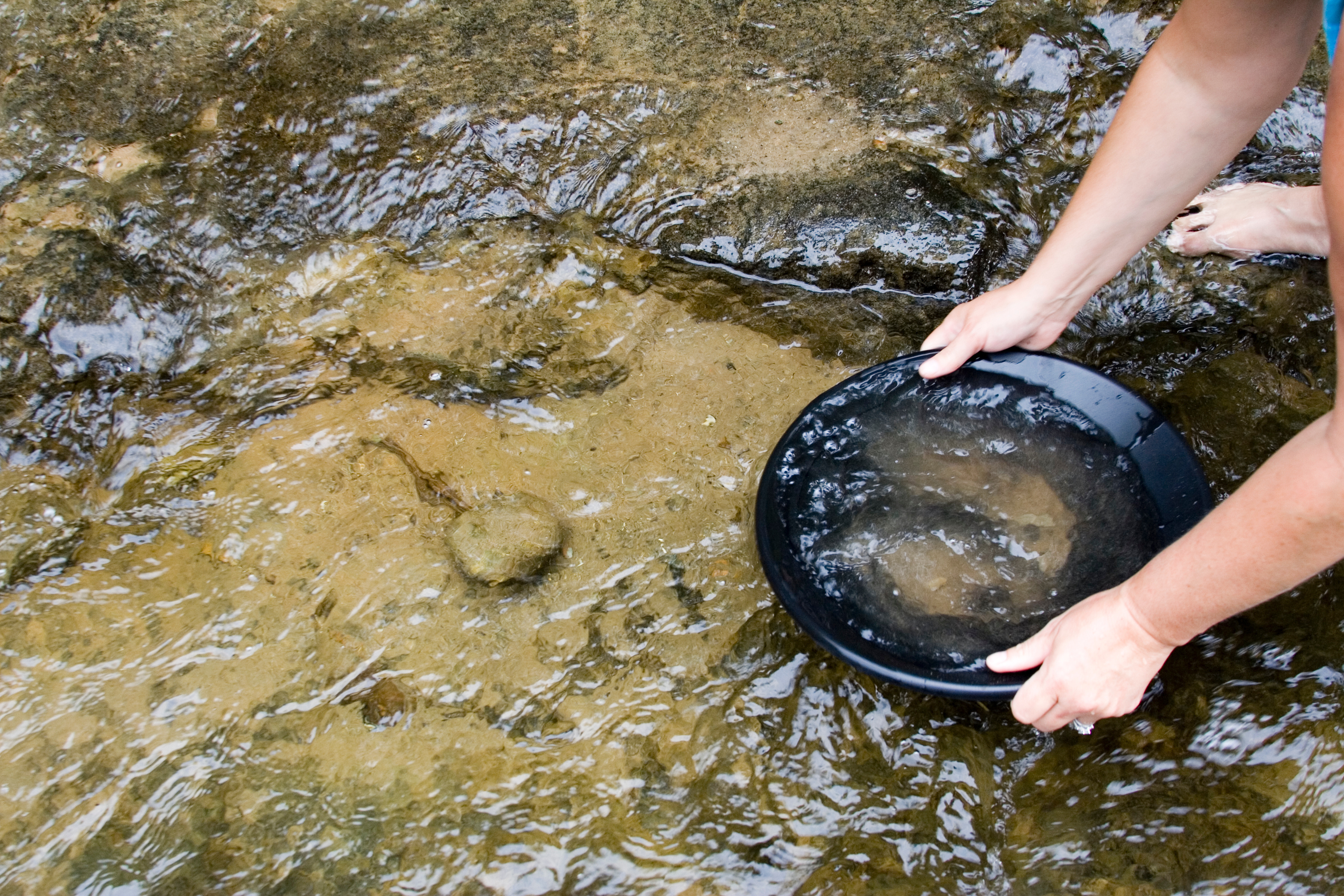
The foundation of dealing with black sand is gravity, the same force that concentrates gold. Panning, sluicing, and similar methods use the weight difference between materials to gather all the heavies, gold and black sand together, into a small concentrate.
This step does not fully separate gold from black sand, but it shrinks your material down to a manageable batch of heavies that you can then clean up precisely. Getting a clean, tight concentrate through good gravity work makes every step that follows easier and reduces the chance of losing gold along the way.
- Classify your material to remove oversize rock first.
- Pan or sluice to concentrate all the heavy material together.
- Reduce the concentrate down to gold and black sand only.
- Move to a smooth finishing pan for the precise separation.
- Keep the wash water gentle so fine gold stays put.
Using a Magnet
Once you have a tight concentrate, a rare-earth magnet is your most powerful tool. Because magnetite makes up much of most black sand, sweeping a strong magnet through the concentrate pulls out the magnetic fraction quickly, often removing the bulk of the black sand in seconds.
Work with the magnet in a bag or over a container so you can drop the captured sand aside cleanly, and check that no fine gold clings to the mass as you remove it. What remains is a much smaller batch of non-magnetic material where your gold is finally easy to see and isolate.
- Use a strong rare-earth magnet, ideally in a bag for clean release.
- Sweep it through the dry or damp concentrate to lift magnetite.
- Check that no gold flakes are stuck to the removed sand.
- Repeat until little magnetic material remains.
- Finish the leftover non-magnetic heavies by hand.
Recommended Reading
Finishing Without Losing Gold
After the magnet, some heavy non-magnetic material and hematite may remain with your gold, and this final cleanup is where patience pays. Swirl the concentrate gently in a smooth finishing pan so the remaining sand forms a tail you can ease away, leaving the gold behind.
Slow down as you approach the last material, since fine gold escapes most easily here. A drop of rinse aid in the water reduces surface tension so tiny flakes settle instead of floating. For large-scale operations, specialized equipment handles big volumes, but for a small-scale prospector, a magnet and careful hand-finishing recover nearly everything. Do this cleanup over land, not open water, so nothing is lost.
Tips and Tricks
Resources for Black Sand and Gold Recovery
- U.S. Geological Survey (USGS) – Information on placer deposits and heavy minerals.
- USGS Mineral Resources Online Spatial Data – Searchable maps of documented gold occurrences.
- Bureau of Land Management (BLM) – Land status and rules for prospecting on public lands.
- Gold Prospectors Association of America (GPAA) – Clubs, claims, and education for prospectors.
- TreasureNet – Community forums where prospectors share black sand techniques.
Conclusion
Black sand does not have to cost you gold. Concentrate the heavies with gravity, pull the magnetite out with a rare-earth magnet, and finish the remaining material slowly and gently, and you will separate the sand while keeping even your fine gold.
Treat that dark, heavy material as a clue to where gold hides rather than an obstacle, and it becomes an ally in your prospecting. That mindset and method are the key to successfully dealing with black sand.
Frequently Asked Questions – Dealing with Black Sand
What is black sand made of?
It is mostly magnetite and hematite, two heavy iron oxides, and it can carry other heavy minerals depending on the region. Their density is why black sand settles alongside gold, and magnetite’s magnetism is what lets a magnet remove it.
Is finding black sand a good sign?
Usually, yes. Because black sand and gold are both heavy, they concentrate in the same places. Finding black sand often means you are working ground where gold also settles, so it is a useful indicator rather than just a nuisance.
How do I remove black sand from my gold?
Concentrate the heavies with gravity by panning or sluicing, then sweep a rare-earth magnet through to pull out the magnetite. Finish the remaining non-magnetic material gently by hand in a smooth pan to isolate the gold.
Does a magnet remove all the black sand?
It removes the magnetic portion, which is often the bulk of it. Some non-magnetic heavies and weakly magnetic hematite may remain, so a careful final hand-finishing step is still needed to fully separate those from your gold.
How do I avoid losing fine gold in the process?
Slow down during the final cleanup where fine gold escapes most easily, keep your wash water gentle, and add a drop of rinse aid to reduce surface tension. Doing this over land rather than open water prevents accidental losses.
Why is black sand so hard to separate from gold?
Because it is nearly as heavy as gold, gravity methods concentrate them together rather than apart. That shared density is what makes black sand cling right where your gold is, requiring a magnet and patient finishing to separate them.
Do I need special equipment for small amounts?
No. For small-scale prospecting, a rare-earth magnet, a smooth finishing pan, and careful technique recover nearly all your gold. Specialized high-volume equipment is only necessary for large operations handling substantial quantities of material.
Should I keep my black sand?
Many prospectors save their black sand concentrate to re-check for missed fine gold later, since it can hide tiny flakes. Reprocessing it carefully at home, with good light and a magnet, sometimes turns up gold worth the effort.
Keep Exploring
For the bigger picture, start with our Gold Panning Tips and Tricks guide.
⛏ Recommended Gear ⛏


* As an Amazon Associate I earn from qualifying purchases at no extra cost to you.
Subscribe to Our Newsletter

Ryan Conlon is the founder of Pan for Treasure.
A lifelong gold panning enthusiast, he created this site to help beginners learn the ropes and share practical tips from his own time on the creek. [email protected]