Can I pan for gold in my backyard? Yes. If you own the property and the mineral rights that go with it, you can legally pan, dig, and detect for gold on your own land in every state.
Whether you will actually find gold is a different question, and it comes down to the geology under your grass.
Most backyards contain no recoverable gold at all. But if your property sits in a historic gold district, has a creek running through it, or lies in the glaciated upper Midwest, there is a real chance of finding fine gold, and testing your own yard costs almost nothing.
This guide covers how gold ends up on residential property, the signs worth looking for, how to test your yard with a pan, and the two legal questions every backyard prospector should answer first: who owns the minerals under your land, and what local rules apply before you dig. If you are brand new to panning, start with our getting started with gold panning guide.
TL;DR
- Legal on your own land: Backyard gold panning is legal in all 50 states if you own both the surface and the mineral rights. Renters need the landlord’s permission.
- Check your mineral rights: In the US, mineral rights can be “severed” from the land and owned by someone else. Your deed and county records will tell you. This is common in western and historic mining states.
- Geology decides everything: Realistic odds exist in historic gold districts, along creeks and old stream channels, and across the glaciated Midwest. Outside those areas, expect nothing.
- Signs to look for: Quartz with iron staining, black sand in your soil or creek, red iron-stained ground, and documented historic mining nearby.
- Call 811 before digging: Any digging beyond a garden trowel should start with a free 811 utility-locate call. Buried gas and electric lines don’t care that you were looking for gold.
- Keep expectations low: Backyard finds are almost always fine “flour” gold worth a few dollars, not nuggets. Treat it as a fun test of your panning skills, not a payday.
Can I Pan for Gold in My Backyard? The Short Answer
On your own property, with your own mineral rights, you can prospect however you like: pan material from your creek, dig test holes, run a metal detector, or sample the dirt under your downspouts. No state requires a permit for a homeowner to pan on their own land.
There are only three situations where the answer changes:
- You don’t own the mineral rights. In the United States, the mineral estate can be legally separated from the surface estate. If a previous owner sold or reserved the mineral rights, the gold under your lawn may belong to someone else, even though the lawn is yours.
- You rent. Tenants need the property owner’s permission before digging or removing anything of value. Gold found on rented property belongs to the landowner unless you agree otherwise.
- Local rules restrict digging or water work. A pan and a bucket won’t trigger anything, but excavating near a stream, diverting water, or digging large holes can run into county grading rules, HOA covenants, or state stream-protection laws, even on private land.
Everything else is a geology question, so let’s start there.
How Gold Ends Up in a Backyard
Gold doesn’t appear randomly. It arrives in a backyard by one of four routes, and knowing which one might apply to your property tells you where to look.
1. Residual gold from bedrock
If gold-bearing quartz veins run through the bedrock under your property, millions of years of weathering can break them down and leave gold particles in the soil directly above. This is called residual or eluvial gold.
It is only realistic in known hard-rock gold districts, like the Sierra Nevada foothills, the Carolina Slate Belt, or the Georgia Gold Belt.
2. Stream-deposited (placer) gold
Running water concentrates gold. If a creek crosses your property, or an old, dried-up stream channel does, water may have concentrated fine gold in the gravels over thousands of years.
A live creek in gold country is by far the best backyard scenario. Our article on whether all creeks have gold explains how to judge your odds.
3. Glacial gold
Ice-age glaciers scraped gold out of Canadian bedrock and smeared it across the upper Midwest. That’s why fine “flour” gold shows up in yards and creeks in Ohio, Indiana, Illinois, Michigan, Wisconsin, and Minnesota, states with almost no native gold of their own.
Glacial gold is fine and scattered, but it is genuinely there.
4. Fill dirt and landscaping
The wildcard. If your lot was built up with fill dirt trucked in from a river bottom or an old mining area, you can find gold in a yard that geologically shouldn’t have any.
It’s rare, but it happens, and it’s one reason a quick test pan is always worth doing.
Where Backyard Gold Is Actually Realistic
Your odds depend almost entirely on where you live. Here is an honest breakdown by region:
| Region | Backyard Gold Potential | Why |
|---|---|---|
| California, Nevada, Arizona, Colorado, Idaho, Montana, Oregon, Washington, Alaska | Best | Major gold-producing geology. Properties in or near historic districts can hold residual and placer gold. |
| Georgia, North Carolina, South Carolina, Virginia, Alabama | Good in the gold belts | The southeastern gold belts hosted America’s first gold rushes. Yards near historic mines regularly produce colors. |
| Ohio, Indiana, Illinois, Michigan, Wisconsin, Minnesota | Fair (fine gold only) | Glacial flour gold is spread widely. Creeks and gravel deposits are the target, not the lawn itself. |
| Gulf Coast, Florida, most of the Plains and the Northeast lowlands | Poor | Deep sedimentary cover and no gold-bearing source rock. A backyard find here would be fill dirt or lost jewelry. |
To see exactly what has been found in your state, where, and how much, check your state’s page in our best locations to find gold directory. If gold has never been documented within 50 miles of your home, your backyard is very unlikely to be the exception.
Signs Your Yard Might Have Gold
Before you ever swirl a pan, walk your property and look for these indicators:
- Quartz, especially with rusty iron staining. Gold in hard rock is most often carried in quartz veins. Weathered, iron-stained (“limonitic”) quartz is the classic prospector’s sign. Clean white landscaping quartz means nothing; rusty, crumbly vein quartz in native rock is interesting.
- Black sand. Heavy, dark sand made of magnetite and hematite concentrates in the same places gold does. If black sand collects in your creek bed, in gutters’ splash zones, or in low spots after rain, gold, if present, will be with it. Run a magnet through it: black sand jumps to the magnet, gold never does.
- Red or orange iron-stained soil. Heavily iron-oxidized ground often signals mineralized rock weathering below. It doesn’t guarantee gold, but gold districts are commonly rusty places.
- A creek, old channel, or gravel bench on the property. Moving water is nature’s sluice box. Inside bends, bedrock riffles, and gravel bars downstream of any of the signs above are your number one target.
- Documented mining history nearby. This is the strongest indicator of all. The USGS keeps a free national database of every recorded mine and prospect (linked in Resources below). If old gold workings show up within a few miles of your address, your odds jump dramatically.
One warning: the shiny stuff that catches your eye in a pan is usually not gold. Pyrite (fool’s gold) is brassy and shatters when poked; mica flashes silvery in sunlight and floats off easily.
Real gold is buttery yellow from every angle, dents instead of breaking, and stays glued to the bottom of the pan.
How to Test Your Backyard for Gold
Testing costs you a gold pan, a shovel, and an afternoon. Here’s the process:
- Pick your best material. In order of priority: creek gravel from inside bends and behind rocks, material sitting on or just above bedrock, old dried channel gravels, then soil from low spots where rainwater concentrates heavies. Random lawn dirt is the last resort.
- Classify it. Screen the material through a classifier (or a piece of half-inch hardware cloth over a bucket) to remove rocks. Gold hides in the fines.
- Pan it down. Fill the pan about two-thirds, submerge it, break up clay lumps, then shake and swirl so the heavy material sinks while you wash the light stuff over the edge. Work down to a few tablespoons of concentrate. Our beginner’s guide walks through the technique step by step.
- Read the concentrate. Tilt the pan with a little water and fan the black sand out. Any gold shows as bright specks at the tail of the black sand streak. Even two or three tiny “colors” per pan means gold exists on your property and bigger pieces may be upstream or deeper.
- Sample systematically. One empty pan proves nothing. Test 10 to 15 pans from different spots and depths before drawing conclusions. Gold distribution is patchy; the pan two feet to the left can be the one that produces.
If your yard tests barren, don’t be discouraged. Most do.
The same pan and technique work at every public panning area in the country, and our state-by-state location guides will point you to proven ground nearby.
Who Owns the Gold in Your Backyard?
This is the part most articles get wrong, so let’s be precise about how it works in the United States.
Surface rights vs. mineral rights
American property law treats land as two separate estates: the surface estate (the land itself) and the mineral estate (everything valuable underneath). Usually one owner holds both, and if that’s you, every flake of native gold you pan on your property is 100% yours.
But mineral rights can be “severed”: sold or reserved separately at some point in the property’s history. This is common in western states, in old mining and oil regions, and anywhere railroads or mining companies once held land.
If the minerals under your lot belong to someone else, that party owns the gold in place, and in some cases holds a legal right to access it. Your deed, title insurance policy, or county recorder’s office will show whether the mineral estate was ever severed.
If you’re sitting on a genuine discovery, a real estate attorney can confirm exactly what you own before you invest any money in recovering it. Our mining claims guide explains how mineral ownership works in more detail.
Native gold vs. buried treasure
The law also distinguishes gold that formed there from gold somebody lost or hid:
- Native gold (flakes, dust, nuggets in your soil or creek) is a mineral. It belongs to whoever owns the mineral estate.
- Buried coins, jewelry, or caches are lost or mislaid property, and state property law governs them. On your own land, found valuables are generally yours, but if an item is identifiable, the original owner (or their heirs) can have a superior claim, and some states have specific found-property statutes with reporting requirements. Historic artifacts can trigger additional state protections.
And yes, the IRS cares either way: found treasure and sold gold are both taxable. See our full guide on whether you have to pay taxes on found gold.
Legal Considerations Before You Dig
Panning a few test buckets will never get you in trouble on your own land. Scaling up can.
Run through this checklist before any serious digging:
- Call 811 first. One free call (or visit to 811.com) gets every buried utility on your property marked within a few days. Required by law in most states before excavation, and hitting a gas line is the fastest way to turn a hobby into a disaster.
- Leave the creek channel alone without checking state rules. Panning in your creek is fine. Digging into the banks, rerouting flow, or installing any equipment in the channel can require a state stream-alteration or water-quality permit even on private property. Muddying the water that flows to your downstream neighbor can also create liability. Your state’s rules are covered in our gold panning laws by state directory.
- Check HOA covenants and local ordinances. Homeowners associations and some municipalities restrict excavation, standing water, and “mining activity” on residential lots. Boring, but cheaper to check than to fight.
- Get permission in writing if it isn’t your land. On a rental, a relative’s property, or the neighbor’s creek, written permission protects everyone, and settles in advance who keeps what you find.
- Stop if you hit artifacts. Arrowheads, historic foundations, or old burial items shift you from prospecting law into historic-preservation law. Several states require reporting certain finds.
What a Backyard Find Is Realistically Worth
Time for honesty. With gold trading around $4,000 per troy ounce, a single gram is worth roughly $130, and that number makes people’s imaginations run.
But backyard gold, where it exists at all, is overwhelmingly fine flour gold. A good day of panning a productive backyard creek might yield a tenth of a gram: about $13 worth.
A season of weekends might fill the bottom of a small vial.
The realistic prizes of backyard prospecting are different: proving gold exists on your own land, learning to pan on ground you can work any evening you like, and the outside chance of tracing your colors upstream to something better. People do occasionally hit genuinely rich ground at home, almost always in historic districts, and that’s exactly why the mineral-rights homework in the section above matters.
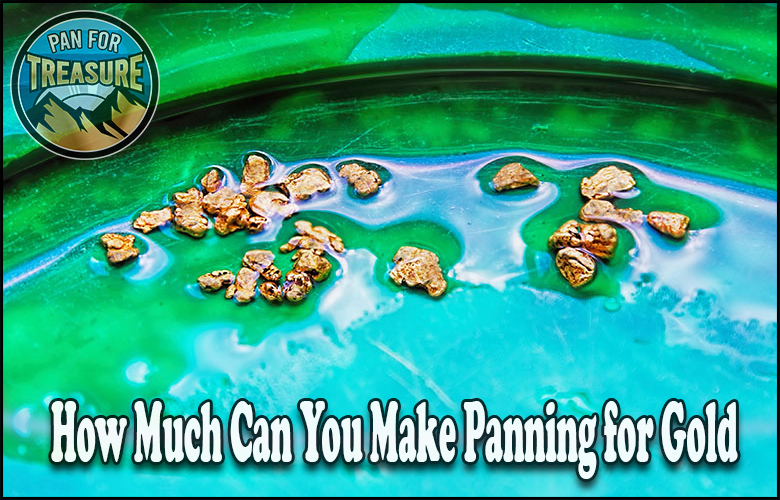
For the bigger economic picture, see how much you can make panning for gold.
Tips for Backyard Gold Prospecting
- Research before you dig. An hour on the USGS mine database and your state geological survey’s site is worth more than a week of random digging. Find out what’s been documented near you first.
- Test the creek before the lawn. Water has already done thousands of years of concentrating for you. Inside bends, behind boulders, and on bedrock are the spots.
- Go deep, not wide. Gold sinks. The gravel sitting directly on bedrock or dense clay (“false bedrock”) beats surface soil every time.
- Save your black sand concentrates. Fine gold hides in black sand. Store concentrates in a bucket and rework them carefully later rather than rushing at the creek.
- Use a magnet on your concentrates. Pulling the magnetite out (inside a plastic bag, so it releases cleanly) makes any gold left behind far easier to see.
- Join a local prospecting club. Clubs like the GPAA know the local geology, and members can usually tell you in one conversation whether yards in your area ever produce.
- Keep a log. Note where each sample came from and what it showed. Patterns across ten pans tell you where to focus; memory doesn’t.
Resources for Backyard Prospectors
- USGS Mineral Resources Data System (MRDS) – Free searchable map of every recorded mine, prospect, and mineral occurrence in the United States. The fastest way to see whether gold has ever been documented near your property.
- USGS – Gold (General Interest Publication) – Plain-language USGS overview of how gold deposits form, including placer and lode geology.
- USGS FAQs – Minerals and Mining – Official answers on gold occurrence, prospecting, and mineral ownership questions.
- BLM – Mining and Minerals Program – Background on how mineral estates and mining claims work under federal law.
- 811 – Call Before You Dig – Free national utility-locating service. One call before any backyard excavation.
Conclusion
Panning for gold in your backyard is legal, cheap to try, and occasionally even productive, if the geology cooperates. The formula is simple: confirm you own your mineral rights, check the USGS records for gold history near your home, look for quartz, black sand, and iron staining, and test-pan your best material systematically, starting with any creek on the property.
Just keep the odds in perspective. Most yards hold nothing, glacial and residual gold is fine and sparse, and the real value of the exercise is learning to prospect on ground you can visit every day.
If your test pans come up empty, take those same skills to the proven public sites in our best locations to find gold directory. So, can I pan for gold in my backyard?
Yes, you can, and the only way to find out what’s under your lawn is to dig a pan’s worth and see.
Frequently Asked Questions – Panning for Gold in Your Backyard
Can I pan for gold in my backyard?
Yes. If you own the property and its mineral rights, backyard gold panning is legal in all 50 states with no permit required.
Renters need the landlord’s permission, and large-scale digging can trigger local excavation or stream-protection rules.
How do I know if there is gold in my backyard?
Check the USGS Mineral Resources Data System for documented gold near your address, then look for physical signs: iron-stained quartz, black sand, rusty red soil, and creek gravels. The only definitive test is panning 10 to 15 samples from the most promising spots on your property.
Who owns the gold I find on my property?
Whoever owns the mineral estate. If your mineral rights were never severed from the land, native gold is entirely yours.
If a previous owner sold or reserved the mineral rights, the gold in place may belong to that party. Your deed and county records will show your status.
What kind of soil has gold in it?
Gold concentrates in stream-deposited (alluvial) gravels, in soils directly over weathered quartz veins, and alongside heavy black sand made of magnetite and hematite. Iron-stained red or orange ground in a known gold district is also worth testing.
Ordinary topsoil rarely carries gold.
Can I find gold in my backyard with a metal detector?
Only if your property is in nugget country. Detectors can’t hear flour gold or small flakes, which is what most backyard gold is.
In parts of the West and the southeastern gold belts where nuggets occur, a gold-specific detector is worth trying. See our guide to the best metal detectors for gold.
Is it legal to dig for gold in my yard?
Yes, on your own land, but call 811 for a free utility locate before excavating, check HOA and local ordinances for digging restrictions, and don’t alter a stream channel without checking your state’s rules. Hand panning and small test holes are never a problem.
What should I do if I find a lot of gold in my backyard?
Verify your mineral rights before spending money on recovery, document exactly where and how much you found, and talk to a real estate attorney if the find is significant. Remember that found and sold gold is taxable income, so keep records for the IRS.
Do glaciers really leave gold in Midwest backyards?
Yes. Ice-age glaciers carried fine gold from Canadian bedrock into Ohio, Indiana, Illinois, Michigan, Wisconsin, and Minnesota.
It’s fine flour gold in small quantities, concentrated in creeks and gravel deposits, but Midwest panners recover it regularly.
⛏ Recommended Gear ⛏


* As an Amazon Associate I earn from qualifying purchases at no extra cost to you.
Subscribe to Our Newsletter

Ryan Conlon is the founder of Pan for Treasure.
A lifelong gold panning enthusiast, he created this site to help beginners learn the ropes and share practical tips from his own time on the creek. [email protected]