First Posted March 4, 2026 | 🕒 Last Updated on June 27, 2026 by Ryan Conlon
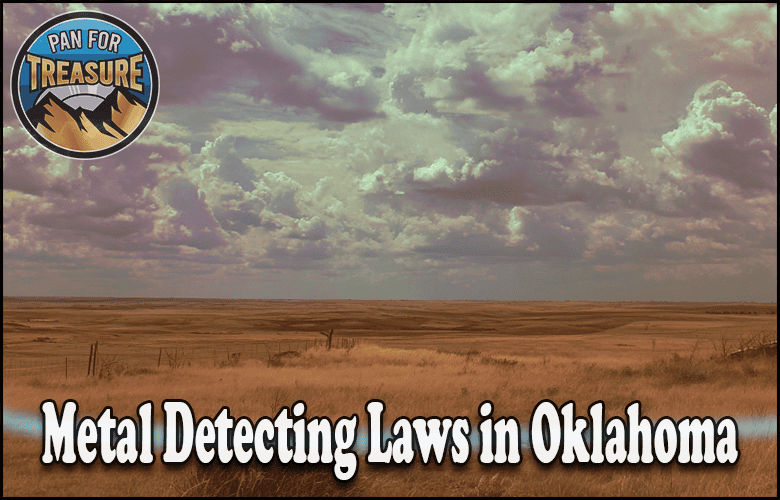
Metal detecting laws in Oklahoma require a permit for using a metal detector on any public land, including state parks.
Historical sites are completely off-limits. Oklahoma has 39 federally recognized tribes, and tribal land requires explicit tribal authorization.
Oklahoma’s Land Run of 1889, oil boom heritage, Chisholm Trail history, and frontier military forts make private land the primary detecting option.
Lake beaches at the state’s numerous reservoirs offer beach detecting with permits.
Unlike neighboring Kansas (no digging in parks) or Texas (most state parks with permits), Oklahoma’s permit-based approach covers all public land.
New to the hobby? Start with our beginner’s guide to gold panning and prospecting.
TL;DR
- State Parks: Permit required for all detecting; contact specific park before visiting
- Public Land: Permit mandatory for metal detecting on any public land in Oklahoma
- Historical Sites: Completely off-limits; Native American cultural sites and Trail of Tears sites strictly protected
- Tribal Lands: 39 federally recognized tribes; tribal land off-limits without explicit tribal permission
- Lake Beaches: Reservoir lake beaches popular; permits required for state-managed beaches
- Private Land: Best option; Land Run homesteads, oil boom towns, frontier settlements; written permission required
Permit required for all detecting
Permit mandatory on all public property
Trail of Tears, Land Run (1889), oil boom, Chisholm Trail
39 federally recognized tribes; off-limits without authorization
Texoma, Grand Lake, Keystone, Eufaula, and other reservoirs
Private land; permitted lake beaches; city parks with permission
Metal Detecting Laws and Regulations in Oklahoma
Metal detecting laws in Oklahoma impose a mandatory permit requirement for all public land detecting. Here is the breakdown.
State Parks
A permit is mandatory for using a metal detector at any Oklahoma state park. Contact the specific state park management to request permission and understand any restrictions. Some parks may be more accommodating than others. Historical sites within parks are always off-limits.
Public Land
All public land in Oklahoma requires a permit for metal detecting. This includes city parks, county parks, and other publicly owned property. Contact the managing agency for permit procedures. Many municipalities are accommodating when approached properly.
Tribal Lands
Oklahoma has 39 federally recognized tribes, and much of the state has tribal sovereignty connections. Tribal land is off-limits without explicit tribal authorization. The Trail of Tears heritage and Native American cultural sites are protected under federal and tribal law.
Lake Beaches
Oklahoma’s numerous Army Corps reservoirs (Lake Texoma, Grand Lake, Keystone Lake, Lake Eufaula) provide beach detecting opportunities. Permits are required for state-managed beach areas. Corps-managed areas follow Corps rules; contact the specific project office.
National Forests and BLM
The Ouachita National Forest extends into southeastern Oklahoma. USFS policy allows casual detecting in developed areas. BLM has limited holdings in Oklahoma. ARPA restrictions apply on all federal land.
NPS Sites (Prohibited)
Chickasaw National Recreation Area, Washita Battlefield National Historic Site, and Fort Smith National Historic Site (partially in Oklahoma) are all off-limits.
Private Land
Private land with written landowner permission is the best option. ARPA does not apply. Oklahoma has extensive private ranch and farmland with Land Run, oil boom, and frontier history.
Rules Summary
| Land Type | Detecting Allowed? | Permit/Permission | Artifacts |
|---|---|---|---|
| State Parks | With permit | Park management permission | Historic sites off-limits |
| Other Public Land | With permit | Managing agency permit | ARPA on federal land |
| Tribal Lands | No | N/A without tribal authorization | Federal and tribal protections |
| NPS Sites | No | N/A (prohibited) | N/A |
| Private Land | Yes | Written landowner permission | Finder keeps (per agreement) |
For state parks, visit Oklahoma Tourism – State Parks. For archaeology, see Oklahoma SHPO.
Best Metal Detecting Locations in Oklahoma
- Lake Texoma beaches (Marshall, Bryan Counties) – One of Oklahoma’s largest reservoirs on the Red River border with Texas. Beach areas with permits produce modern coins and jewelry from heavy recreation traffic.
- Land Run corridor private land (various central counties) – The 1889 Land Run settled central Oklahoma rapidly. Old homestead sites on private farmland produce settlement-era items from the 1890s onward.
- Tulsa area (Tulsa County) – Check with Tulsa Parks for detecting policies. The city’s oil boom history (1900s-1920s) makes older parks and neighborhoods productive.
- Fort Sill area private land (Comanche County) – One of the oldest active Army posts (1869). Private land near the fort produces frontier military artifacts.
- Oklahoma City area (Oklahoma County) – Founded during the 1889 Land Run. Older parks and neighborhoods have settlement and early statehood (1907) history.
- Chisholm Trail corridor (various counties) – The trail crossed Oklahoma south to north. Private land along the route produces cattle drive-era items (1867-1885).
- Grand Lake area (Delaware, Mayes Counties) – Northeastern Oklahoma reservoir with beach detecting opportunities under permit.
- Southeast Oklahoma mining towns (Latimer, LeFlore Counties) – Coal mining history from the late 1800s. Private land near old mining communities produces domestic items and coins.
See our best locations to find gold guide and metal detecting for gold guide.
Oklahoma’s History and What You Might Find
Oklahoma’s history begins with the forced removal of the Five Civilized Tribes along the Trail of Tears in the 1830s. Indian Territory remained until the Land Run of 1889 opened unassigned lands to white settlement. The oil boom transformed the state in the early 1900s, and statehood came in 1907. The Dust Bowl devastated western Oklahoma in the 1930s.
Common private land finds include Land Run-era homestead items (1890s), oil boom coins and personal items, Chisholm Trail cattle drive artifacts, frontier military items, and Native American trade goods (on private land with permission). Oklahoma has no significant gold deposits.
Tips for Metal Detecting in Oklahoma
- Get permits for all public land. Oklahoma’s permit requirement is universal. Contact the managing agency before detecting anywhere public.
- Respect tribal sovereignty. Oklahoma has 39 tribes. Know the land ownership before detecting. Tribal land is off-limits.
- Focus on private land for relics. Land Run homesteads, oil boom towns, and Chisholm Trail corridors on private land produce the best finds.
- Detect lake beaches during off-season. Oklahoma’s reservoir beaches accumulate modern finds during heavy summer use. Fall and spring permits provide the best detecting conditions.
- Research Land Run homestead sites. The General Land Office records identify original homestead claims from the 1889 and subsequent land runs. These sites on private farmland produce settlement-era artifacts.
- Target old oil boom towns. Oil boom towns (1900s-1920s) sprang up and sometimes disappeared quickly. Private land at these sites produces early 20th-century items.
- Be prepared for hot summers. Oklahoma summers are extremely hot. Spring and fall are the best detecting seasons. Carry water and watch for venomous snakes.
- Join a local club. Oklahoma has active detecting communities that share permit knowledge, landowner contacts, and productive locations.
For technique help, see our techniques guide and tips and tricks.
Resources
- Oklahoma Tourism – State Parks – State park information and contact details for permit requests.
- Oklahoma State Historic Preservation Office – Historic site protections and archaeological resource information.
- National Park Service – Oklahoma – NPS sites where detecting is prohibited.
- Oklahoma Historical Society – Historical research resources for Land Run, oil boom, and frontier history.
Conclusion
Metal detecting laws in Oklahoma require permits for all public land but provide a functional system for lake beaches and some parks. The state’s Land Run heritage, oil boom history, and Chisholm Trail corridor make private land the best option for relic hunting. Get your permits, respect tribal sovereignty, and explore the private land opportunities across the state.
Explore nearby state guides: metal detecting laws in Kansas, metal detecting laws in Texas, metal detecting laws in Arkansas, metal detecting laws in Missouri, and metal detecting laws in Colorado. See the full state-by-state metal detecting laws directory.
Frequently Asked Questions
Can I metal detect in Oklahoma state parks?
Yes, with a permit from park management. Contact the specific state park before visiting. Historical sites within parks are off-limits. Each park may have different rules and restrictions.
Do I need a permit for all public land in Oklahoma?
Yes. Oklahoma requires a permit for metal detecting on all public land, including state parks, city parks, and other publicly owned property. Contact the managing agency for each location.
What about tribal lands in Oklahoma?
Oklahoma has 39 federally recognized tribes. Tribal land is off-limits without explicit tribal authorization. The Trail of Tears heritage and Native American cultural sites are protected under federal and tribal law. Never detect on land you suspect may be tribal property.
Where are the best places to detect in Oklahoma?
Private land along the Land Run corridor, Chisholm Trail, and near oil boom towns produces the best relic finds. Lake Texoma and Grand Lake beaches with permits are good for modern finds. Tulsa and Oklahoma City area parks may allow detecting with permits.
What can I find metal detecting in Oklahoma?
Land Run-era homestead items (1890s), oil boom coins and personal items, Chisholm Trail cattle drive artifacts, frontier military items near fort sites, and modern jewelry at lake beaches. Oklahoma has no significant gold deposits.
How does Oklahoma compare to neighboring states?
Kansas allows detecting but not digging in parks. Texas requires permits for most state parks. Arkansas allows state park detecting with permits. Oklahoma’s universal permit system is straightforward but covers all public land.
⛏ Recommended Gear ⛏


* As an Amazon Associate I earn from qualifying purchases at no extra cost to you.
Subscribe to Our Newsletter

Ryan Conlon is the founder of Pan for Treasure.
A lifelong gold panning enthusiast, he created this site to help beginners learn the ropes and share practical tips from his own time on the creek. [email protected]